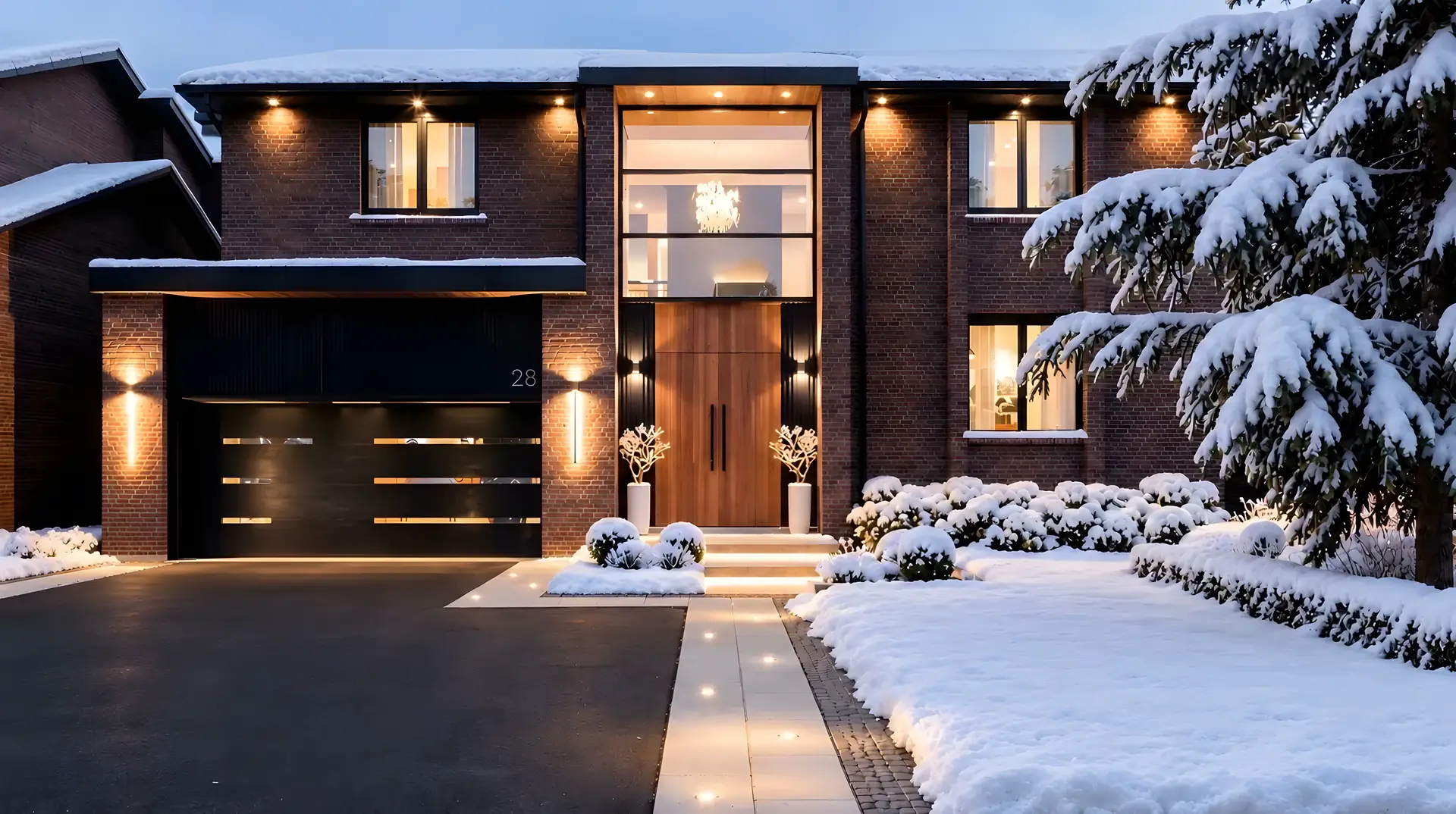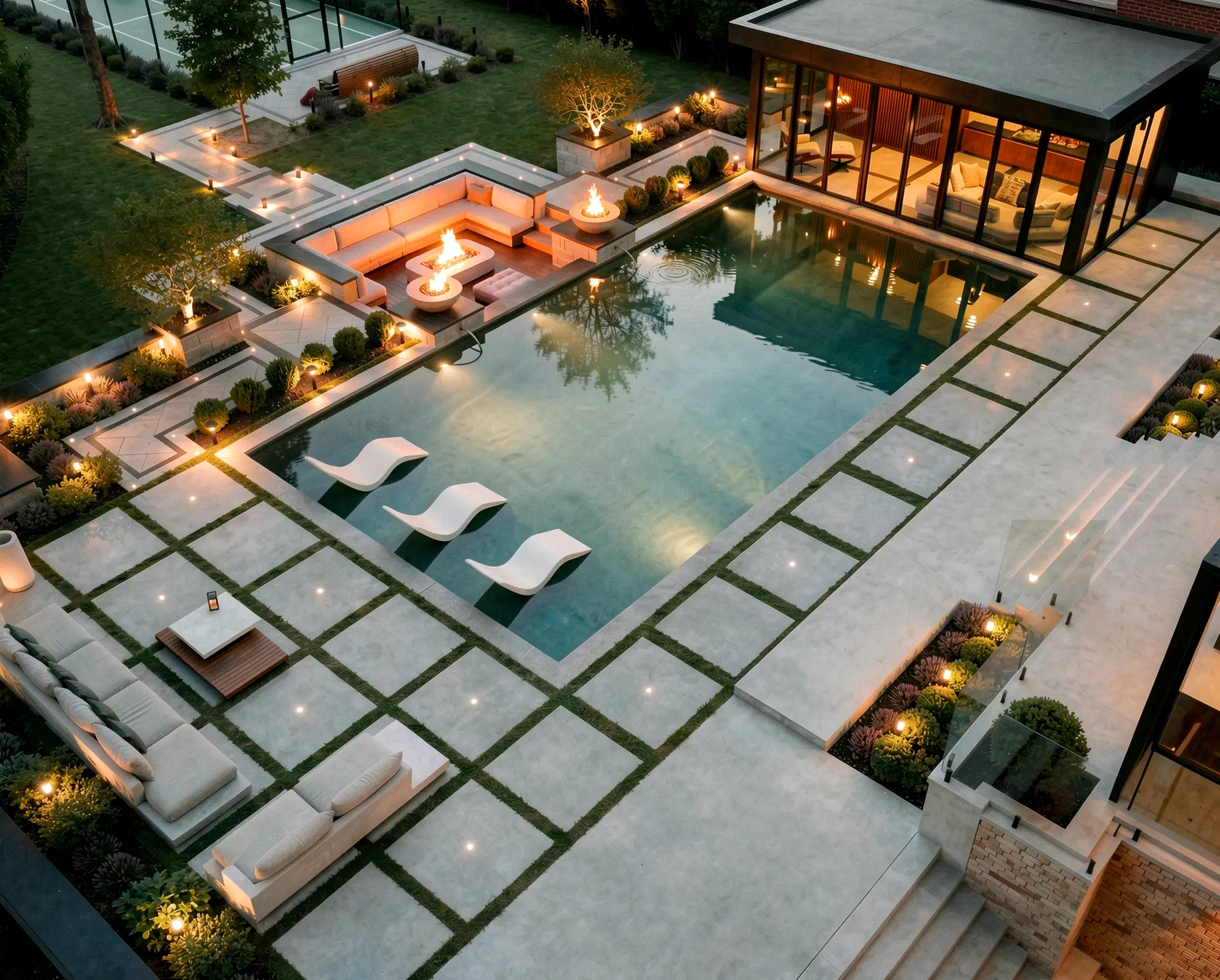

As summer winds down, most Ontario homeowners start looking at their property differently. The patio that felt perfect in July now has leaves collecting in the corners. The lawn has a soft spot that never quite dried out. You start to wonder where all that snow is going to go.
That question is the right one. A backyard designed only for the photo in July is a backyard that will be tested in January, and Ontario winters are not gentle. Freeze-thaw cycles, heavy snow, road salt, short days and months of frozen ground all put pressure on how a property is built. The best outdoor spaces are designed to perform all year, not just when the sun is out.
Here is the winter test in one minute:
- Water leaves the property instead of pooling against hardscape, walls or the house
- Hard surfaces sit on a base built for frost, not just for looks
- Snow has a planned place to go that does not damage plants, drains or structures
- Materials are chosen for freeze-thaw and de-icing salt, not just for colour
- Lighting, access and heated surfaces keep the space safe and usable in the dark months
- Structures, pools and hot tubs are designed for winter loads and winter access
Why September Is the Right Time to Look at Your Backyard Differently
Late summer and early fall is when a property tells you the truth. Summer's dry weather hides drainage problems, and full leaf cover hides grading issues. By September, and especially after the first heavy autumn rains, you can see where water actually collects, which surfaces have settled, and which areas you struggle to reach.
It is also the ideal moment to plan. Ontario's construction season is short, and the best projects are designed well before the ground thaws. Planning through fall and winter means materials, drainage and scheduling are resolved before spring demand hits. For more on that approach, see our guide to landscape design in Ontario and why winter planning wins.
Drainage: Where Does the Water Go?
Drainage is the single biggest factor in whether a backyard survives Ontario winters. Water that sits against hardscape, foundations or retaining walls will eventually freeze, and frozen water expands by roughly 9%. That expansion is what lifts pavers, cracks slabs and pushes walls out of line.
Grading Comes First
Every surface in your yard should slope gently away from the house and toward a planned outlet. Patios, walkways and driveways need enough pitch to shed water quickly, but not so much that the surface feels uncomfortable to walk on. Grading is easy to overlook because it is invisible once construction is finished, yet it is the foundation of everything else.
Downspouts, Catch Basins and Drainage Lines
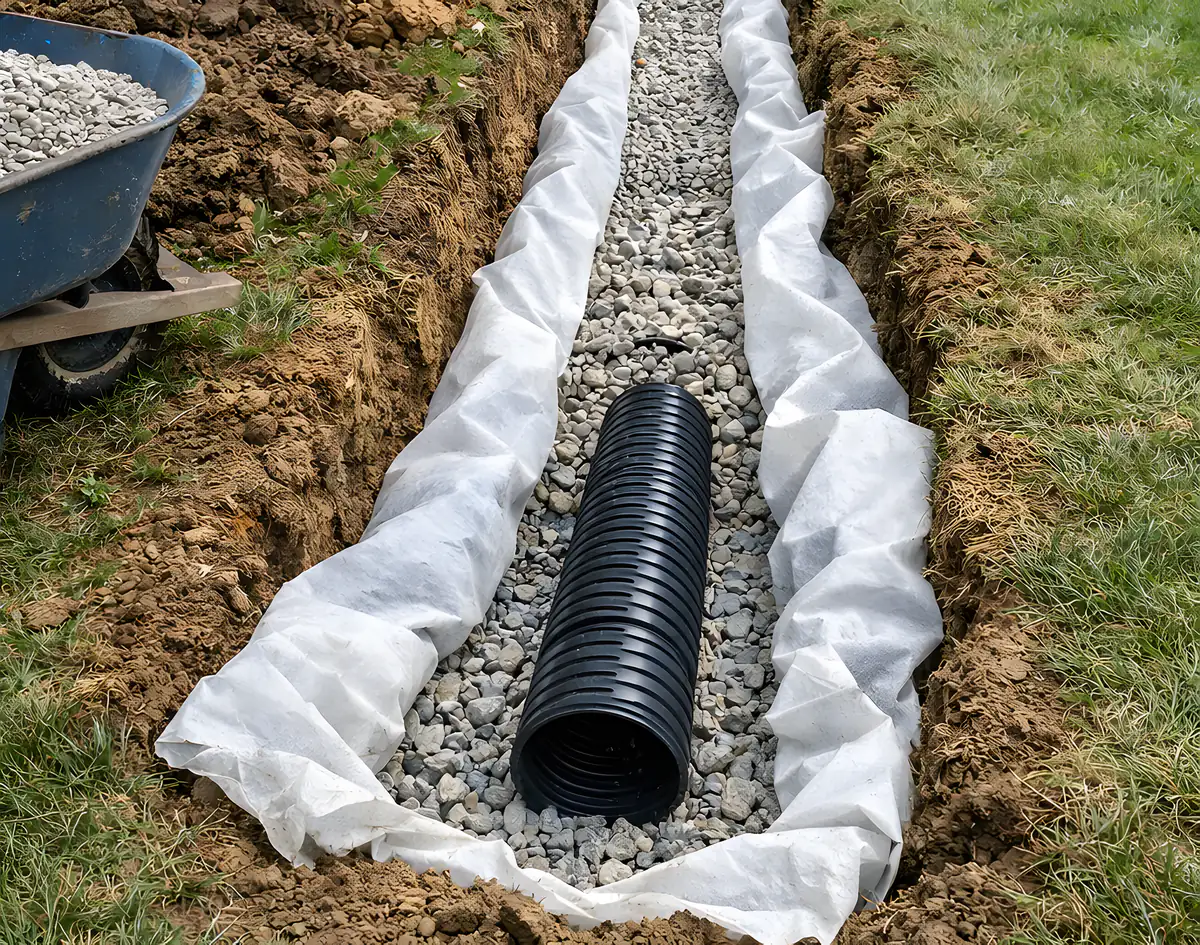
Roof water is a huge volume, especially during a March thaw or a heavy rain on frozen ground. Where your downspouts discharge matters. Discharging onto a patio or beside a foundation sends meltwater exactly where you do not want it. A well-designed yard uses catch basins, channel drains or buried drainage lines to carry water to a safe outlet, with pipe placed so it does not freeze and block.
Hard Surfaces and Wet Soil
Clay soil, common across much of the GTA, holds water and drains slowly. In winter that water freezes in place, and the soil moves. Proper excavation, compacted granular base and, where needed, subsurface drainage keep the ground under your hardscape from turning into a frost-heave problem.
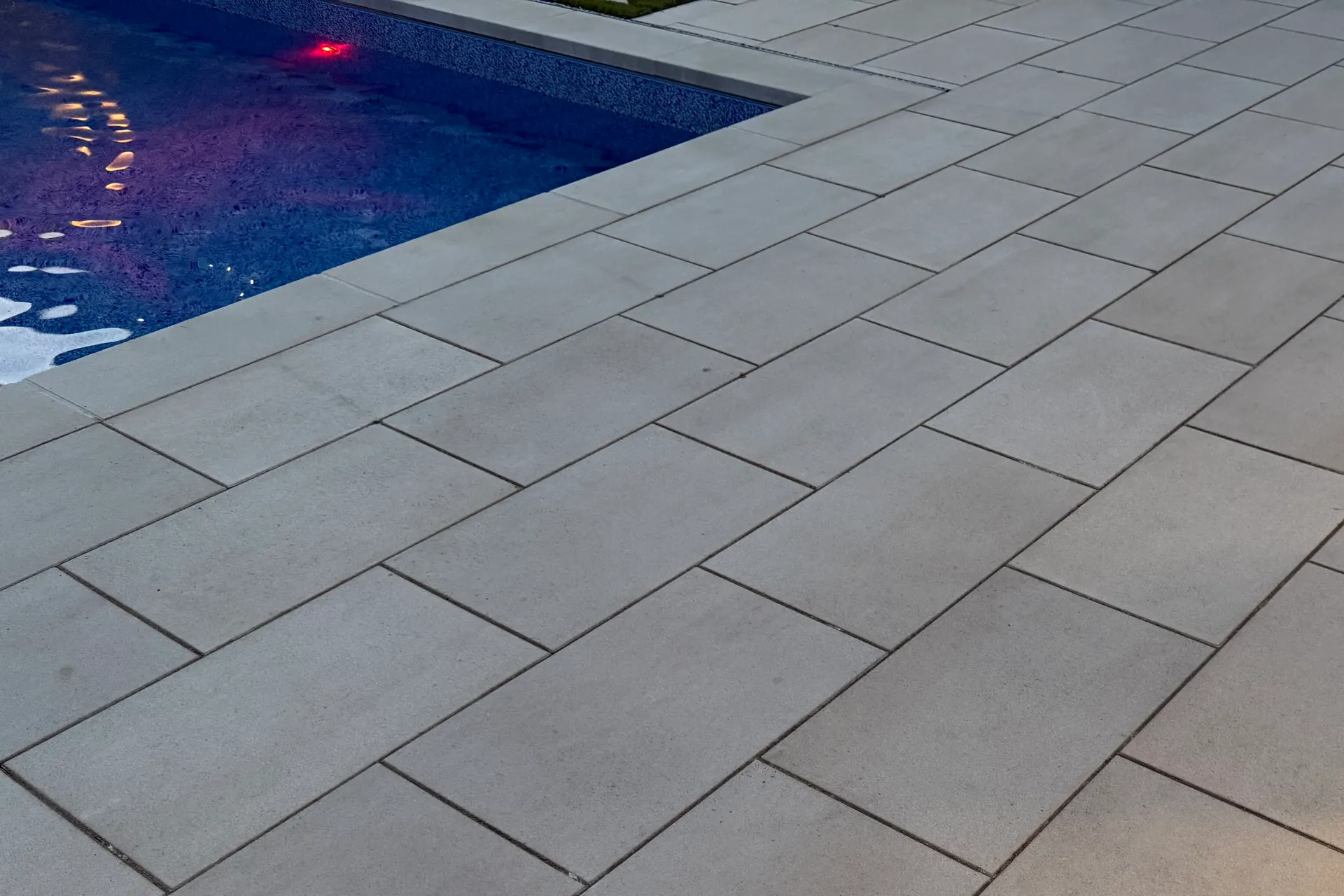
Freeze-Thaw: What Ontario Winters Do to Hard Surfaces
Southern Ontario winters rarely stay frozen. Temperatures cross zero again and again, and every cycle lets water into small gaps, freezes it, and widens those gaps. Over several winters, that is how a beautiful patio turns into an uneven, cracked one. As our guide to pavers vs. concrete vs. masonry explains, hardscape problems rarely show up on install day. They appear after a few winters.
The Base Is What Matters
The visible surface gets the attention, but the base does the work. A properly built hardscape starts with excavation to the correct depth, a compacted granular base and edge restraint that holds everything in place. Cutting corners on base depth and compaction is the most common reason surfaces settle or heave.
Frost Depth and Footings
Frost can penetrate roughly 1.2 m (4 ft) into the ground in much of southern Ontario. Anything that must stay stable, such as deck footings, pergola posts, pool equipment pads and the footings for structures, needs to be designed with frost in mind. Footings that do not reach below the frost line can lift in winter and settle in spring.
Retaining Walls and Grade Changes
A retaining wall holds back soil and, more importantly, water. Without drainage stone and outlet piping behind it, water builds up, freezes and pushes the wall outward. Taller walls need careful engineering and drainage planning, so it is worth designing them early.
Snow Storage: Where Does the Snow Go?
Nobody thinks about snow storage in July, and almost everyone thinks about it in January. When a driveway, walkway and patio all need clearing, the snow has to go somewhere. If there is no plan, it ends up on plant beds, against fences, on top of drains or blocking the path you just cleared.
Good winter design answers a few simple questions:
- Where will plowed or shovelled snow be piled, and does that area drain when it melts?
- Are plants near snow piles tough enough to handle weight and road salt?
- Do meltwater paths lead away from the house, pool and patio, or toward them?
- Are drains, gas meters, hydro boxes and hose bibs kept clear of pile zones?
- Is there room to move snow without damaging lighting, fixtures or edging?
Placing planting beds and delicate features away from designated snow storage, and choosing salt-tolerant plants where snow will be piled, prevents a lot of spring disappointment. Thoughtful gardens are designed around snow, not in spite of it.
Hardscape Materials That Hold Up in Ontario Winters
Not every material handles freeze-thaw and salt equally. The right choice depends on the surface, how it will be used, and how it will be maintained through winter.
| Material | Winter Performance | What to Plan For |
|---|---|---|
| Interlocking pavers | Flexible system that moves with the ground and can be re-levelled if needed | Proper base, polymeric sand and edge restraint |
| Porcelain pavers and slabs | Very low water absorption, which resists freezing damage | Choose frost-rated products with appropriate slip resistance |
| Natural stone | Beautiful and durable, but absorption varies widely by stone type | Stone selection, sealing and salt exposure |
| Poured concrete | Strong and clean-lined, but can scale or crack if not detailed correctly | Air-entrained mix, control joints, sealing and delayed salt use on new pours |
| Wood and composite decking | Wood needs regular maintenance; PVC and composite are more stable | Snow load, ventilation and shovel-friendly boards |
Beyond the material itself, surface texture matters. Polished or glossy finishes that look elegant in summer can be slippery when wet or icy. It is worth considering how a surface feels underfoot in winter, especially on steps and walkways. Our interlocking and natural stone specialists can help match a material to your lifestyle, and our guide to the best interlocking patterns for driveways and patios covers how pattern choice affects performance.
De-icing salt deserves its own mention. Salt can damage concrete surfaces and some natural stone, and it can harm nearby plants. Sealing, choosing appropriate materials and having a plan for how you will clear ice are all part of a backyard that works in winter.
Lighting: Designing for a 4:45 p.m. Sunset
In the depths of an Ontario winter, the sun sets before 5 p.m. That means many of us arrive home in the dark, take the dog out in the dark and look at the backyard through a window in the dark. A backyard with no landscape lighting simply disappears for months.
Good lighting design does three things in winter:
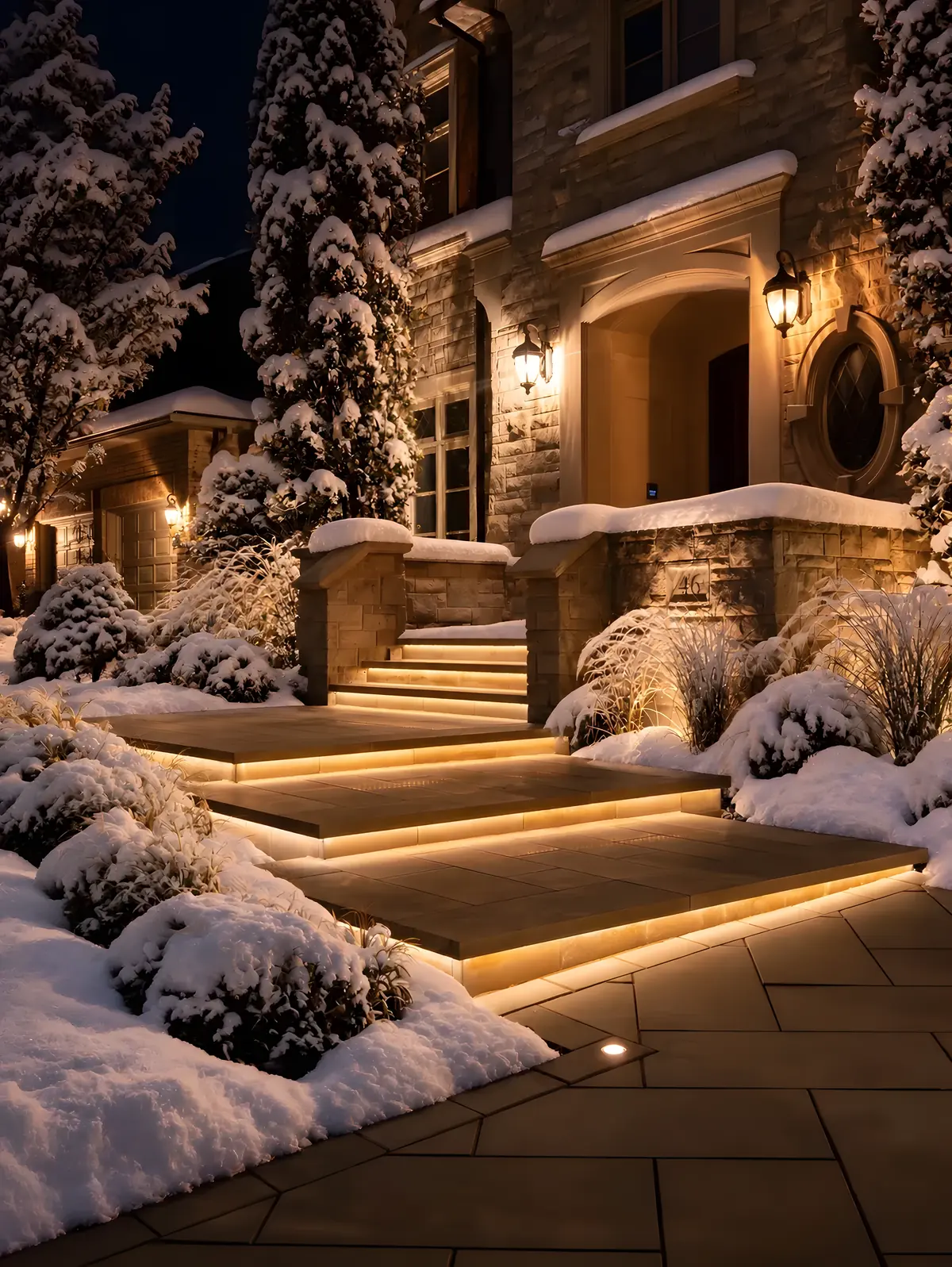
- Safety: Lit steps, walkways and grade changes reduce slips, especially where ice forms
- Access: Illuminated paths and gates make it easy to reach the hot tub, the garage or the back door
- Atmosphere: Snow reflects light beautifully, and well-placed lighting can make a winter backyard as inviting as a summer one
Fixtures and wiring should be chosen and installed with winter in mind, including placement above expected snow depth and away from plowing zones. Recessed step lighting and low-glare path lighting hold up well and keep the space usable when it is cold and dark.
Access: Can You Actually Reach Everything in Winter?
A gate that swings freely in July may not open through 30 cm of snow. A narrow side path that is fine for a summer stroll may be impossible to shovel, or too tight for a snowblower. Access is one of the most practical and most overlooked parts of backyard design.
Consider how winter changes movement through your property:
- Gates should open outward or have enough clearance for snow buildup
- Walkways need to be wide enough to clear and pitched to avoid ice
- Steps should have consistent risers, good traction and railings where needed
- Utility access, such as gas lines, meters and pool or spa equipment, must stay reachable
- Emergency and service access should never depend on a path that gets buried
Access also matters for construction. If a project is planned for spring, thinking through machinery access, material delivery and staging now avoids costly surprises later.
Heated Surfaces: Driveways, Steps and Walkways
For many homeowners, the best answer to winter is to take shovelling and salt out of the equation. Heated driveways use either electric cables and mats or hydronic tubing carrying heated glycol beneath the surface. Both are controlled by sensors that detect temperature and moisture, so the system turns on only when conditions require it.
Electric systems are typically well-suited to smaller and mid-sized surfaces such as walkways, steps and shorter driveways. Hydronic systems are usually the better fit for larger or more complex driveways, and can be finished with concrete, pavers, asphalt or natural or man-made stone. Heating can also be extended to walkways, patios and pool decks, which is especially valuable around steps and entry points where ice creates a safety risk.
The key with heated surfaces is planning them from the start. The heating layer sits beneath the finished surface, so it needs to be designed into the base, drainage and material choice, not added after the fact. That is why heated surfaces work best as part of a full landscape design rather than as an afterthought.
Structures: Pergolas, Cabanas and Decks Under Snow
Summer photos rarely show what a pergola looks like under snow. In winter, structures carry snow load, wind and moisture, and they sit on ground that is moving with frost.
Pergolas and Cabanas
A pergola or cabana should be built with frost-rated footings, appropriate framing and roof or louvre systems designed for Ontario snow loads. Enclosed or partially enclosed cabanas can extend the season, giving you a place to enjoy the backyard well into fall and even on a crisp winter day. Details such as roof pitch, drainage off the roof and how snow will slide matter more than most people expect.
Decks
Decks are exposed on every side. Footings, ventilation beneath the deck, drainage and board choice all affect how a deck handles winter. Our comparison of PVC vs. composite decking in Ontario looks at how materials perform over time. Planning for snow load, drainage and easy shovelling before you build makes a big difference in how the deck ages.
Pools and Hot Tubs: Beyond Swimming Season
A pool is a summer feature that has to survive the other eight months of the year. The best pool designs think about winter from day one.
Pools
Shell type, plumbing, equipment location and surrounding hardscape all affect how a pool handles winter. Water lines need to be designed and closed properly, the equipment area needs to be accessible, and the surrounding surfaces need drainage that does not send meltwater back toward the pool. For a deeper look at how long different pool types last, see our guide on pool lifespan in Ontario. Our pool installation work considers winter performance from the earliest design stage.
Hot Tubs, Swim Spas and Saunas
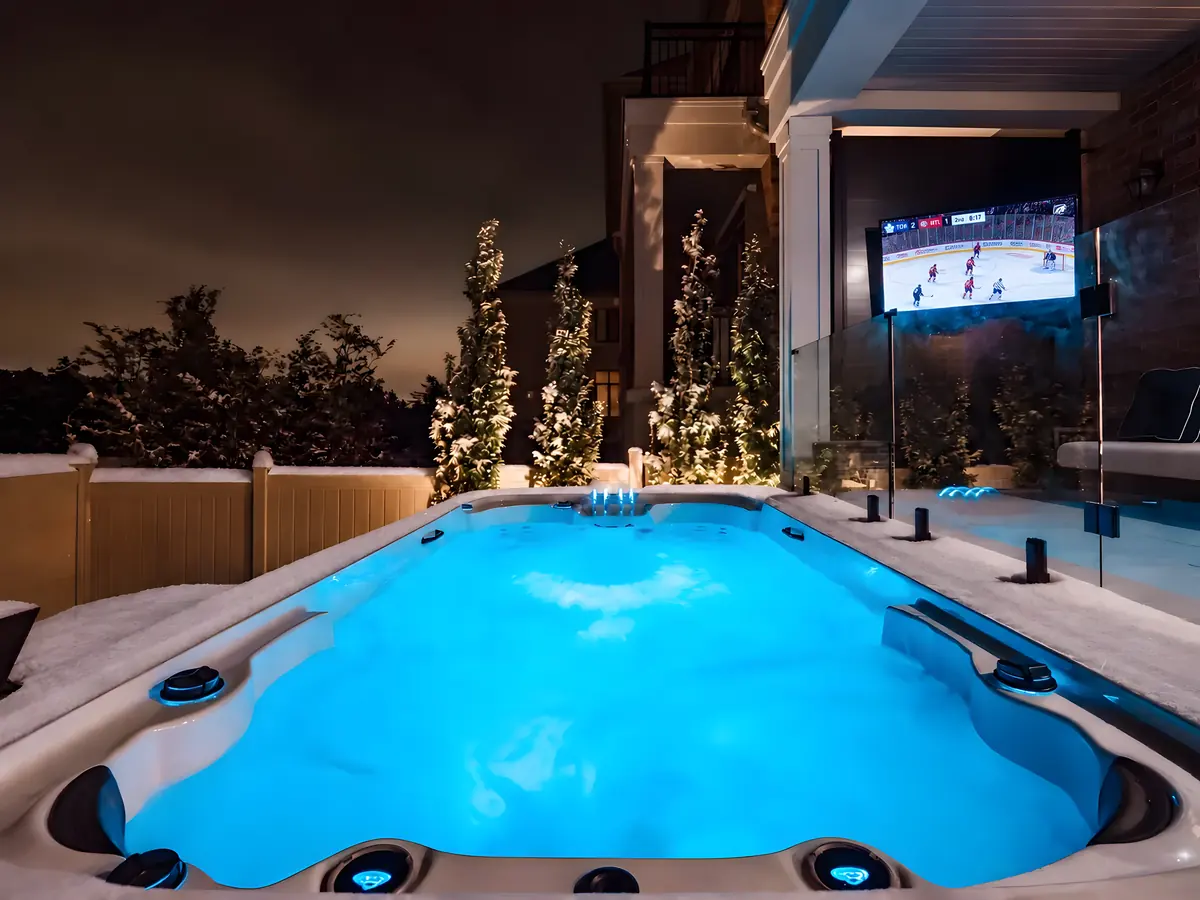
Unlike a pool, a hot tub is often used most in winter. That changes the design brief. The route from the back door needs to be clear, lit and slip-resistant. The tub needs shelter from wind, a stable base and properly designed electrical service. Nearby snow storage, privacy and the walk back inside while wet in freezing temperatures all matter. The same thinking applies to swim spas and an outdoor sauna, which can turn the coldest months into the best time to use the backyard.
A Fall Walk-Through: What to Look For in Your Own Backyard
Before the ground freezes, take a slow walk around your property and ask a few honest questions. Do it after a good rain if you can.
- Where does water pool, and how long does it stay?
- Are any pavers, steps or slabs settling, tilting or cracking?
- Do downspouts drain away from the house and hardscape?
- Are there gaps, low spots or wobbles along retaining walls?
- Where would you pile snow, and what would it damage?
- Can you walk safely from the back door to every part of the yard in the dark?
- Are gates, steps and utility access points reachable in deep snow?
- Do you have a plan for ice on steps, walkways and the driveway?
If several of those questions have unsatisfying answers, that is useful information. It means your backyard was designed for July, and it can be improved to work in January too.
Precision's Approach: Design for the Whole Year
At Precision Landscaping, we treat winter as a design requirement, not an afterthought. Drainage, grading, base preparation, material selection, lighting, access and structure all get resolved together in the design stage, before construction begins. Our design-build approach puts one coordinated team in charge of the whole project, so the decisions made on paper are the same ones that get built. If you want to understand how that works, read what a design-build landscaping company does.
Whether you are dreaming of a new pool, a heated driveway, a stone patio, an outdoor kitchen or a full backyard retreat, we build outdoor spaces that look exceptional and perform through every Ontario season.
Frequently Asked Questions About Backyard Design for Ontario Winters
Wondering how your own backyard will hold up once the snow flies? These are the questions Ontario homeowners ask most often about designing an outdoor space that works in every season.
-
A winter-ready backyard drains water away from the house and hardscape, uses a properly compacted base built for frost, has a plan for snow storage, and uses materials suited to freeze-thaw and de-icing salt. Lighting, safe access and well-designed structures complete the picture.
-
Fall and winter are ideal for planning. Design, drainage, materials and scheduling can all be finalized while the ground is frozen, so construction can begin as soon as spring conditions allow. Starting early also gives you a better chance at your preferred build window.
-
Freeze-thaw damage happens when water enters small gaps in a surface or the soil beneath it, freezes and expands, then thaws and repeats. Over many cycles this can heave pavers, crack slabs, loosen walls and shift footings. Good drainage and a properly built base are the best defences.
-
Well-installed interlocking pavers, frost-rated porcelain, suitable natural stone and properly detailed concrete can all perform well. The installation quality, base preparation and drainage matter as much as the material. Our guide to pavers vs. concrete vs. masonry goes into more detail.
-
Yes. Snow storage zones can be planned alongside grading, planting beds, drainage and access, so that piled snow melts toward a safe outlet and does not harm plants, drains or structures.
-
For many homeowners, yes. Heated surfaces remove shovelling and reduce the need for salt, and they improve safety on steps and slopes. Systems are sensor-controlled so they run only when needed. The right system depends on the size and shape of the surface, so it is best assessed as part of your overall design. See our heated driveways page for system types and details.
-
Start with drainage so meltwater does not sit on the surface and refreeze, then choose a textured finish with good traction. Many homeowners add heated surfaces to steps and entry walkways, where ice creates the biggest safety risk, along with lighting so any slick spots are easy to see.
-
Hot tubs, swim spas and saunas can be enjoyed year-round with the right design, including a lit and slip-resistant path, wind shelter, a stable base and proper electrical service. Pools are typically closed for winter, so their design should focus on drainage, equipment access and surrounding surfaces.
Plan a Backyard That Works All Year
An Ontario backyard should be judged in January as much as in July. If your property has drainage problems, aging hardscape or a wish list of pools, structures, lighting or heated surfaces, now is the ideal time to start planning. Contact Precision Landscaping for a free design consultation and build a backyard that performs in every season.