
A pool does not have one lifespan. The structure, surface, liner, and equipment all age on different schedules.
A steel-vinyl pool may go through several liners while the supporting structure remains sound. A concrete pool may be resurfaced more than once without rebuilding the shell. A fiberglass pool may show fading or surface wear long before there's any concern with the structural shell.
Whether you own a pool in Toronto, the GTA, or elsewhere in Ontario, construction quality, drainage, site preparation, winterization, and maintenance all influence how those components age. Understanding what's actually wearing out is the first step in deciding whether the pool needs maintenance, restoration, or replacement.
How Long Do Inground Pools Last?
A well-built inground pool can remain in service for decades, but no pool has a single lifespan. The structure, surface, liner, and equipment all age independently, which is why one pool may only need a new liner while another of the same age may require more extensive restoration.
| Pool Type | Structural Lifespan | First Component Typically Renewed |
|---|---|---|
| Fiberglass | 50-60+ years with proper installation and maintenance | Gelcoat / surface finish |
| Steel-Vinyl | Supporting structure can remain serviceable for decades | Vinyl liner (typically planned around 7-10 years) |
| Concrete | 30+ years as a planning benchmark; often considerably longer | Interior finish (commonly around 10-15 years) |
How Long Does a Fiberglass Pool Last?
A fiberglass pool has two separate lifecycles: the structural shell and the gelcoat surface.
The gelcoat is what the homeowner sees. The base, backfill, drainage, and groundwater conditions are what support the shell underneath, and proper site preparation is especially important in Ontario, where seasonal groundwater and freeze-thaw conditions can affect the surrounding soil. These same conditions make proper installation especially important for homeowners throughout Toronto and the GTA.
Fading, staining, or a chalky texture is generally associated with the surface finish rather than the structural shell. These signs do not, by themselves, mean the fiberglass structure is failing. Where wear is significant, or there's a genuine question about structural condition such as bulging, movement, or cracking beyond the surface, that's a case for professional assessment rather than a judgment based on appearance. Surface wear alone is not a reason to replace the fiberglass shell.
Surface signs:
- Persistent staining
- Significant fading
- A chalky surface texture
- Blistering
- Surface cracking
Potential structural signs:
- Unusual bulging or movement
- Significant structural cracking
- Recurring leaks where the source has been identified
Explore Precision's Fiberglass Pools and installation process.
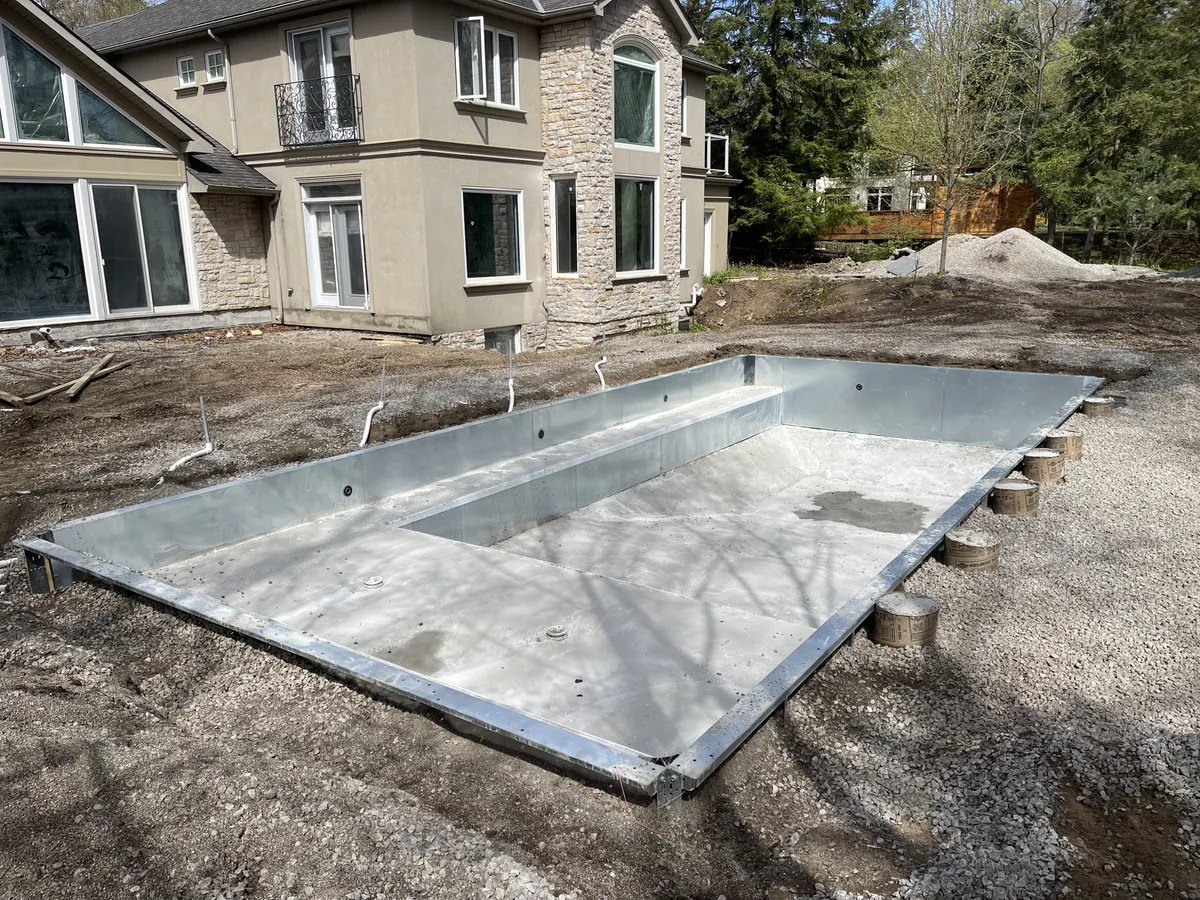
How Long Does a Steel-Vinyl Pool Last?
A steel-vinyl pool has two lifespans worth understanding separately: the steel-supported structure, and the vinyl liner. The structure can remain usable for decades when it's properly installed and not compromised by corrosion or ground movement. The liner is different. It's designed from the start to be replaceable, not permanent.
7-10 years: Precision's typical planning range for vinyl liner replacement. Replacing the liner is not the same as replacing the pool.
Actual liner life depends on water chemistry, UV exposure, use, and winterization. Some manufacturer guidance extends toward 10-15 years under favourable conditions, but 7-10 years remains Precision's planning range for Ontario projects.
Signs it's time to replace your pool liner:
- Tears
- Cracking or brittleness
- Significant fading
- Wrinkles or stretching
- Pulling away from the bead or track
- Persistent water loss, once the liner has been confirmed as the source
Water loss on its own doesn't confirm liner failure. Plumbing, fittings, and equipment can all be responsible, so the source needs to be identified first. Steel wall panels and the liner track can also show localized wear, usually where movement, corrosion, or age is concentrated, and it's more efficient to address that during a liner change than as a separate project later.
Learn more about Steel-Vinyl Pools.
How Long Does a Concrete Pool Last?
A concrete pool is not one material aging at one rate. It is a structural shell, an interior finish, tile, coping, and surrounding hardscape working together, and each layer ages on its own schedule.
The shell can remain in service for 30+ years as a planning benchmark, often considerably longer when properly constructed. The interior finish shows age first: plaster and marbleite-type finishes commonly need resurfacing around 10-15 years, depending on the finish, water chemistry, use, and condition. Tile finishes operate on a different maintenance cycle than plaster or marbleite, with individual tile and grout repairs often becoming relevant before complete finish replacement.
Cracking should be evaluated by its location, severity, movement, and underlying cause rather than treated as an automatic sign that the pool has reached the end of its life. Some cracking affects only the finish, while movement through the concrete structure requires a more detailed assessment. Resurfacing is not rebuilding.
Signs a concrete pool may need resurfacing:
- Rough surface texture
- Persistent staining
- A worn or dull finish
- Chipping or flaking
- Exposed underlying material
- Surface cracking
See Precision's Concrete Pools and Concrete Pool Restoration services.
How Ontario's Climate Affects Pool Lifespan
Ontario doesn't automatically shorten the life of a pool. It raises the importance of how the pool is built, drained, closed, and maintained.
Winterization
Protecting plumbing lines, preparing equipment, and closing the pool correctly each fall prevents trapped water from causing damage over winter. Water left where it can freeze in plumbing or equipment can cause preventable winter damage, which is why proper closing procedures matter.
Drainage & Freeze-Thaw
Movement around a pool may be connected to soil, groundwater, drainage, construction, or a combination of those conditions. The coping and hardscape around a pool respond to freeze-thaw cycles and spring thaw the same way the pool structure does.
Water Chemistry
Water chemistry affects long-term surface and equipment condition across every pool type. Persistent imbalance can contribute to premature liner deterioration, staining, scaling, etching, surface wear, and equipment problems depending on the pool system.
What Signs Show That an Older Pool Needs Attention?
A pool should be evaluated as a complete system.
- Surface: Cracks, blisters, roughness, fading, staining, flaking.
- Liner: Tears, wrinkles, stretching, brittleness, detachment.
- Water loss: Persistent, unexplained changes in water level.
- Structure: Unusual bulging, movement, significant settlement, or structural cracking.
- Equipment: Repeated failures, leaks, poor circulation or heating, unusual noise.
- Surrounding area: Deck movement, erosion, soft spots, drainage issues, coping movement.
One aging component doesn't mean the entire pool has reached the end of its life. It identifies where the next inspection or repair should begin.
Should You Repair, Restore, or Replace Your Pool?
The right response depends on whether the problem is localized, spread across several components, or structural.
| If the Pool Has... | Best Next Step | Examples |
|---|---|---|
| One isolated issue with a sound structure | Repair | Leak repair, coping repair, tile replacement, equipment replacement, localized surface repair |
| Multiple aging components but a sound structure | Restore | Vinyl liner replacement, concrete resurfacing, fiberglass refinishing, lighting, coping and equipment upgrades |
| Significant structural deterioration or recurring major failures | Replace | Severe settlement, compromised steel walls or concrete shell, extensive structural movement, restoration no longer practical |
A proper assessment looks at the structure, surface, equipment, drainage, and surrounding site together, rather than deciding from a single symptom. An aging liner, finish, or heater does not mean the pool structure has reached the end of its life.
When several components are aging together, explore Pool Restoration.
Is a 20- or 30-Year-Old Pool Too Old?
Condition matters more than age.
A 25-year-old pool in Toronto or anywhere across Ontario can be in better condition than a much younger pool if it has a sound structure, an updated liner or finish, modern equipment, and effective drainage. Two pools installed in the same year can therefore reach very different stages of their service life.
Your Pool Equipment Won't Last as Long as Your Pool
Pool equipment is designed to be serviced and replaced on a shorter cycle than the pool structure. Pumps, heaters, filters, salt systems, automation, and lighting all have their own service lives.
Equipment replacement is part of normal ownership. It is not evidence that the pool structure has reached the end of its life.
How to Help Your Pool Last Longer in Ontario
Long pool life is usually the result of consistent fundamentals rather than one major intervention.
- Maintain balanced water chemistry according to your pool, finish, and equipment requirements
- Winterize correctly each season
- Address leaks early, once the source is identified
- Maintain drainage around the pool
- Inspect surfaces and liners during spring opening
- Watch coping and surrounding hardscape for unusual movement
- Maintain pumps, filters, heaters, and sanitation systems
- Investigate structural movement rather than covering it cosmetically
See Precision's Pool Care guidance for ongoing maintenance.
Frequently Asked Questions About Pool Lifespan
A pool's age does not tell the whole story. These answers explain how the structure, liner, surface, equipment, and Ontario conditions affect whether an older pool needs maintenance, restoration, or replacement.
-
Most properly built inground pools can last for decades. The structure usually outlasts the liner, finish, or equipment, so the component being evaluated matters more than one universal age.
-
Precision generally plans for liner replacement every 7-10 years. Some manufacturer guidance extends toward 10-15 years under favourable conditions.
-
Tears, brittleness, significant fading, wrinkles, stretching, or the liner pulling away from the bead. Persistent water loss is also a sign, but only once the liner is confirmed as the source.
-
Fiberglass shells can potentially last 50-60 years or longer when properly installed and maintained. That range refers to the shell; the gelcoat surface has its own maintenance and aging cycle.
-
Surface repair or refinishing can become appropriate when the gelcoat has deteriorated significantly, but there's no universal resurfacing schedule. The decision depends on the condition and cause of the surface damage.
-
30+ years is a conservative planning benchmark for the structure, and many last considerably longer. The interior finish normally needs renewal much earlier than the shell itself.
-
Approximately 10-15 years, depending on the finish, water chemistry, use, and condition.
-
It raises the importance of construction quality, drainage, closing, and winterization. A well-built, well-maintained pool can handle Ontario winters for decades.
-
Often, yes, if the structure is sound. Restoration can address a worn liner or finish, aging equipment, and coping in one project, and it's frequently the more practical path when the structure is intact.
-
Replacement becomes more practical when there is genuine structural failure, major settlement, severe wall deterioration, or recurring problems that repairs aren't resolving.
Does Your Pool Need Repair, Restoration, or Replacement?
An aging liner, worn finish, or outdated equipment doesn't automatically mean it's time for a new pool. The right recommendation starts with understanding the condition of the structure, surface, equipment, drainage, and surrounding landscape.
Precision Landscaping assesses existing pools as part of larger pool restoration and backyard renovation projects across Toronto and the GTA, helping homeowners determine whether repair, restoration, or replacement is the most practical path forward.