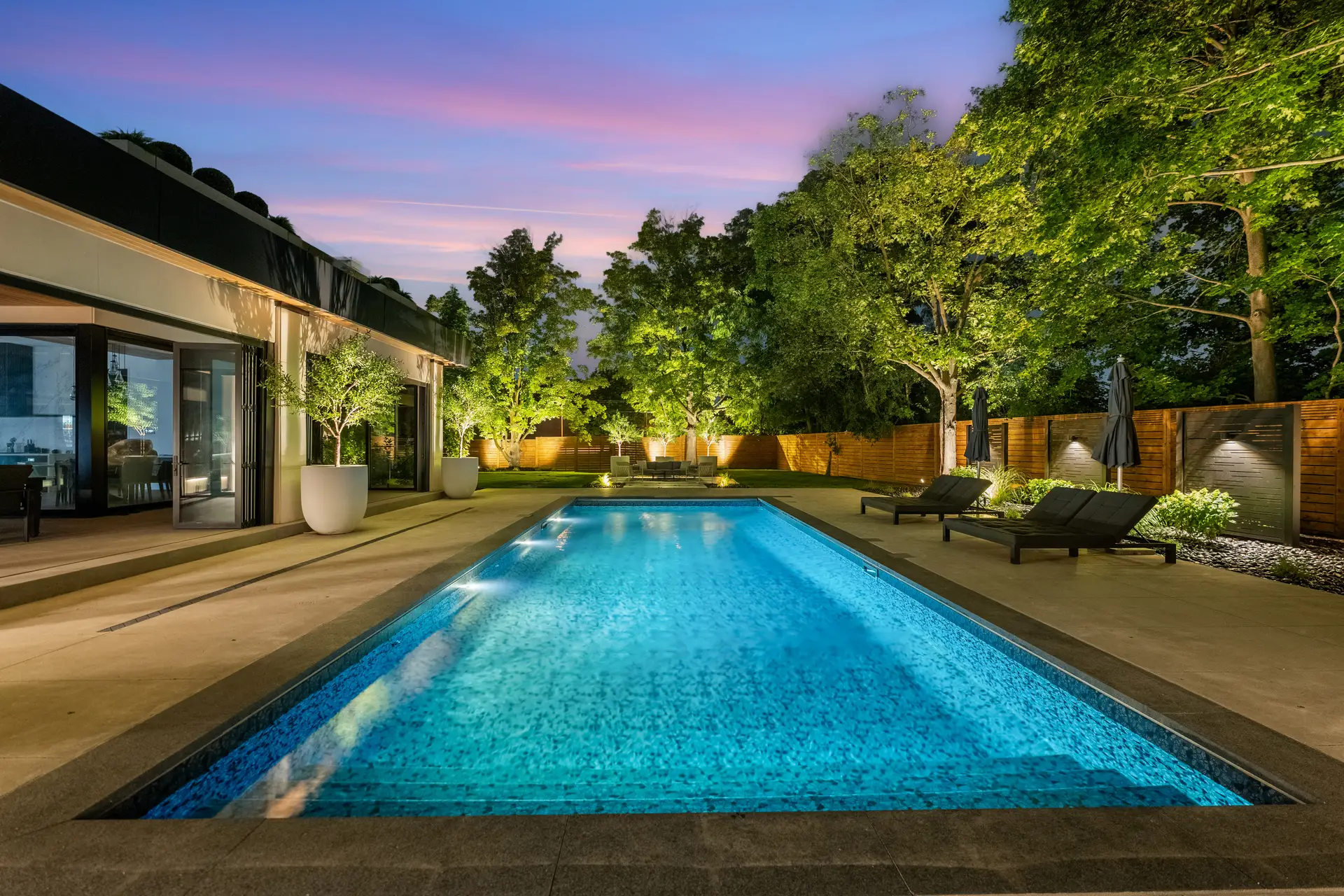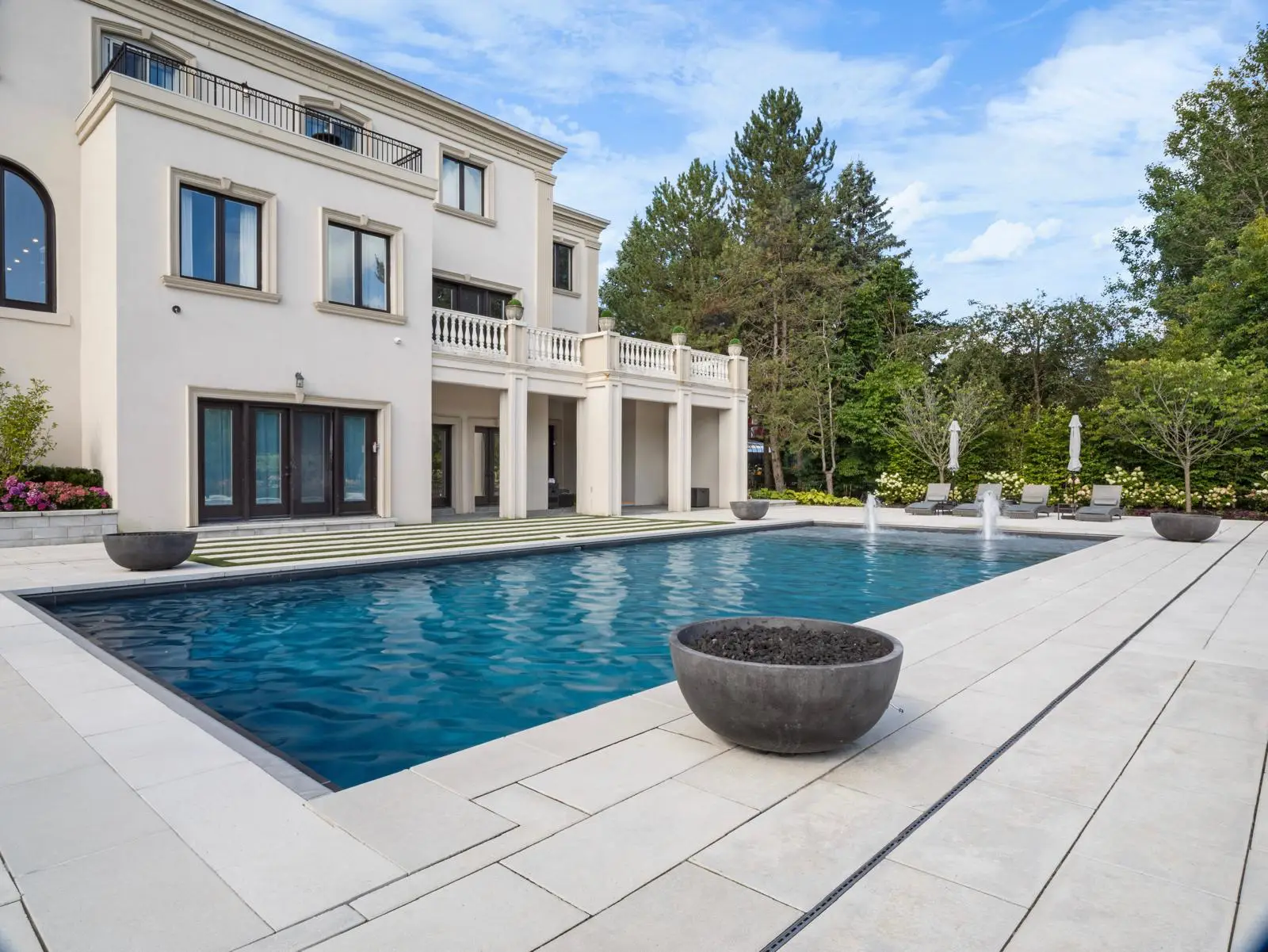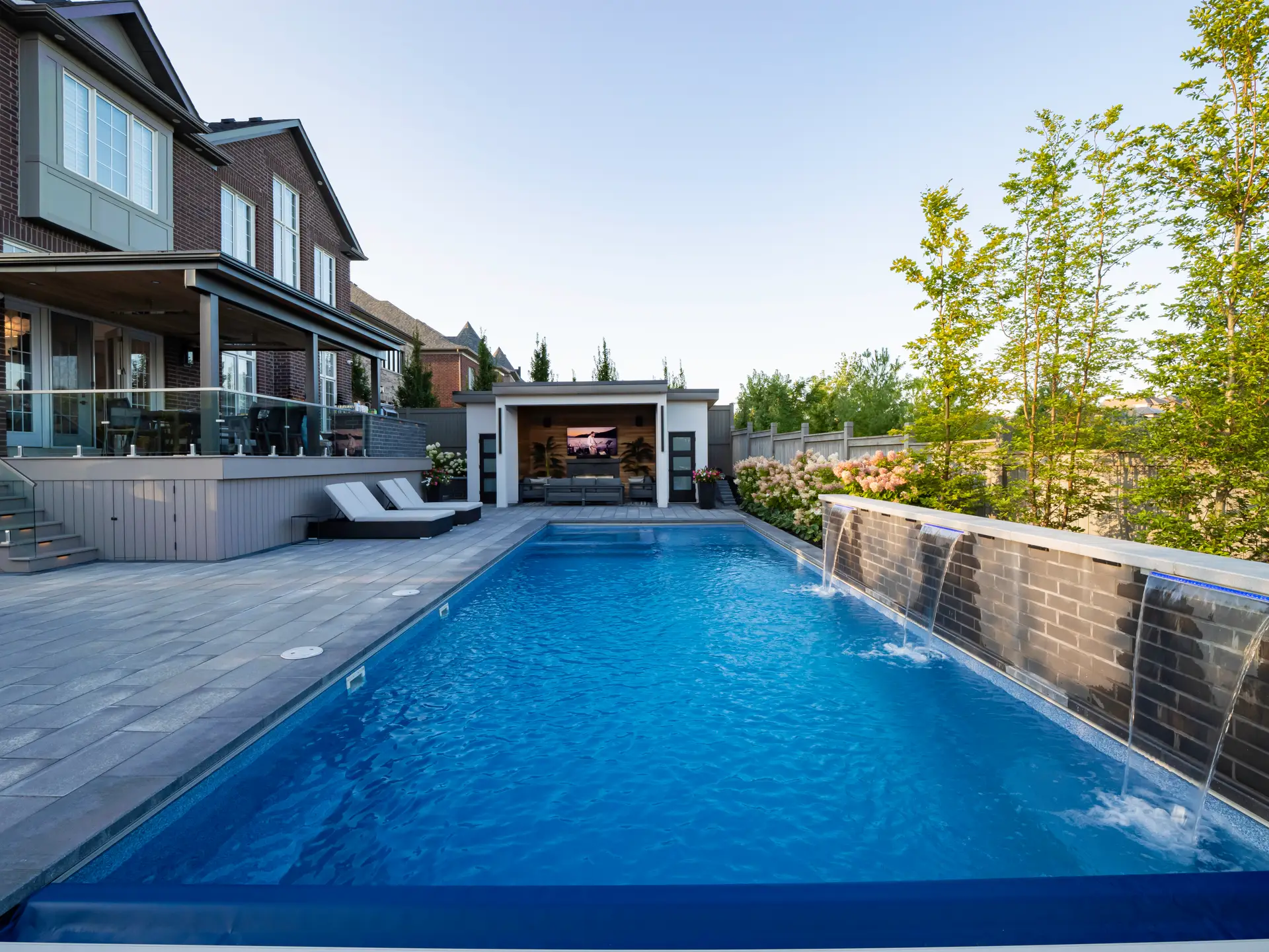

At Precision Landscaping, Salt Water Pools and chlorine pools are both designed and installed as part of fully coordinated outdoor environments. The right sanitizer choice depends on property conditions, ownership style, and how the pool integrates with the surrounding backyard.
This guide explains how saltwater and chlorine systems actually work, what each one costs, and how they perform through Ontario's full range of conditions so homeowners can plan Pool Installation with confidence.
Quick Comparison
| Factor | Saltwater Pool | Chlorine Pool |
|---|---|---|
| Sanitizer source | Chlorine generated on site from dissolved salt by an electrolytic cell | Chlorine added directly as tablets, liquid, or granular products |
| Upfront equipment cost | Higher - $2,000 - $3,500 for the salt system | Lower - $130 - $330 for feeder hardware |
| Annual chemical spend | Lower - salt systems generally reduce annual sanitizer costs, though savings vary by pool size, cover use, and service model | Higher - conventional chlorine typically requires more ongoing chemical spending |
| Swimmer comfort | Softer, gentler water with fewer skin and eye irritation issues | Chemical spikes more common with manual dosing schedules |
| Automation integration | Excellent native integration with leading pool automation platforms | Good with ORP controllers, requires more manual integration |
| Material sensitivity | Requires salt-compatible materials around the pool | Lower salt-related exposure risk |
| Cold-water operation | Cell output drops below approximately 10 - 15 degrees Celsius depending on manufacturer - manual dosing may be needed in spring and fall | No temperature-related cutoff |
| Best fit | New builds with automation, compatible materials, and design-led coordination | Simpler budgets or retrofits with older metals and sensitive stone |
How a Saltwater Pool Works
A saltwater pool is not chlorine-free. The difference is how the chlorine gets into the water. A salt chlorine generator converts dissolved salt into free chlorine through electrolysis. The homeowner does not handle chemical products during normal operation.
The system adds a relatively low level of dissolved salt to the pool water, typically 3,000 - 3,500 ppm. The water passes through an electrolytic cell on the return line, where a low-voltage charge converts the salt into sanitizer. The salt is continuously recycled.
Key operating details for homeowners:
- The cell only runs when the pump is on and adequate flow is present
- The homeowner sets an output percentage and the system generates sanitizer automatically
- Production drops or stops in cold water, typically around 10 - 15 degrees Celsius depending on manufacturer and model, directly affecting Ontario spring and fall operation
- The cell should be inspected periodically according to manufacturer recommendations for calcium scale buildup
- Salt systems integrate naturally with leading pool automation platforms
Precision Landscaping coordinates salt system sizing during Pool Installation so the generator, plumbing, and electrical are all matched to the pool volume and equipment pad from day one.
How a Conventional Chlorine System Works
A conventional pool sanitizes the water by adding chlorine directly through stabilized tablets, liquid dosing, or shock products. A tablet feeder on the plumbing loop dispenses sanitizer automatically when the pump runs.
Conventional dosing provides simpler equipment with more regular chemical handling:
- ORP and pH monitoring for automated chemistry tracking
- Liquid-feed tanks for hands-free dosing
- Automation control for remote scheduling and alerts
Free chlorine should be maintained in the 1 - 3 ppm range and pH in the 7.2 - 7.8 range in both systems.
Why Saltwater Is Common in New Builds
Saltwater systems are frequently specified in new Ontario pool construction. Several practical factors contribute to that trend:
- Softer, gentler water that reduces skin irritation, red eyes, and brittle hair
- Saltwater often delivers lower routine chemical costs compared to manually chlorinated pools, though actual savings vary by pool size and usage
- More consistent water quality with fewer chemical spikes
- Stronger automation integration for app control, scheduling, and remote monitoring
- Environmentally conscious - fewer chemical products purchased, stored, and handled
When a salt system is integrated early through Pool Design and coordinated with surrounding elements during Landscape Design, it performs more reliably than a retrofit added after construction.
Ontario-Specific Ownership Considerations
This is where the comparison matters most. The right system is shaped by cold-water startup, freeze-thaw cycling, cover strategy, and municipal discharge rules.
Cold-Water Behaviour and Shoulder Seasons
Salt cells stop producing sanitizer when water temperature drops below approximately 10 to 15 degrees Celsius, depending on manufacturer and model. In Ontario, that means spring opening and fall closing often require manual dosing support even on a salt system. This does not make salt a poor choice — it operates most effectively during the warm season, and manual dosing provides backup at the cold edges. A properly planned Pool Landscaping project accounts for this in the seasonal maintenance schedule.
pH Management
Salt systems tend to cause pH to drift upward more quickly because of the electrolysis process:
- Salt pools may need muriatic acid or other pH adjustment more frequently to keep pH in the 7.2 - 7.6 range
- Conventional pools experience pH drift too, but the rate is typically slower
- pH management is a maintenance rhythm difference, not a system flaw
- This should be factored into the ownership plan for any salt system
Covers and Heating Extend the Season More Than Sanitizer Choice
If the goal is swimming longer in Ontario, the first answer is a cover and heating system. Energy efficiency authorities, including Natural Resources Canada, identify covering the pool as one of the most effective ways to reduce heating costs, with widely reported savings of 50% - 70%. For a full breakdown of cover types and pricing, see Pool Covers Cost.
What actually extends the Ontario swimming season:
- A quality safety or thermal cover used consistently
- A properly sized heater matched to pool volume
- A variable-speed pump running efficient circulation schedules
- Disciplined cover routine during shoulder months
- Fire Features positioned around the pool for evening comfort
A salt system paired with these elements performs well as an integrated package. Variable-speed pumps, covers, and automation typically have a greater impact on operating costs than sanitizer choice alone. Precision Landscaping coordinates cover, heat, and sanitation together during Pool Design so every component supports the others.
Winterization
Winterization requires additional steps for salt systems. All major pool equipment manufacturers recommend protecting the electrolytic cell from freezing:
- Most manufacturers recommend cell removal and dry storage during winterization
- Flow and temperature sensors should also be removed and stored
- The cell should be drained and stored indoors during the off-season
Salt does not make closing impractical. It adds one additional component that must be protected during every closing and recommissioned during every opening.
Discharge Rules
Discharge rules vary by Ontario municipality:
- Toronto - chlorine-pool water may go to the storm sewer if dechlorinated first
- Toronto - saltwater cannot go to the storm sewer because of chloride content
- Windsor - saltwater must go to the sanitary sewer or an approved hauler
- Other municipalities publish similarly restrictive guidance
Homeowners should verify current municipal requirements before draining or backwashing a pool.
Cost and Lifecycle
In a real Ontario backyard project, sanitation choice is important but usually not the biggest cost driver. Pool Installation costs for fiberglass typically run $90,000 - $120,000+ depending on size and scope. For a complete pricing breakdown by pool type, see Pool Cost.
Equipment and Installation
Adding a saltwater system typically increases total pool costs by $2,000 - $3,500, depending on pool size, system capacity, and installation requirements.
Conventional chlorine equipment is significantly less expensive upfront. A basic in-line tablet feeder runs about $130 - $330. The trade-off is higher recurring chemical spend.
Key cost factors:
- Conventional chlorine chemicals - typically higher annual spend, varying by pool size and service model
- Salt system chemicals - typically lower annual spend after initial salt load
- Ranges depend on pool size, sun exposure, cover use, and service frequency
- Salt cells typically last 5 - 7 years based on system quality, usage, and water balance
- Cell replacement costs range from $700 - $1,500
- Cell replacement is a planned lifecycle cost that conventional chlorine avoids
| Cost Category | Saltwater | Chlorine |
|---|---|---|
| Upfront sanitizer equipment | $2,000 - $3,500 depending on pool size and system capacity | $130 - $330 for feeder hardware |
| Annual chemical spend | Typically lower - savings vary by pool size, cover use, and service frequency | Typically higher - ongoing chemical costs depend on pool size and usage |
| Major replacement cycle | Cell replacement every 5 - 7 years at $700 - $1,500 | No equivalent replacement event |
| Economic fit | Stronger when automation convenience and swimmer comfort are priorities | Stronger when upfront capital restraint matters more than operating cost |
Materials, Corrosion, and Compatibility
Salt systems are compatible with all major pool types. Fiberglass Pools from both Latham and Pentarm are designed to work with saltwater systems. Concrete Pools and Steel-Vinyl Pools are also compatible, though concrete may require more attention to finish selection and steel-vinyl liners should be confirmed for salt compatibility. Material compatibility should be evaluated during the design phase rather than after construction, particularly when natural stone, water features, or custom metalwork are part of the project.
Stone and Hardscaping
Salt adds chloride exposure to surrounding surfaces, and chloride is a real material stressor in Ontario's freeze-thaw conditions:
- Dense concrete pavers and porcelain surfaces handle salt exposure well
- Porous stones like limestone, travertine, and standard sandstone are more vulnerable
- Pitting, flaking, and surface deterioration increase with salt splash and freeze-thaw cycling
For Hardscaping around saltwater pools, material selection should account for absorption, density, and environmental performance:
- Interlocking pavers and Interlocking Slabs designed for pool environments are strong choices
- Natural Stone performs well but requires careful selection, sealing, and maintenance planning
Metals and Equipment
Chloride exposure increases corrosion pressure on metals:
- Lower-grade stainless steel, aluminum, and mixed metal components are more vulnerable
- Pool handrails, anchors, fasteners, and equipment-pad components should be specified for chloride resistance
- Poor water balance causes more corrosion issues than salt alone
Heater compatibility matters in both systems:
- The heater manufacturer's manual should confirm compatibility with salt-system pools when water chemistry is in range
- The salt chlorinator must be installed downstream with a check valve
- Chlorine tablets should not be placed in skimmers - concentrated chlorine can backflow and corrode the heat exchanger
Water Features
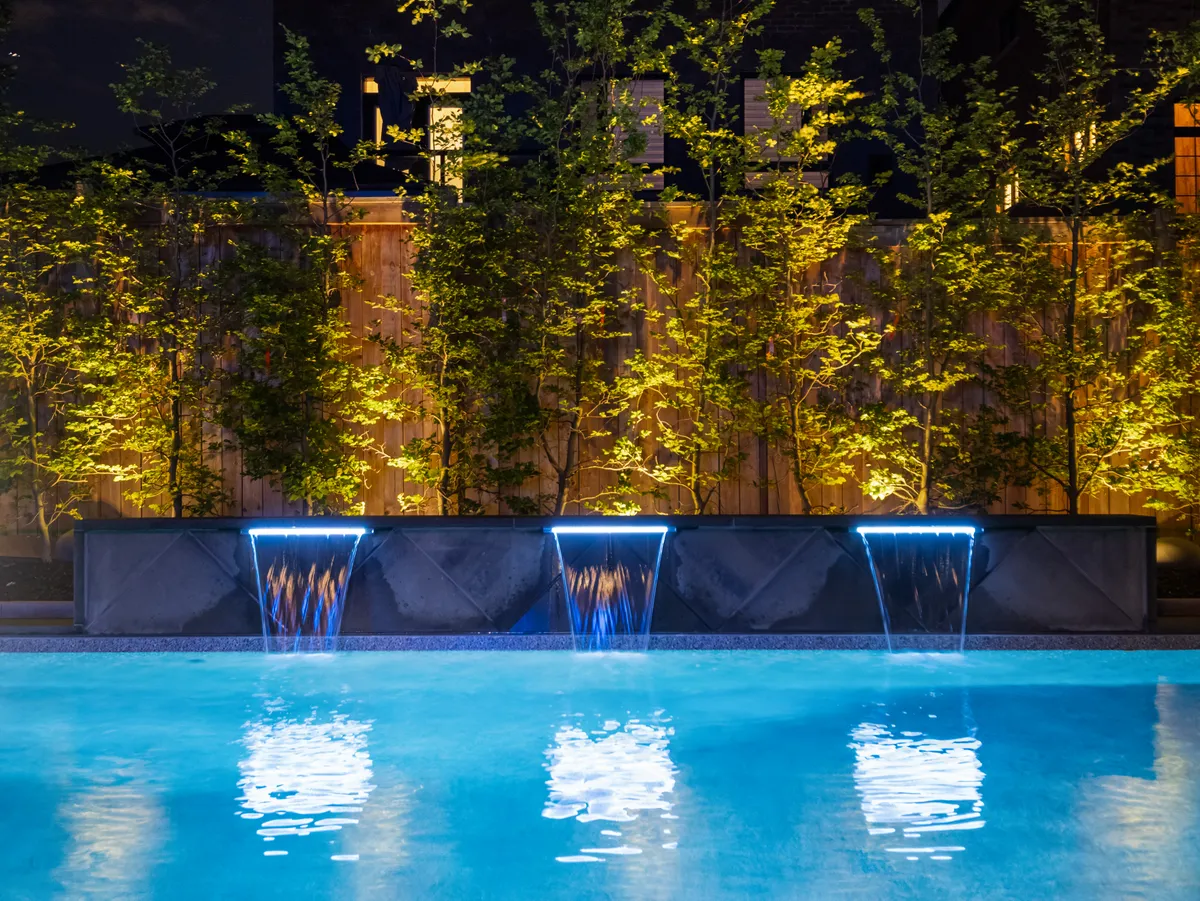
Water Features present additional considerations in a salt environment:
- Waterfalls, spillovers, and raised spas increase evaporation
- Evaporation can leave salt deposits on adjacent finishes
- Heavy aeration, sheer descents, and spillways require more careful finish selection
- Salt systems reward careful splash-zone drainage planning
Which System Fits Your Backyard
The right sanitizer depends on the full project scope. Neither system is universally better — each fits different priorities.
| Homeowner Profile | System Fit |
|---|---|
| New-build homeowner wanting app control and low routine handling | Saltwater. Strong automation and convenience fit when the pad and materials are specified correctly. |
| Cost-sensitive owner who values simple equipment | Chlorine is viable. Lower upfront hardware cost and simpler field service path. |
| Frequent swimmers seeking softer-feeling water | Saltwater. Continuously generated chlorine feels gentler to most swimmers. |
| Cottage or seasonal owner using the pool mainly in peak summer | Either system can work, depending on maintenance preferences and access to service support. Chlorine provides simpler shoulder-season operation. |
| Design-led backyard with upgraded paving, cover, heat, Lighting, and coordinated pad | Saltwater. Performs well when the project is detailed correctly with compatible materials, Fire Features for evening comfort, and Cabanas for poolside shelter. |
How Precision Coordinates Pool Sanitation
Precision Landscaping designs sanitation into the full outdoor system from day one:
- Pool Design establishes the equipment pad, shell type, and feature layout
- Pool Installation coordinates build sequencing, permit path, and trade coordination
- Pool Landscaping handles coping, deck material, drainage, and planting selection
- Deck Installation integrates composite, PVC, or wood surfaces adjacent to the pool environment
- Landscape Design addresses circulation, privacy, sun exposure, and amenity planning
- Hardscaping delivers the paver, coping, wall, and drainage package
Precision Landscaping designs and installs both saltwater and chlorine pool systems across Ontario. The sanitizer choice performs strongest when it is made inside a complete design brief from day one.
Frequently Asked Questions About Saltwater and Chlorine Pools in Ontario
These are the most common questions homeowners ask when choosing between saltwater and chlorine pool systems in Ontario.
-
No. A saltwater pool generates chlorine from dissolved salt through electrolysis. The water is still sanitized by chlorine, and the pool still requires regular water chemistry management including pH, free chlorine, and stabilizer levels.
-
Salt systems add $2,000 - $3,500 upfront and generally reduce annual chemical spend compared to conventional chlorine. Conventional chlorine costs less upfront ($130 - $330 for feeder hardware) but typically requires higher ongoing chemical investment. Cell replacement every 5 - 7 years at $700 - $1,500 is the main lifecycle variable for salt. Actual savings depend on pool size, cover use, and service frequency.
-
In most cases, yes. A pool can be converted by testing the water, adding the correct amount of salt, and installing a salt chlorination system. Electrical capacity, plumbing layout, heater compatibility, and surrounding materials should be reviewed as part of a professional assessment.
-
Not when the system is properly designed and maintained. Using salt-compatible materials and managing drainage protects coping, stonework, and nearby plantings. Porous stones like limestone and travertine require more careful specification in freeze-thaw conditions.
-
Salt cells stop producing chlorine when water temperature drops below approximately 10 to 15 degrees Celsius, depending on manufacturer and model. During Ontario's spring and fall shoulder seasons, manual chlorine may be needed. At closing, the cell must be removed or protected from freezing.
-
Usually, no. Ontario municipalities regulate the pool, enclosure, site plan, and inspections rather than distinguishing by sanitizer type. The main difference is discharge rules - saltwater typically cannot be drained to the storm sewer, while dechlorinated pool water may be permitted for storm-sewer discharge in some municipalities.
-
Both systems work well in Ontario when properly designed. Salt provides excellent warm-season automation and softer-feeling water. Chlorine provides simpler equipment and lower upfront cost. For extending the swimming season, a cover and heating system matter far more than the sanitizer choice.
Choose the Right Pool System for Your Property
A great pool system does not start with the sanitizer. It starts with a complete design brief. Precision Landscaping designs and installs both saltwater and chlorine pool systems as part of fully integrated outdoor environments. Through Pool Design, Pool Installation, and complete project coordination, every component is matched to the property from the start. Contact Precision Landscaping for a design consultation.