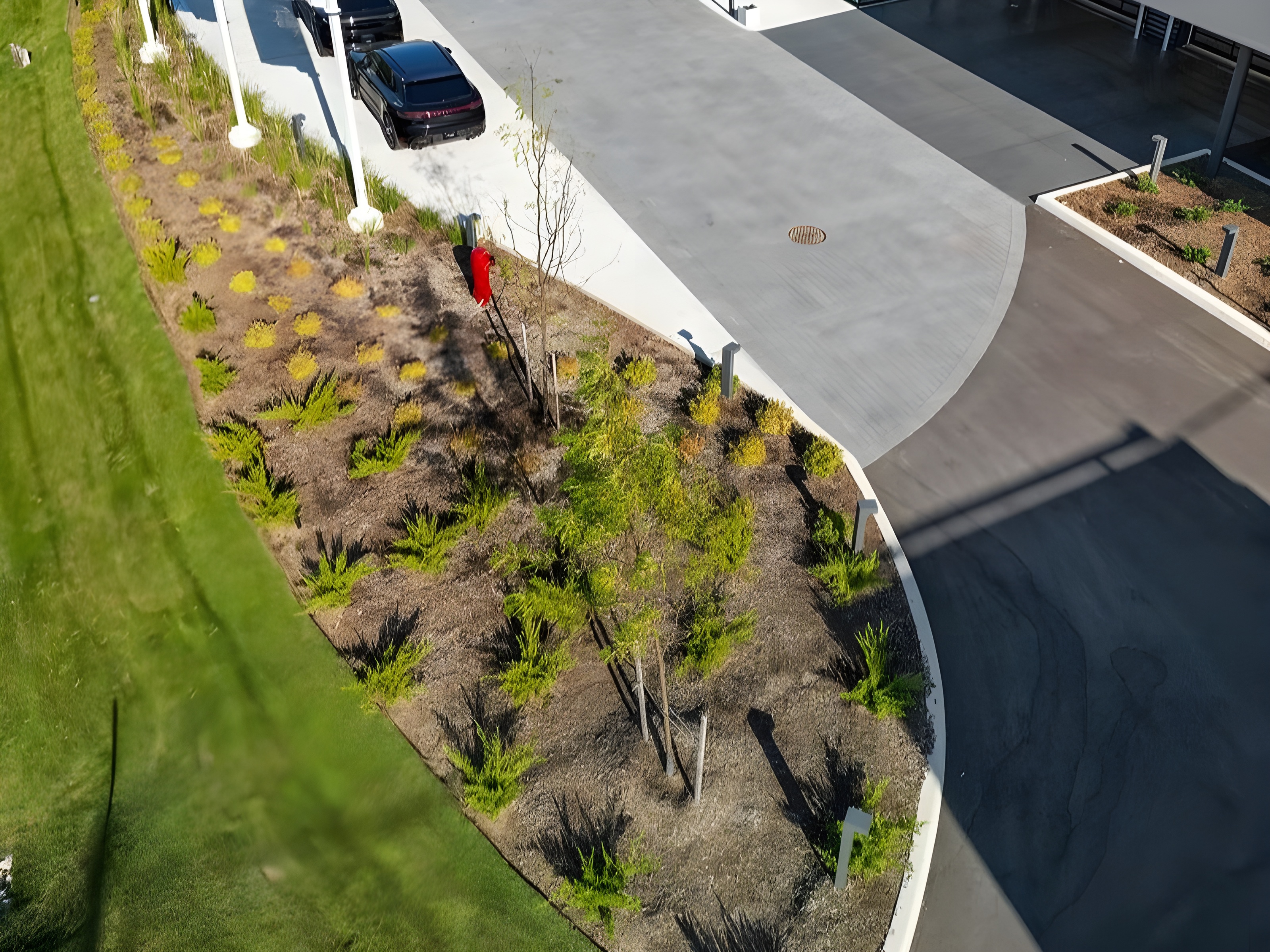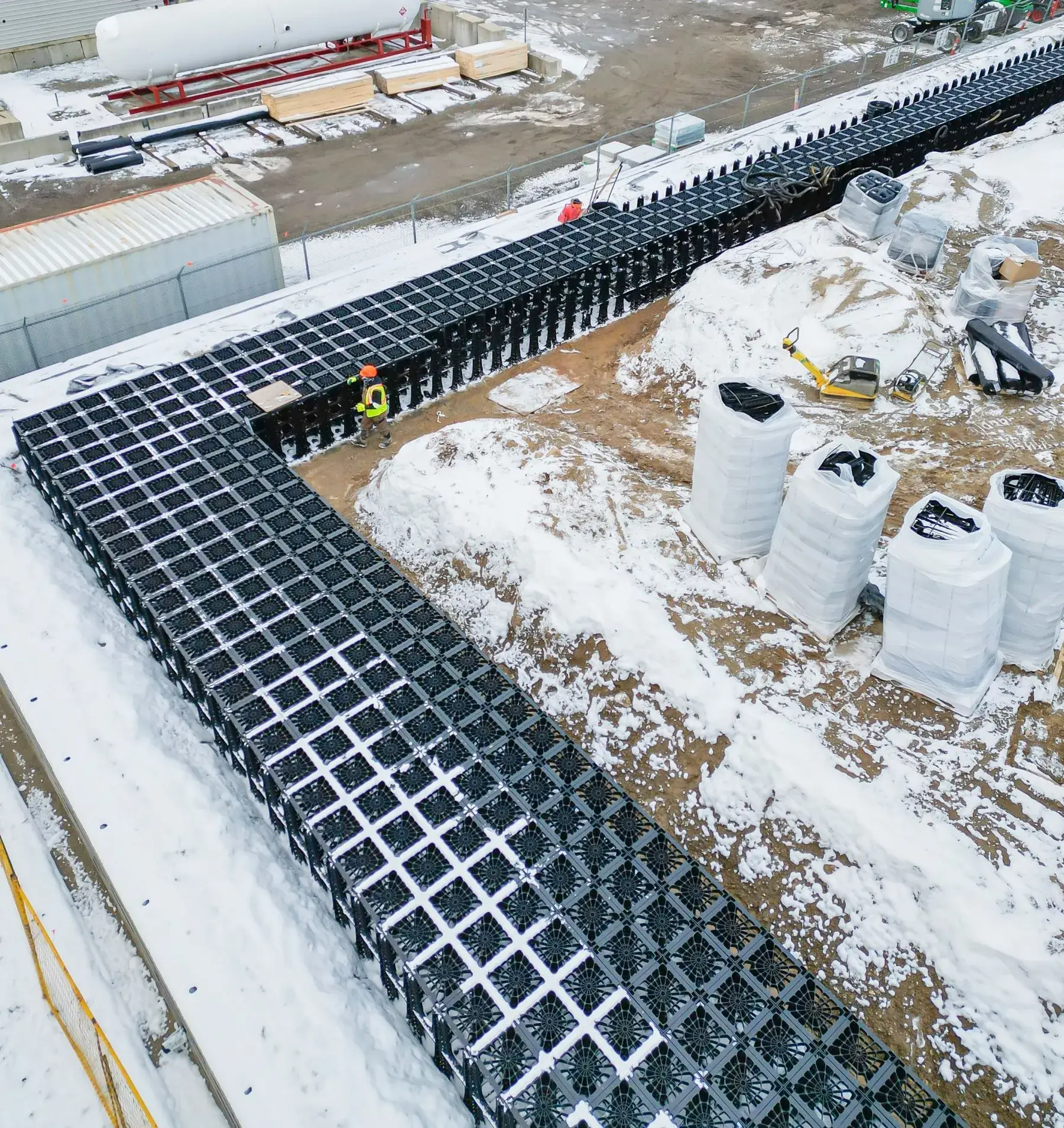

Commercial soil cell systems are a core component of modern urban landscape infrastructure. In
high-density environments where space is limited and surface loads are high, traditional tree
planting methods often fail to support long-term tree health or protect surrounding hardscape.
Soil cell systems address this challenge by creating engineered, load-bearing soil volumes
beneath paved surfaces, allowing trees to thrive without compromising infrastructure.
Precision Landscaping installs commercial soil cell systems for streetscapes, plazas, parking
areas, and mixed-use developments across Toronto and the GTA. Our
team
works closely with civil
engineers, landscape architects, and municipal stakeholders to ensure each system is
installed
accurately, aligned with engineered drawings, and compliant with project specifications. Our
experience includes complex soil cell installations beneath high-traffic plazas, parking
areas,
and integrated hardscape systems where root health, load performance, and long-term
infrastructure protection must work together.
A commercial soil cell system is a modular structural framework installed below paved or hardscape surfaces to support surface loads while preserving uncompacted soil for tree root growth. Unlike traditional tree pits that confine roots to small, compacted volumes, soil cells create a continuous underground soil environment beneath sidewalks, roads, and plazas.
In commercial and municipal applications, soil cell systems improve tree longevity, enhance stormwater infiltration, and reduce common infrastructure failures such as sidewalk heaving, cracked paving, and premature surface wear. They are widely specified to meet urban forestry standards, sustainability targets, and municipal design requirements in dense developments.
Urban trees are installed in demanding conditions while being expected to perform for decades without damaging surrounding infrastructure. When root zones are poorly managed, the result is declining trees, increased maintenance liability, and premature hardscape failure.
Soil cell systems resolve these conflicts at an engineering level, allowing trees and infrastructure to perform together rather than compete for space.
Soil cell systems are used across commercial and municipal environments where tree health, durability, and infrastructure protection are critical.
Supports continuous tree growth while protecting curbs, roads, and underground services.
Enables healthy tree canopies in high-traffic pedestrian environments without compromising accessibility.
Allows trees to thrive beneath load-bearing pavements designed for vehicle circulation and durability.
Integrates urban forestry while supporting municipal engineering and planning requirements.
Supports long-term landscape performance across shared outdoor spaces and walkways.
The scope of a commercial soil cell system is shaped by site conditions, engineering requirements, and municipal standards rather than a fixed template. Early clarity helps streamline coordination and approvals.
System scope is driven by planting zone size, targeted soil volume, and surface load demands, influencing layout complexity and sequencing.
Existing utilities, drainage layers, and subgrade stability affect placement depth, layout, and installation sequencing.
Projects must meet defined soil volume targets, load ratings, approved systems, and accessibility requirements set by municipal authorities.
When combined, these issues shorten tree lifespan and increase long-term maintenance costs.
Soil cell systems significantly improve both tree performance and infrastructure durability compared to traditional planting methods, especially in high-traffic commercial and municipal environments.
| Performance Factor | Traditional Tree Pit | Soil Cell System |
|---|---|---|
| Available Soil Volume | Severely limited | Maximized beneath hardscape |
| Soil Compaction | High | Low (protected root zone) |
| Root Growth | Shallow and restricted | Deep, natural expansion |
| Surface Heaving Risk | High | Minimal |
| Tree Lifespan | Shortened | Significantly extended |
| Infrastructure Protection | Poor | Engineered load separation |
| Long-Term Maintenance | Frequent repairs | Reduced intervention |
| Municipal Compliance | Often minimum standard | Meets or exceeds urban forestry standards |
| Outcome | Impact on Commercial & Municipal Sites |
|---|---|
| Healthier Urban Trees | Stronger canopies, longer service life |
| Reduced Hardscape Damage | Fewer cracked sidewalks and curbs |
| Improved Stormwater Performance | Better infiltration and soil aeration |
| Lower Lifecycle Costs | Less replanting and infrastructure repair |
| Enhanced Streetscape Durability | More consistent long-term appearance |
| Stronger Municipal Alignment | Supports common urban forestry targets |
Soil cell systems function as part of a broader site strategy coordinated alongside grading, utilities, paving, accessibility, and architectural elements. Precision Landscaping plans soil cells as an integrated scope of work to support long-term landscape and infrastructure performance.
Our team coordinates soil cell layouts with civil drawings to:
Soil cell systems only perform as intended when installation accuracy, engineered coordination, and sequencing are executed without compromise. Precision Landscaping treats soil cells as a technical, load-bearing scope that must align precisely with civil drawings, municipal standards, and adjacent hardscape construction.
We coordinate directly with civil engineers, landscape architects, and municipalities to ensure systems are installed exactly as designed.
All installations are completed by our in-house commercial crews, ensuring consistent quality, safety, and accountability on complex sites.
Soil cell installation is treated as a coordinated, engineered scope aligned with site logistics and construction schedules.
Review drawings, utilities, load requirements, and spatial constraints before mobilization.
Verify layout, elevations, and clearances on-site against approved plans.
Install soil cells, infill soil, and integrate with curbs, paving, and finishes.
Confirm compliance, coordinate inspections, and complete documentation.
Soil cell systems operate beneath load-bearing, high-traffic environments where safety and compliance are critical. Our approach is designed to reduce long-term liability, protect asset value, and support smooth inspections and approvals on commercial and municipal projects.
Installations meet engineered load requirements, accessibility standards, and utility clearances.
All work is completed under full WSIB coverage and OHSA protocols, with coordination for inspections and approvals.
Below are answers to common questions we receive from municipalities, consultants, and commercial clients planning soil cell installations.
Whether you re designing a streetscape, plaza, parking area, or large-scale urban development, Precision
Landscaping provides the coordination and installation expertise required for accurate, compliant soil
cell systems.
LET'S BUILD YOUR
Ready to transform your outdoor space? Whether you are looking for a stunning new landscape, a custom pool or outdoor construction, our team is here to help. Fill out the form below, and one of our landscaping specialists will be in touch to schedule your free consultation!

TESTIMONIALS