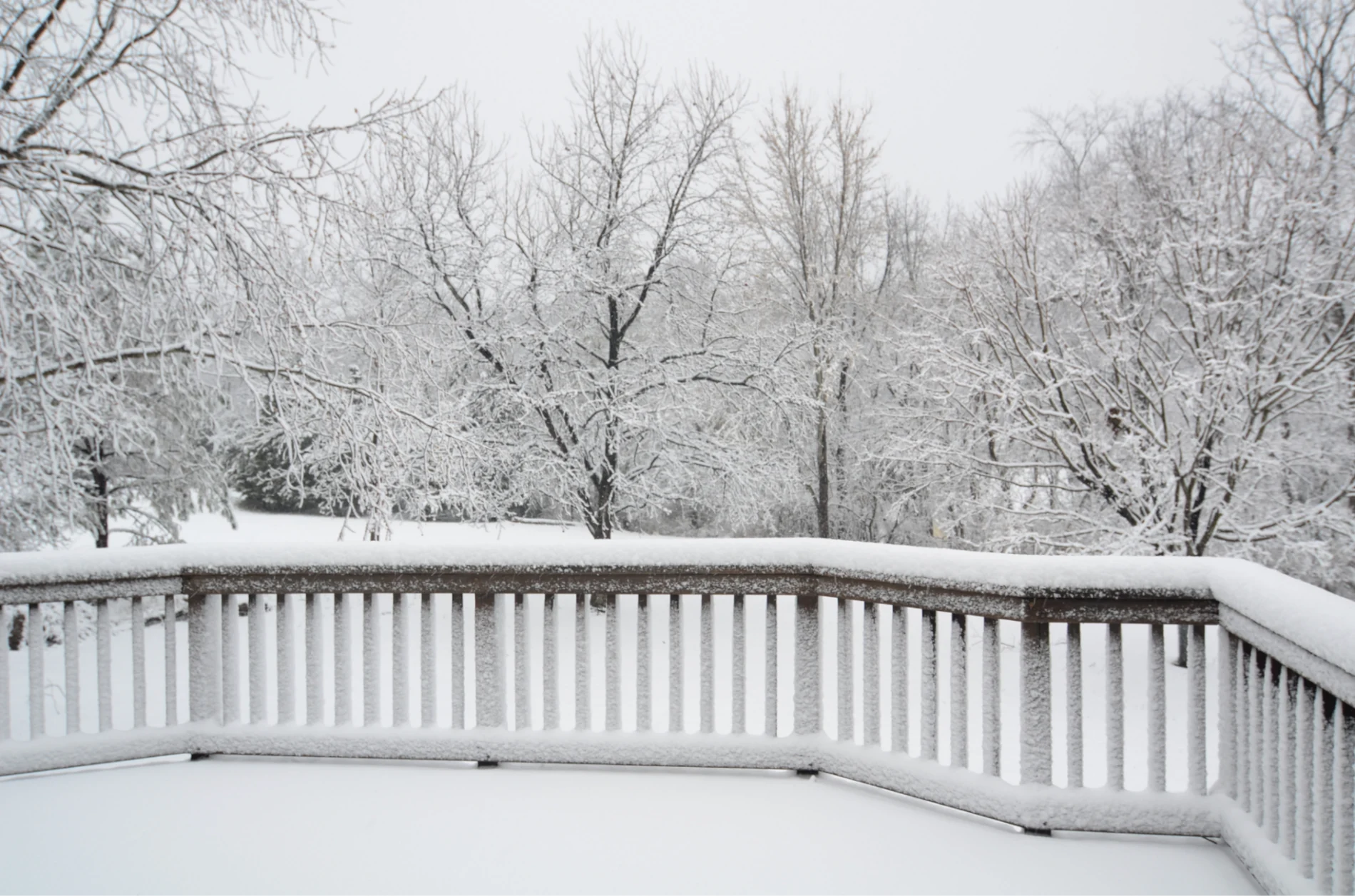

Ask a homeowner what they want from a new backyard and the answers come fast: a patio, a pool, a fire feature, better lighting. Almost nobody says, "and a place to put the snow."
Then January arrives. Toronto gets around 100 cm of snow in an average winter, and a good share of it lands on your driveway, walkways and steps, where it has to be moved. If the design never answered the question of where it goes, the snow answers it for you. It ends up on the flower bed you just planted, against the fence, on top of the drain or right where you need to walk.
Snow storage is one of the most overlooked questions in outdoor design, and one of the most useful to get right. This guide looks at how snow piles, driveway and walkway layout, drainage, entrances and planting choices all fit together, why narrow Toronto lots make every decision harder, and where a heated driveway or snowmelt system can take the whole problem off the table.
The Snow Math Nobody Does Before Building
Take a modest driveway, 3 m wide and 12 m long. After a 30 cm storm, that is roughly 11 cubic metres of snow sitting on the surface, before you count the walkway, the front steps or the patio path to the back door. That is one storm. Southern Ontario often delivers several in a row, with a thaw and a refreeze in between.
Every shovelful or snowblower pass moves that snow to the edge of the surface, and the edge is where problems start. The edge of your driveway is usually the edge of your lawn, your garden bed, your fence line or your neighbour's property. Without a plan, the pile goes wherever is easiest on the day, and the easiest spot is rarely the best one for your landscape.
A good design starts by treating snow as a given, the same way it treats water, sun and access. Once you know how much snow you will have and where it will realistically go, the rest of the layout gets easier.
What Snow Piles Damage (and How Design Prevents It)
Snow piles cause damage in predictable ways. Weight breaks branches and bends fences. Repeated scraping tears turf. Road salt and de-icers dissolve into meltwater and soak into the soil or spray onto foliage. And slow-melting piles keep the ground cold and saturated well into spring.
Here is where snow tends to end up on a typical property, and what design can do about it:
| Where the snow ends up | What goes wrong | Design fix |
|---|---|---|
| Lawn edge beside the driveway | Compacted soil, salt burn and turf torn up by shovels and plow blades | A flush hard edge or a durable border, with a tough planting strip or gravel band next to the surface |
| Garden beds and new plantings | Snapped branches, salt spray and cold, soggy soil in spring | Beds set outside the pile zone, with hardy plants where piling cannot be avoided |
| Fences and gates | Panels pushed out of line and gates frozen shut | Fences set back from pile zones and gates that swing clear of drifts |
| Drains, catch basins and downspout outlets | Meltwater with nowhere to go, then sheet ice overnight | Pile zones kept off drains, with channel drains at low points |
| Meters, hose bibs and utility access | Blocked access and shovel damage | Clear routes planned in, with pile-free zones around utilities |
| Steps and landings | Snow pushed onto stairs and meltwater refreezing on treads | Surfaces pitched away from steps, with textured finishes and, where practical, heating |
None of these fixes is complicated on its own. The trick is making them together, early, so the driveway, the beds and the drains are not competing for the same corner of the yard.
Narrow Toronto Lots: When There Is Nowhere to Put It
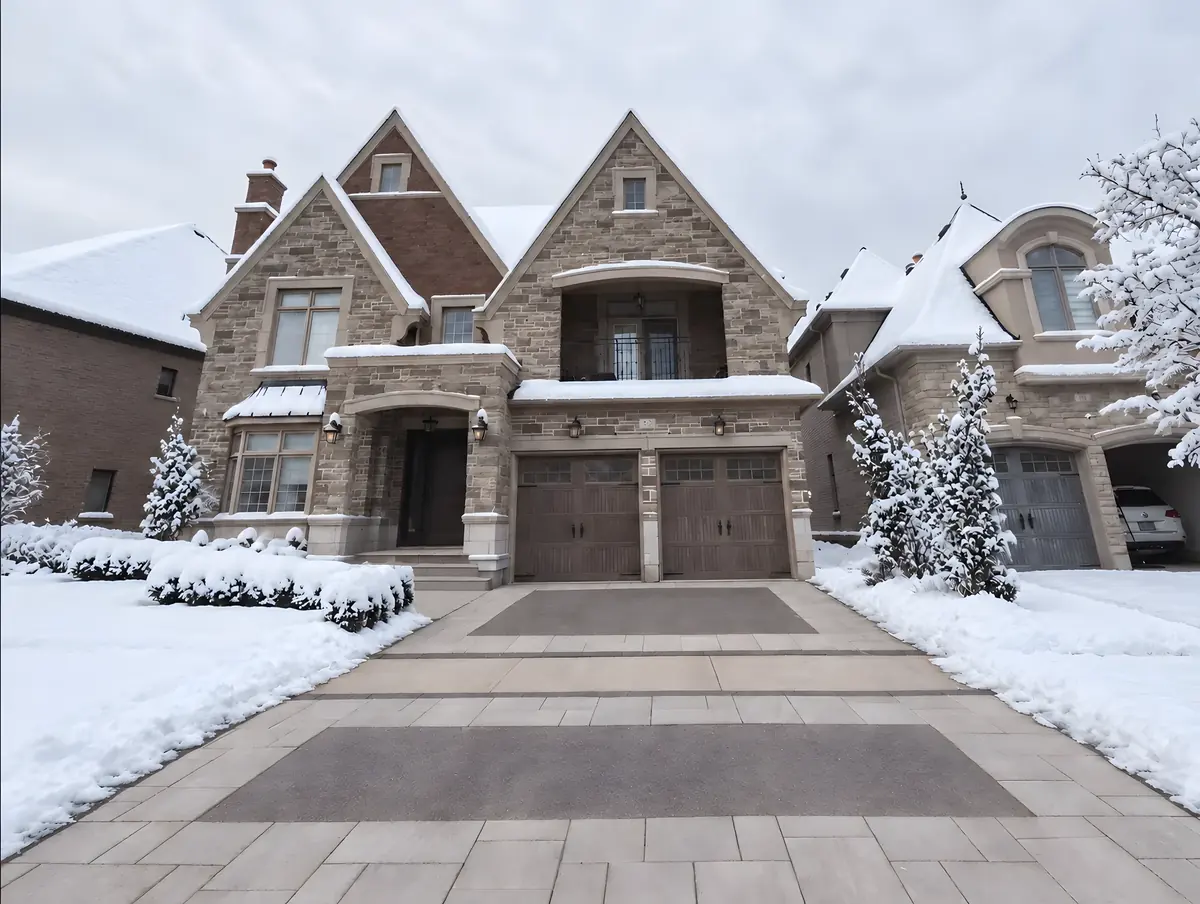
On a wide suburban lot, there is often a big lawn that can absorb a whole winter of piles. Many Toronto properties do not have that luxury. The driveway may run tight along the house, the side yard may be barely a metre wide, and the front garden may be one small strip between the walkway and the sidewalk. In older neighbourhoods across Etobicoke, North York and the rest of the city, there can be no empty corner at all.
Tight lots call for more deliberate design, not less. A few principles help.
Pick One Designated Pile Zone
Decide in the design stage where snow will go, and design everything else around that decision. The best pile zone sits where meltwater drains away from the house and hardscape, where it does not bury utilities or drains, and where there is some sun to help it melt. It can be a patch of lawn, a gravel band, or a bed planted with salt-tolerant perennials that look good in summer and shrug off the pile in winter.
Move Less Snow in the First Place
Every square metre of hard surface is a square metre of snow to clear. Driveways, walkways and patios should be sized for how they are used, not just for how they look on a drawing. A layout that shortens the walk from the driveway to the door, or avoids extra paved corners, gives you less to shovel and fewer places to put it.
Plan the Route the Snow Travels
Carrying snow from the front of the house to the backyard is only realistic if the route works. A 90 cm side gate with a tight turn is a poor path for a loaded shovel or a snowblower. If snow has to travel, the side access needs to be wide enough, level enough and free of steps and awkward corners.
Let the Surface Do the Work
On the tightest lots, the most practical answer is often to stop moving snow at all. A heated walkway, entrance and driveway melts snow in place, so there is nothing to pile and nowhere to store it. Electric heating mats are thin enough to suit narrow walkways and short driveways, which is why heated surfaces are a natural fit for compact urban properties. Our heated driveway work in Etobicoke is a good example of how this plays out on real city lots.
Driveway, Walkway and Entrance Layout: Small Decisions, Big Winter Effects
Most of what makes a property easy or miserable in winter is decided by layout, long before anyone picks a paver.
Slope and Pitch
Every surface should shed water gently and consistently, generally in the range of about 2 per cent, or roughly 2 cm of fall for every metre. Driveways should slope away from the garage and the house, toward a planned drain or a safe discharge point. A surface that is too flat holds water, and one that is too steep is uncomfortable to walk on and hard to clear.
Walkway Width and Shape
A path that feels fine in July can be a struggle in January. As a rule of thumb, a walkway of about 1.2 m (4 ft) is much easier to clear than a tight 90 cm path, especially if you use a snowblower. Long straight runs are easier to clear than winding paths with sharp corners, and the shape of the path should keep snow moving toward the pile zone rather than across steps or entrances.
Entrances, Landings and Steps
The front door is where snow, ice and daily life collide. A landing large enough to stand on while you open a storm door, steps with consistent risers and good traction, and railings where they are needed all make a difference. Meltwater should drain away from the door and the steps, never toward them. Landscape lighting that shows every step and slick patch matters just as much, because winter darkness arrives before dinner.
Gates and Side Access
Gates should open outward or have enough clearance for drifts, and the path through them should stay clear of pipes, meters and low branches. A gate that opens in July may not open through 30 cm of snow.
Meltwater: The Other Half of the Snow Question
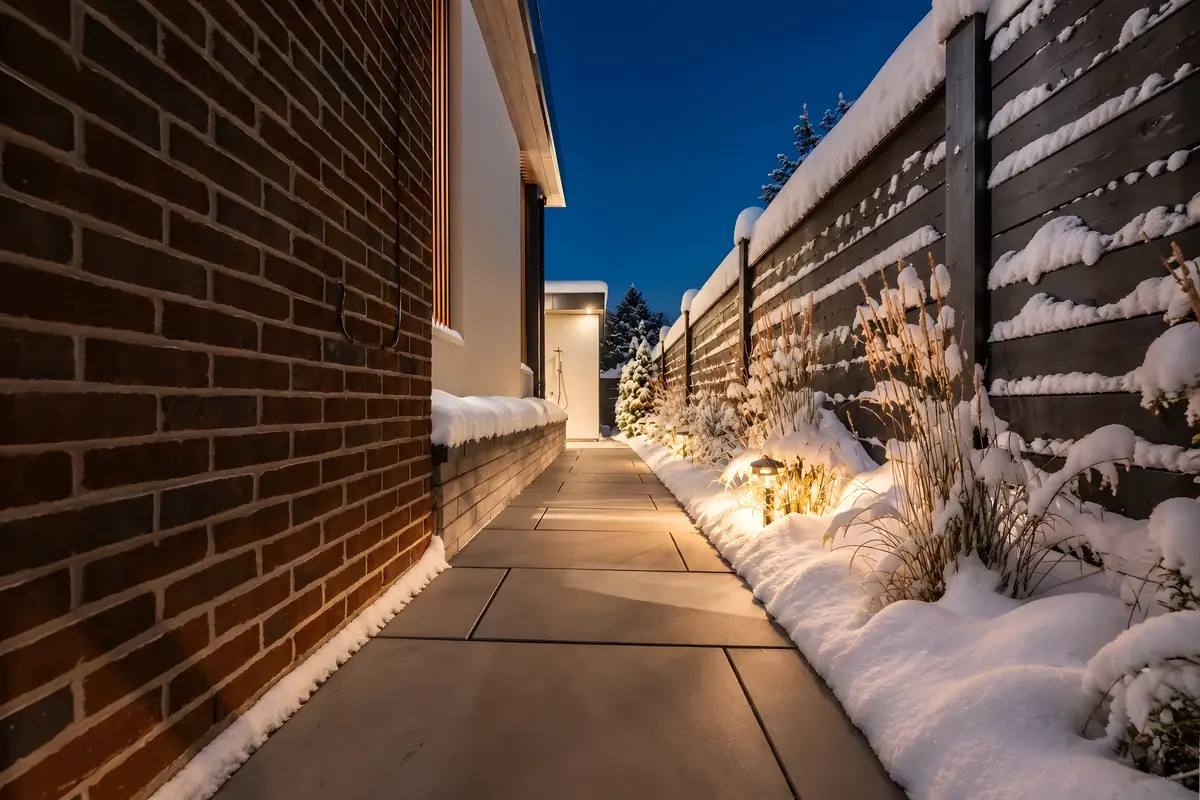
Snow does not disappear. It turns into water, and that water has to go somewhere. When it does not, it runs across a walkway or a driveway during a mild afternoon and refreezes into sheet ice by evening. That is how a safe surface at 2 p.m. becomes a hazard at 7 p.m.
Good drainage design handles this before it becomes a problem:
- Surfaces are pitched away from the house, the garage door and the entrance
- Channel drains sit across the bottom of sloped driveways and at the base of steps, where water collects
- Catch basins and buried drainage lines carry meltwater to a safe outlet, with pipe placed so it does not freeze and block
- Downspouts discharge away from walkways and driveways, not onto them
- Pile zones sit where melting snow drains away from the house and hardscape
The same drains that manage a March thaw also handle a July downpour, so this is design that works all year, not just in winter. For more on protecting your landscape through the cold months, see our top winter maintenance tips for your outdoor space.
Landscaping That Survives the Snow Pile
Good design does not mean keeping plants away from every possible snow pile. It means choosing the right plants for the right places.
Keep Delicate Plants Out of the Pile Zone
Japanese maples, boxwood, new plantings and anything with fragile branches belong away from where snow will be thrown or piled. Weight and salt exposure damage them faster than most homeowners realize. Planting beds in the gardens we design are set with snow in mind, so the most delicate plants sit where the snow does not.
Use Tough Plants Where Piling Is Unavoidable
Salt damage comes in two forms: salt spray that dries out foliage on the side facing the pavement, and salt in the soil that stops roots from taking up water. Plants that tolerate both are a smart choice next to the driveway and walkway. Commonly used options include:
- Evergreens such as eastern red cedar, mugo pine and blue spruce
- Perennials such as yarrow, daylily, sedum, coreopsis and blanket flower
- Ornamental grasses that flatten under snow and spring back in April
Protect the Edges
A low stone border, a flush paver edge or a strip of gravel between the driveway and the lawn keeps plow blades and shovels from tearing up turf. It also gives salt-laden meltwater a place to drain before it reaches the roots. A well-built interlocking border can do the job cleanly and look good all year.
Reduce the Salt Itself
The most effective way to protect plants from road salt is to use less of it. Surfaces designed to drain well, textured for traction and, where it makes sense, heated to stay clear all reduce how much de-icer you spread. That is better for your plants, your pavers and the groundwater.
The Design Fix That Removes the Question: Snowmelt Systems
Everything above helps you manage snow. A snowmelt system helps you skip the management. Instead of clearing, piling and hoping, you let the surface melt the snow where it falls. For many properties, particularly tight ones, this is the cleanest answer to the question this blog started with. Snow that melts in place does not need a pile zone, does not carry salt into your beds and does not need to be carried anywhere.
How Heated Driveways Work
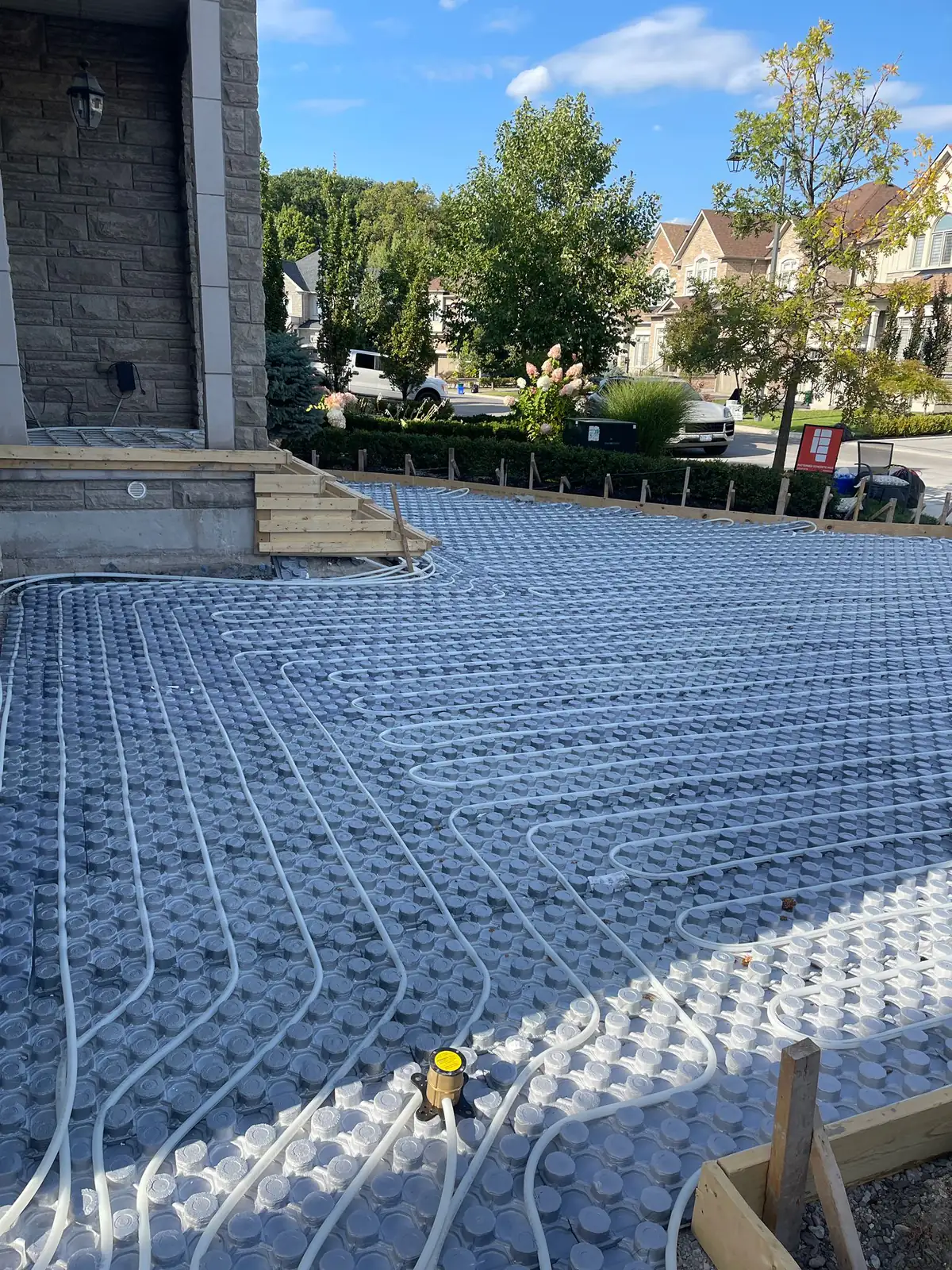
A heated driveway uses either electric cables or mats, or hydronic tubing carrying heated glycol, installed beneath the finished surface. Sensors detect temperature and moisture, so the system runs only when conditions call for it and stays off the rest of the time.
Electric or Hydronic: Which Fits Your Property?
Electric systems are typically well suited to walkways, steps, entrances and shorter or mid-sized driveways. They respond quickly and are the more retrofit-friendly option, which is helpful on small lots where a full rebuild is not on the table. Hydronic systems are usually the better fit for larger or more complex driveways. They circulate heated glycol through tubing set into the base, and they generally work best when the driveway is being rebuilt so the base can be opened up. Either system can sit beneath concrete, pavers, asphalt or natural or man-made stone.
You Do Not Have to Heat Everything
A snowmelt system can be shaped around how you actually live. Many homeowners start with the areas that are hardest to clear or most dangerous when icy: the entrance, the front steps, the walkway and the driveway. Others heat only what they use every day and manage the rest with a planned pile zone. Because the layout is designed with the drainage and the pile zone, the pieces work together instead of leaving gaps.
Heated Surfaces Still Need Good Drainage
A snowmelt system turns snow into water, and that water needs somewhere to go. Without drainage at the edge of the heated area, meltwater can run onto unheated ground and refreeze into an ice band. That is why heating works best when it is designed in from the beginning, together with the base, the pitch, the channel drains and the finish. Adding it later is possible, but it is far easier to get right the first time as part of a full landscape design.
Heated surfaces also deal with the snow that falls on them. The ridge a street plow leaves at the foot of a driveway is a separate problem, which is one more reason the pile zone and drainage plan belong in the design either way.
One Design, Four Seasons
The best snow plan does not sit idle for the other eight months. The pile zone is a planted bed, a gravel band or a stretch of lawn in summer. The channel drain that carries meltwater in March handles a thunderstorm in July. The wide, straight walkway that is easy to clear in January is easy to walk, and easy to carry groceries along, in June. A well-built base under a heated driveway is also a well-built base under a driveway that never freezes, so the whole surface lasts longer and moves less.
That is the difference between adding a winter fix to a backyard and designing a backyard that works through winter. When drainage, layout, planting, materials and heating are resolved together, nothing has to be bolted on later, and nothing has to be redone when the first big storm shows where the plan fell short. Our guide to pavers, concrete and masonry in Ontario covers how the surface material fits into that picture.
Try This After the Next Big Storm
The next heavy snowfall is a free design audit. After you have cleared the driveway and walkways, take five minutes and ask:
- Where did the snow end up, and what did it land on?
- Which plants, fences or drains got buried?
- Where did meltwater run in the afternoon, and where was the ice by evening?
- Which path or gate was the hardest to clear, and why?
- If you did not have to shovel at all, which areas would you want cleared first?
If several of those answers are frustrating, that is useful information. It means the property was designed for July, and it can be redesigned to work in January too.
Precision's Approach: Plan the Snow Before You Plan the Patio
At Precision Landscaping, snow storage is part of the design brief, not an afterthought. Layout, grading, drainage, planting, materials and heated surfaces are worked out together, before construction begins, so the plan on paper is the plan that gets built. Our design-build approach puts one coordinated team in charge of the project from start to finish. If you would like to know how that works, read what a design-build landscaping company does.
Whether you are planning a new driveway, a backyard retreat or a front entrance that finally works in winter, we design outdoor spaces that look great and perform through every Ontario season.
Frequently Asked Questions About Snow Storage and Heated Driveways
Snow storage and heated driveways raise a lot of practical questions, especially on smaller Toronto properties. Here are the ones homeowners ask us most.
-
Choose one designated pile zone in the design stage. The best spot drains away from the house and hardscape, stays off drains and utilities, and gets some sun. On a very small lot, heating the walkway, entrance and driveway removes the need for a pile zone almost entirely.
-
Tough options include eastern red cedar, mugo pine, blue spruce, yarrow, daylily, sedum, coreopsis and blanket flower. Delicate plants such as Japanese maples and boxwood are better placed away from the pile zone. The right choice depends on your site, so it is best decided as part of the overall design.
-
Heated driveways are designed to keep pace with typical snowfall, and sensors start the system when snow is detected. In a very heavy storm or extreme cold, snow may build up briefly before the system catches up, but it melts without any shovelling.
-
It needs to drain, which is why drainage is part of the design. Pitch, channel drains and outlets carry meltwater away so it does not refreeze on unheated ground.
-
Not necessarily. Heating can be planned around the areas that matter most, such as the entrance, steps, walkway and driveway, and the layout can be adjusted to suit your property and budget.
-
Yes. Electric heating mats are well suited to narrow walkways, steps and shorter driveways, which is why they are common on tight urban lots. The best option depends on the size, shape and surface of the area, so it is worth assessing as part of your design.
-
Electric systems are usually the more retrofit-friendly option. Hydronic systems typically need the base opened up, so they are best planned when the driveway is being rebuilt. Either way, the sooner heating is part of the design, the better it works.
-
Yes. Because the surface stays clear, there is far less need for salt and other de-icers, which is better for nearby plants, pavers and concrete.
Plan a Backyard That Handles Winter
If snow has been piling up in all the wrong places, or if you are tired of shovelling, now is the right time to plan. Contact Precision Landscaping for a free design consultation and build a property that works in every season, including the snowy ones.