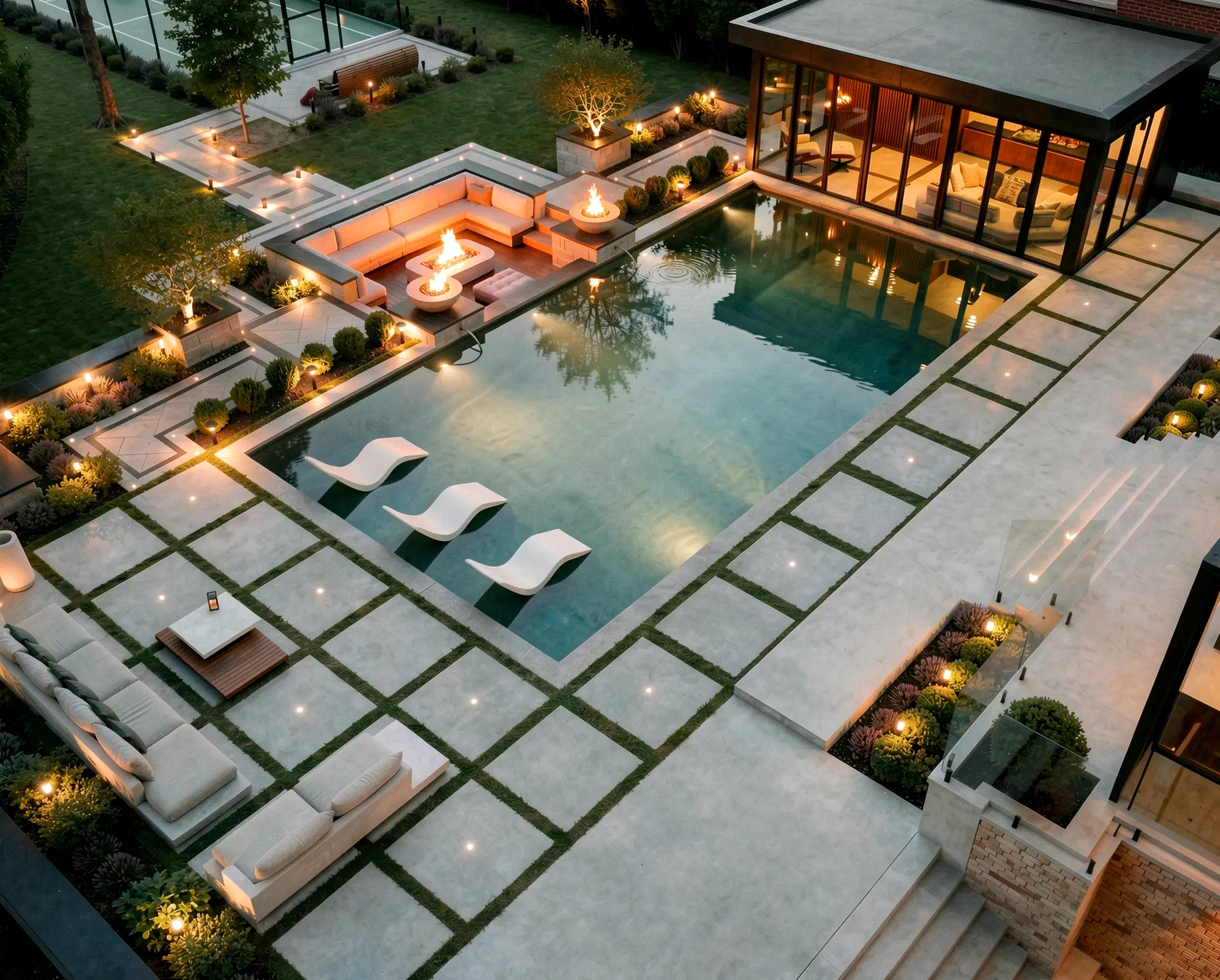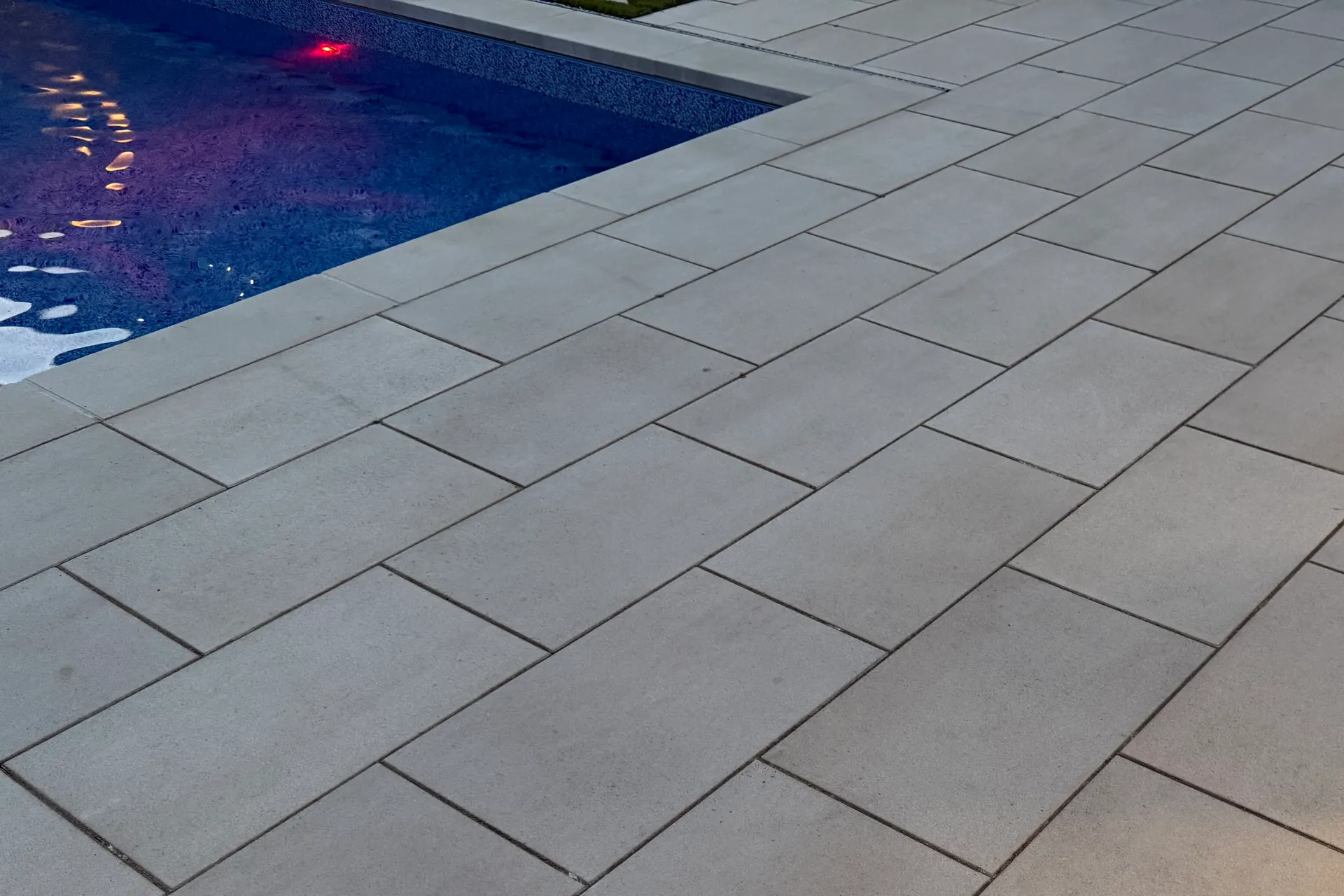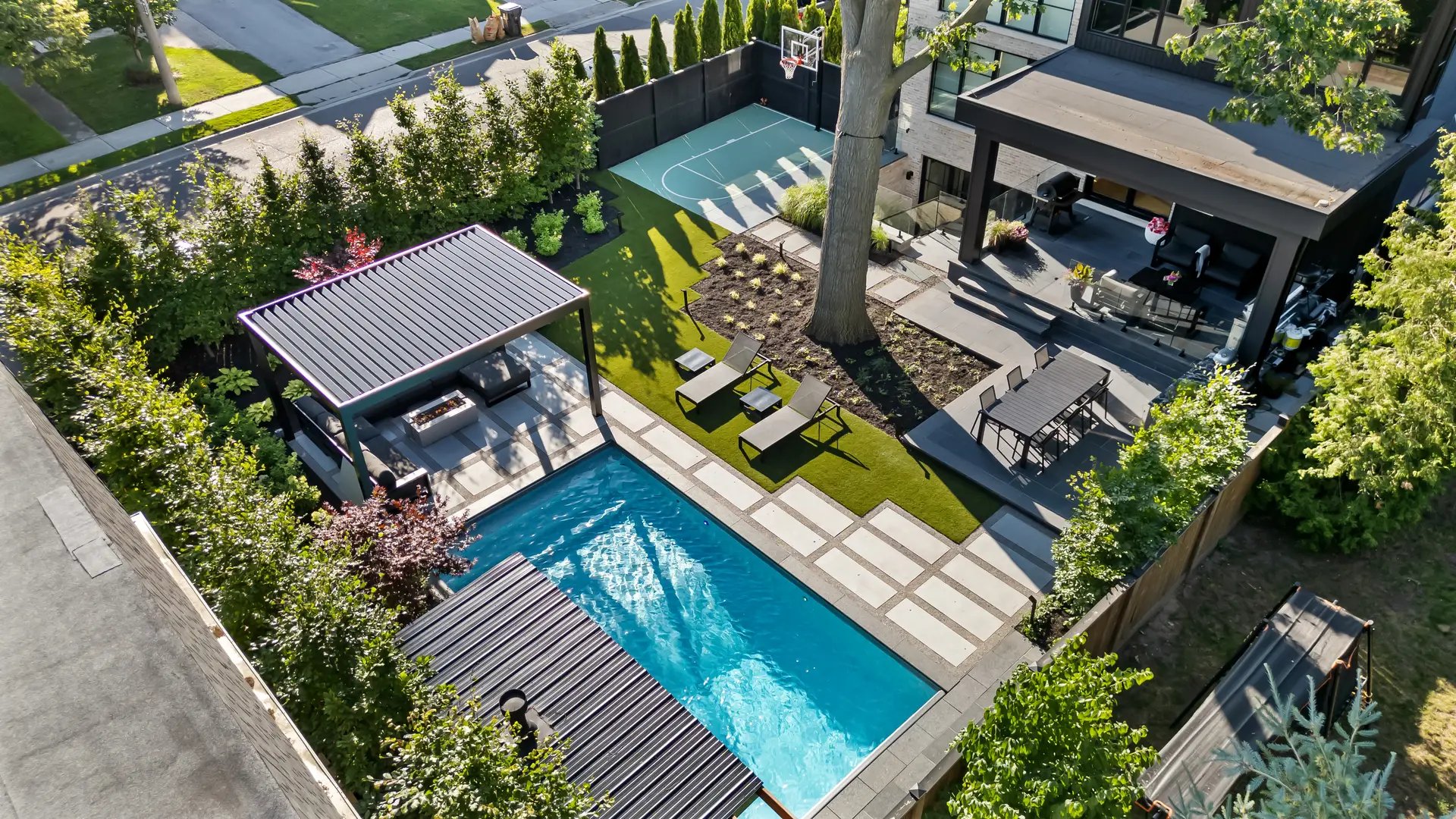

In Ontario, Hardscape problems rarely show up on install day. They appear after a few winters of freeze–thaw cycles, drainage pressure, salt exposure, and seasonal movement. Pavers, Concrete, and Masonry all respond differently to those stresses, which is why the wrong material in the wrong location often leads to shifting, cracking, or premature repairs.
This guide breaks down how each option actually performs in Ontario conditions. It explains where pavers, concrete, and masonry work best, what tends to fail when design or installation is rushed, and how early decisions shape long-term durability. Drawing from real-world Hardscaping projects, the goal isn't to crown a single "best" material, but to help you choose the right solution for each part of your landscape so it performs better year after year.
Quick Navigation
You can read straight through, or jump to the section that matches what you're deciding right now.
- Pavers: The Most Flexible Hardscape Surface
- Concrete: Clean, Seamless, and Structural When Done Right
- Masonry: The Premium Choice for Walls, Steps, and Architectural Features
- Side-by-Side Comparison: Pavers vs. Concrete vs. Masonry
- How Ontario Weather Changes the "Best" Choice
- Where Each Material Works Best Around Your Home
- Design Details That Decide How Well It Ages
- Installation Reality: What Makes or Breaks Results
- Which Option Is Right for You?
- Frequently Asked Questions
Pavers: The Most Flexible Hardscape Surface
What Pavers Are (And Why They're Popular in Ontario)
Pavers are individual hardscape units installed over a compacted granular base rather than poured as a single continuous surface. In Ontario, they are most commonly used in Interlocking and Interlocking Slabs, where flexibility, drainage performance, and long-term serviceability are more important than monolithic strength.
Because pavers are designed to move slightly without cracking, they adapt well to freeze–thaw cycles, minor settlement, and seasonal soil movement. When installed correctly, paver systems absorb environmental stress instead of resisting it, which is why they remain a core material across many residential Hardscaping applications.
Where Pavers Perform Best Around a Home
Pavers excel in areas where movement, access, or future changes are likely:
- Patios and outdoor living zones
- Walkways, entry paths, and circulation routes
- Driveways and high-traffic areas
- Pool surrounds and transitional spaces
- Areas requiring future access to drainage or utilities
Their modular construction allows surfaces to be adjusted or repaired without disturbing adjacent materials, which is especially valuable in Ontario's climate.
Why Homeowners Choose Pavers
Pavers are often selected for their balance of durability, flexibility, and long-term practicality. Individual units can be lifted and reset if settlement occurs, and damaged pieces can be replaced without visible patching. This makes repairs more controlled and far less invasive than with poured surfaces.
From a design standpoint, pavers offer a wide range of sizes, textures, and laying patterns. They integrate cleanly with Natural Stone, Architectural Concrete, and Masonry elements, allowing cohesive designs that still accommodate movement over time.
Design & Installation Details That Matter Most
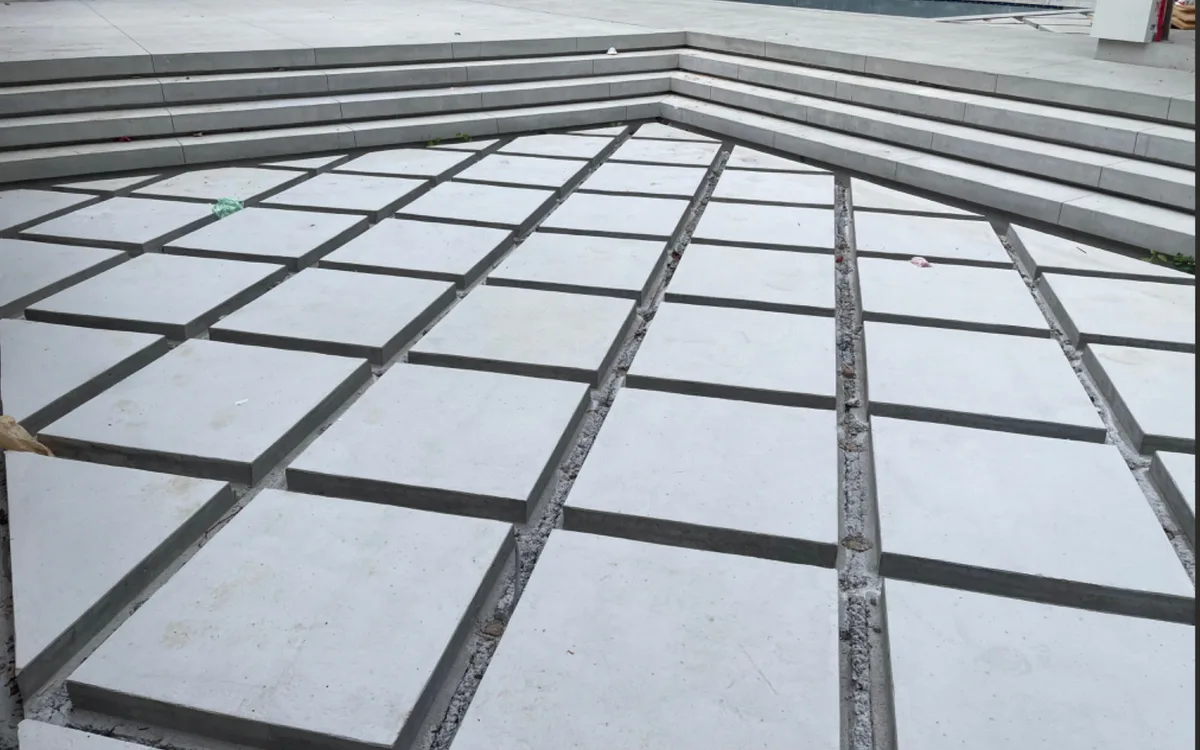
Paver performance is determined below the surface. Proper excavation depth, base compaction, edge restraint systems, and drainage detailing are non-negotiable. Jointing systems also play a critical role. Polymeric sand, correct slope, and water management prevent joint erosion, weed growth, and surface instability.
When these details are rushed or value-engineered out, pavers can shift or settle prematurely. When they are resolved properly during design, paver systems remain one of the most forgiving and serviceable hardscape solutions in Ontario.
| Design Factor | How Pavers Perform |
|---|---|
| Freeze–Thaw Cycles | Individual units accommodate movement without cracking |
| Drainage & Water Management | Permeable joints and granular bases help manage surface water |
| Settlement & Soil Movement | Units can be lifted, re-levelled, and reset if shifting occurs |
| Repairability | Damaged areas can be repaired without visible patching |
| Design Flexibility | Wide range of sizes, textures, patterns, and layouts |
| Long-Term Maintenance | Periodic joint maintenance required, but repairs are localized |
| Integration With Other Materials | Transitions cleanly to Natural Stone, Concrete, and Masonry |
Concrete: Clean, Seamless, and Structural When Done Right
What "Concrete" Means in Modern Ontario Landscapes
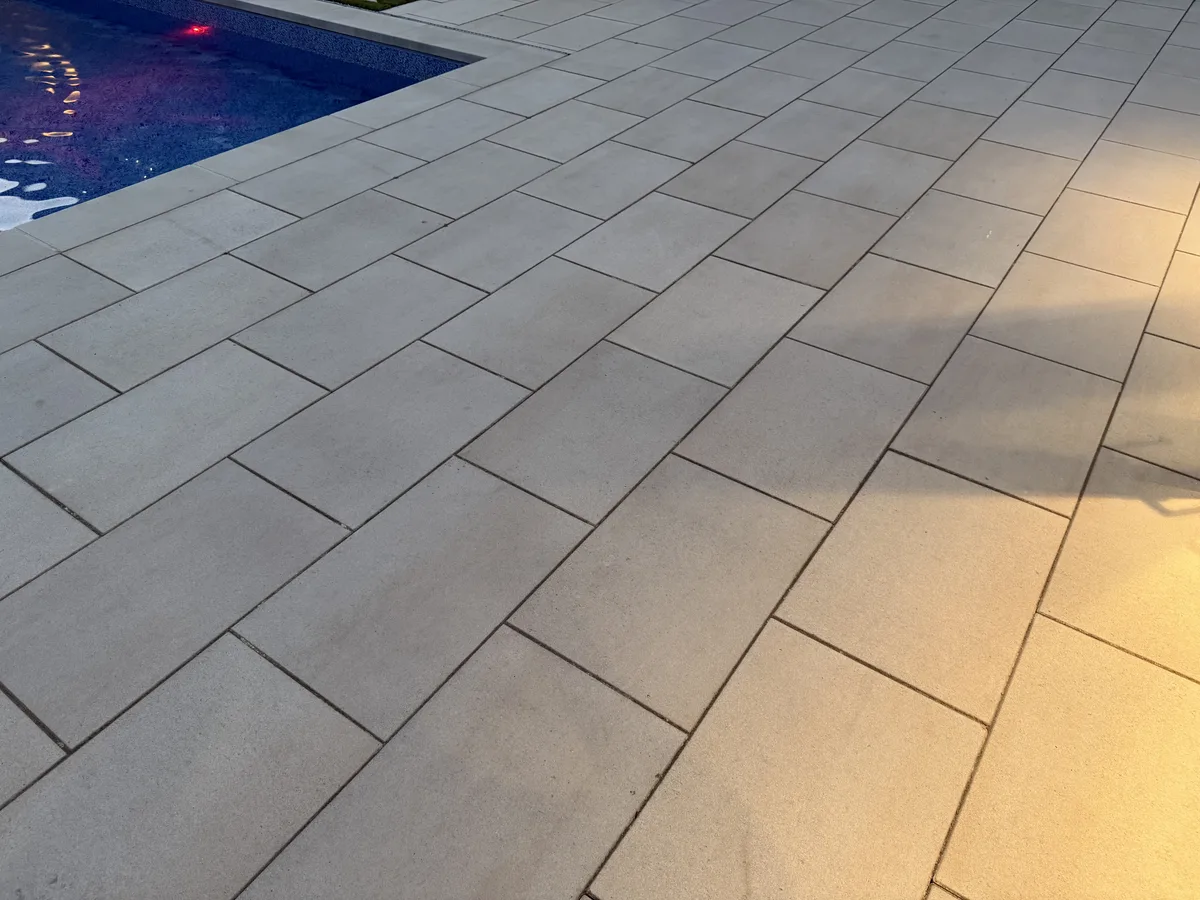
In landscaping, concrete is not a single product. It includes poured slabs, Decorative Concrete finishes, and Architectural Concrete used for steps, walls, and integrated structures. Unlike modular systems, concrete is a monolithic surface. Once placed, it behaves as one continuous element.
That continuity is concrete's strength and its risk. When properly designed with correct base preparation, reinforcement, jointing, and drainage, concrete delivers a clean, architectural look that performs well under load. When shortcuts are taken, cracks and surface failure tend to be permanent rather than localized.
Concrete succeeds in Ontario when it is treated as a structural system, not a cosmetic surface.
Where Concrete Performs Best
Concrete works best where continuity, load distribution, and minimal visual interruption are priorities. It is commonly used for primary patios, walkways, steps, and structural transitions where a seamless finish supports the overall design language.
In Architectural Design, concrete is often selected to unify multiple zones into a single composition, especially in contemporary landscapes where clean lines and restraint matter more than pattern variation.
Why Homeowners Choose Concrete
Concrete appeals to homeowners looking for clarity and simplicity. Its uninterrupted surface creates strong visual flow, especially in modern outdoor spaces. Properly finished concrete also integrates well with Masonry, Porcea Stone, and Natural Stone features when transitions are designed intentionally.
From a performance standpoint, concrete distributes weight evenly and handles heavy loads well, making it suitable for steps, landings, and high-use circulation areas when reinforced correctly.
What Limits Concrete in Ontario
Concrete is less forgiving than modular materials. Freeze–thaw cycles, soil movement, and moisture exposure all place stress on poured surfaces. Cracking is not always a sign of failure, but crack location and severity are dictated by design decisions made before the pour.
Joint placement, reinforcement strategy, drainage slope, and curing conditions matter. When these details are rushed or simplified, repairs are difficult and often visible. Unlike Interlocking systems, concrete does not allow for selective lifting or adjustment once installed.
When Concrete Makes the Most Sense
Concrete is best suited for homeowners who prioritize a clean, architectural look and are committed to proper design and installation standards. It performs well in patios, walkways, steps, and structural elements where continuity and strength matter more than future adjustability.
Concrete works especially well when coordinated with other hardscape materials through a comprehensive Hardscaping plan rather than used as a standalone surface.
| Design Factor | How Concrete Performs |
|---|---|
| Freeze–Thaw Cycles | Performs well when reinforced and jointed correctly |
| Drainage & Water Management | Requires precise slope and subsurface drainage |
| Settlement & Soil Movement | Less forgiving; movement often leads to cracking |
| Repairability | Repairs are visible and typically permanent |
| Design Continuity | Seamless, uninterrupted surface |
| Long-Term Maintenance | Low routine maintenance, limited repair flexibility |
| Architectural Integration | Strong compatibility with Masonry and stone features |
Masonry: The Premium Choice for Walls, Steps, and Architectural Features
What Masonry Means in Ontario Hardscape Construction
Masonry refers to hardscape elements built from individual stone, brick, or concrete units that are set, stacked, or mortared into vertical and load-bearing structures. In residential landscapes, this includes Masonry walls, steps, Retaining Walls, pillars, and architectural features that define space rather than simply cover ground.
Unlike pavers or poured concrete, masonry is about structure and permanence. It is used where elevation change, containment, or visual weight is required. In Ontario conditions, masonry performs best when it is engineered as part of the landscape design rather than added later as a decorative upgrade.
Where Masonry Performs Best
Masonry excels in vertical applications and areas where the landscape needs definition, support, or long-term stability. It is commonly used for Retaining Walls, raised planters, steps, seat walls, and entry features where strength and visual presence matter.
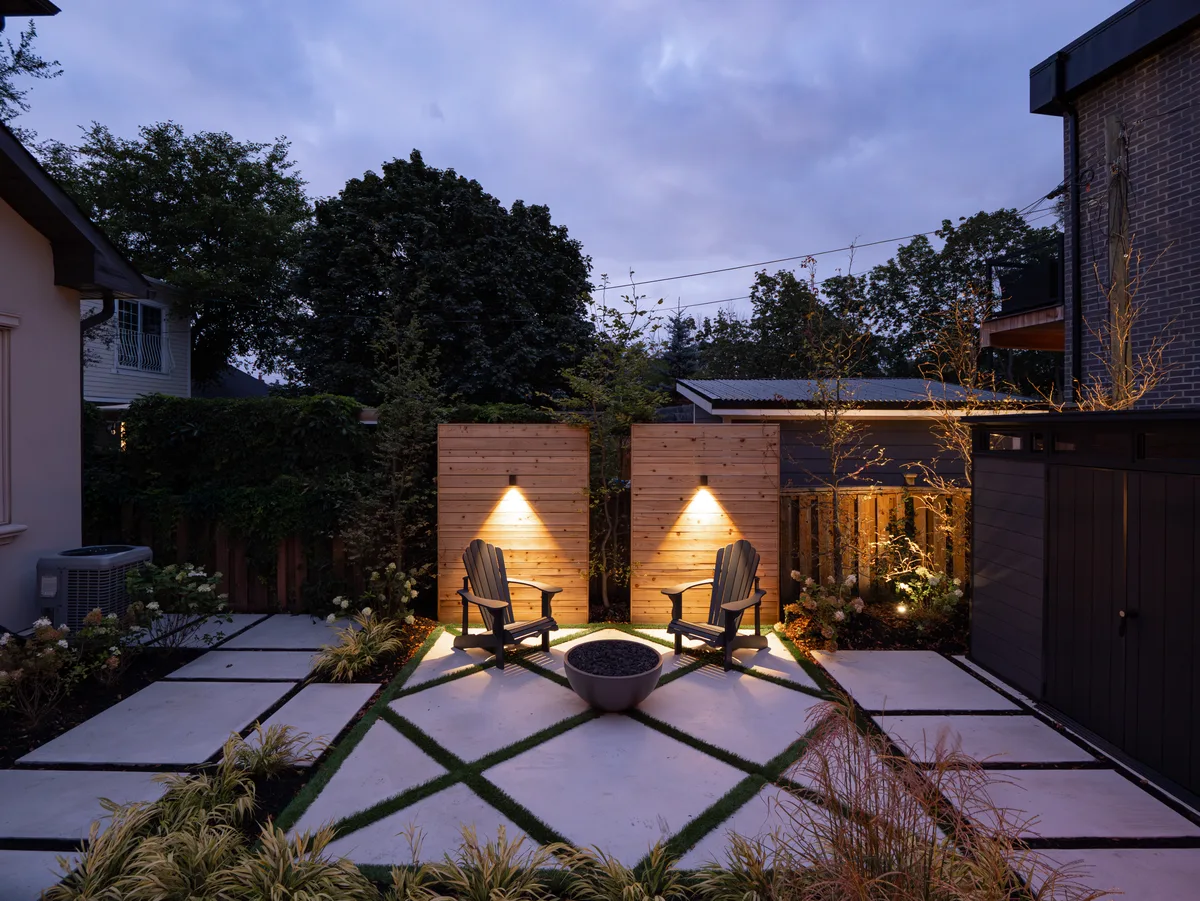
In Architectural Design, masonry acts as the backbone of a space. It anchors grade changes, frames outdoor rooms, and creates transitions between different hardscape surfaces. When combined with materials like Porcea Stone or Natural Stone, it establishes hierarchy and permanence within the overall layout.
Why Homeowners Choose Masonry
The primary appeal of masonry is longevity. Properly built masonry structures can last decades with minimal change in performance. Visually, masonry adds depth, scale, and architectural character that flat surfaces cannot achieve.
Masonry also handles Ontario's climate well when designed correctly. It resists surface wear from salt and snow contact better than many horizontal materials and maintains visual consistency as surrounding elements age. For homeowners investing in long-term property value, masonry often becomes the defining feature of the landscape.
What Limits Masonry in Ontario
Masonry is not forgiving of shortcuts. Footings, drainage behind walls, frost depth considerations, and proper anchoring all determine whether a structure remains stable over time. When drainage is undersized or footing depth is inadequate, issues such as movement, cracking, or wall failure can occur.
Masonry also requires higher upfront coordination. Because it interacts with grading, drainage, and adjacent hardscape surfaces, changes after construction begins are difficult and costly. This makes early design coordination critical.
When Masonry Makes the Most Sense
Masonry is the right choice when a landscape requires structure, elevation control, or architectural presence. It is ideal for homeowners prioritizing durability, premium aesthetics, and long-term performance over flexibility or ease of repair.
Masonry performs best as part of a fully integrated Hardscaping plan, where walls, steps, and vertical features are designed alongside patios, walkways, and planting rather than treated as isolated elements.
| Design Factor | How Masonry Performs |
|---|---|
| Freeze–Thaw Cycles | Performs very well when footings and drainage are correct |
| Drainage & Water Management | Critical; failures usually trace back to drainage shortcuts |
| Settlement & Soil Movement | Highly stable with proper foundations |
| Repairability | Repairs are possible but often visible |
| Design Impact | Strong architectural presence and visual weight |
| Long-Term Maintenance | Very low when built correctly |
| Structural Capability | Excellent for walls, steps, and grade changes |
Side-by-Side Comparison: Pavers vs. Concrete vs. Masonry
By the time homeowners reach this point, they understand how each material works on its own. This section brings those differences together so performance, maintenance, and long-term tradeoffs are easy to compare at a glance—especially in Ontario's climate.
Comparison Table: Performance, Maintenance, Repairability, and Aesthetics
| Design Factor | Pavers | Concrete | Masonry |
|---|---|---|---|
| Freeze–Thaw Performance | Excellent. Individual units absorb movement without cracking | Good when reinforced and jointed correctly; cracks are permanent | Excellent when footings and drainage are engineered properly |
| Drainage Handling | Strong. Granular base and joints manage surface water well | Moderate. Requires precise slope and subsurface drainage | Critical. Drainage failures are the most common cause of issues |
| Settlement Tolerance | High. Units can be lifted, re-levelled, and reset | Low. Settlement typically results in visible cracking | Very high when foundations are properly constructed |
| Repairability | Excellent. Localized repairs with minimal visual impact | Limited. Repairs are visible and often permanent | Moderate. Repairs possible but typically noticeable |
| Long-Term Maintenance | Periodic joint maintenance required | Low routine maintenance | Very low when built correctly |
| Aesthetic Style | Patterned, textured, adaptable | Clean, seamless, architectural | Strong visual weight and architectural presence |
| Design Flexibility | Very high. Wide range of layouts and finishes | Moderate. Defined by formwork and finish | High, but decisions must be finalized early |
| Lifespan (When Built Correctly) | Long-term with serviceable maintenance | Long-term with limited repair flexibility | Decades with minimal performance change |
Comparison Table: Best Uses by Feature Type
| Hardscape Feature | Best Material Choice | Why It Works Best |
|---|---|---|
| Patios & Outdoor Living Areas | Pavers or Concrete | Pavers allow movement and repair; concrete offers seamless flow |
| Walkways & Entry Paths | Pavers | Flexible, slip-resistant, and easy to repair |
| Driveways & High-Traffic Areas | Pavers or Concrete | Pavers handle movement; concrete handles load when reinforced |
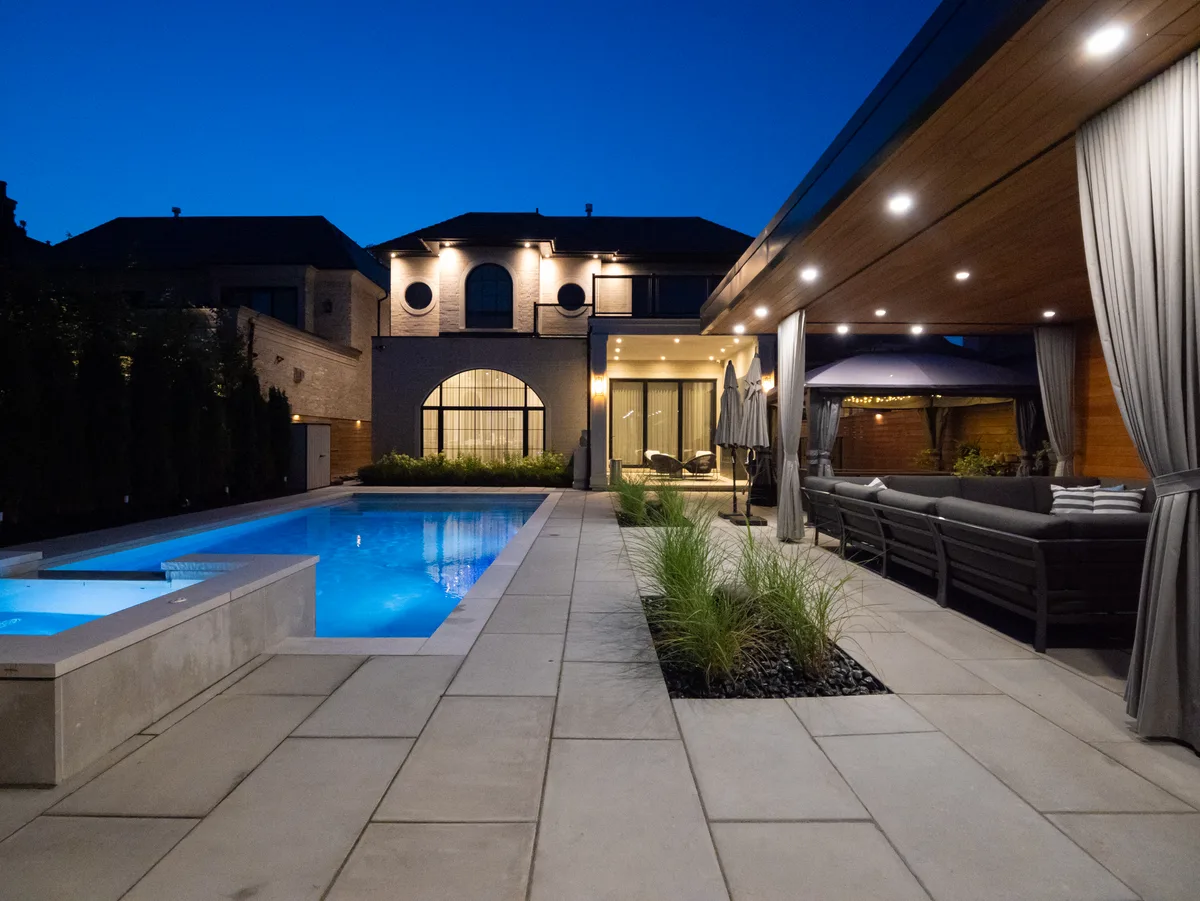
| Pool Surrounds | Pavers or Porcea Stone | Drainage-friendly, repairable, and comfortable underfoot |
| Steps & Landings | Concrete or Masonry | Structural strength and precise elevation control |
| Retaining Walls & Grade Changes | Masonry | Structural stability and long-term performance |
| Seat Walls & Raised Planters | Masonry | Durability, visual weight, and architectural definition |
| Modern, Minimalist Designs | Concrete + Masonry | Clean lines and seamless transitions |
| Complex Multi-Zone Landscapes | Combination of All Three | Each material performs best in different roles |
How Ontario Weather Changes the "Best" Choice
Ontario's climate does not reward materials equally. Freeze–thaw cycles, moisture retention, and winter maintenance practices determine whether a hardscape surface remains stable or begins to degrade. The "best" material is often the one whose weaknesses are least exposed by local conditions.
Freeze–Thaw, Drainage, and Base Prep
Freeze–thaw damage is rarely caused by cold alone. It is caused by trapped moisture and inadequate base construction.
Pavers perform well because granular bases and joint systems allow water to move through the assembly rather than being trapped beneath it. Concrete and masonry rely on precise slope, reinforcement, and drainage design to prevent water from sitting under or behind the structure. When base depth, compaction, or drainage paths are undersized, seasonal expansion and contraction create stress that surfaces as cracking or movement.
In Ontario, base preparation is not a hidden detail. It is the primary performance variable.
Salt, Staining, and Seasonal Wear
Winter maintenance accelerates surface wear. De-icing salts, grit, and repeated moisture exposure affect materials differently.
Concrete is most vulnerable to surface scaling when salts penetrate the top layer. Masonry resists surface wear well but can deteriorate if moisture accumulates behind walls or steps. Pavers tend to conceal salt residue and wear more evenly, but joint systems require maintenance to prevent erosion and weed intrusion.
Material selection must account for how the space will be maintained in winter, not just how it is used in summer.
Why "Looks Great in Photos" Isn't the Same as "Ages Well Here"
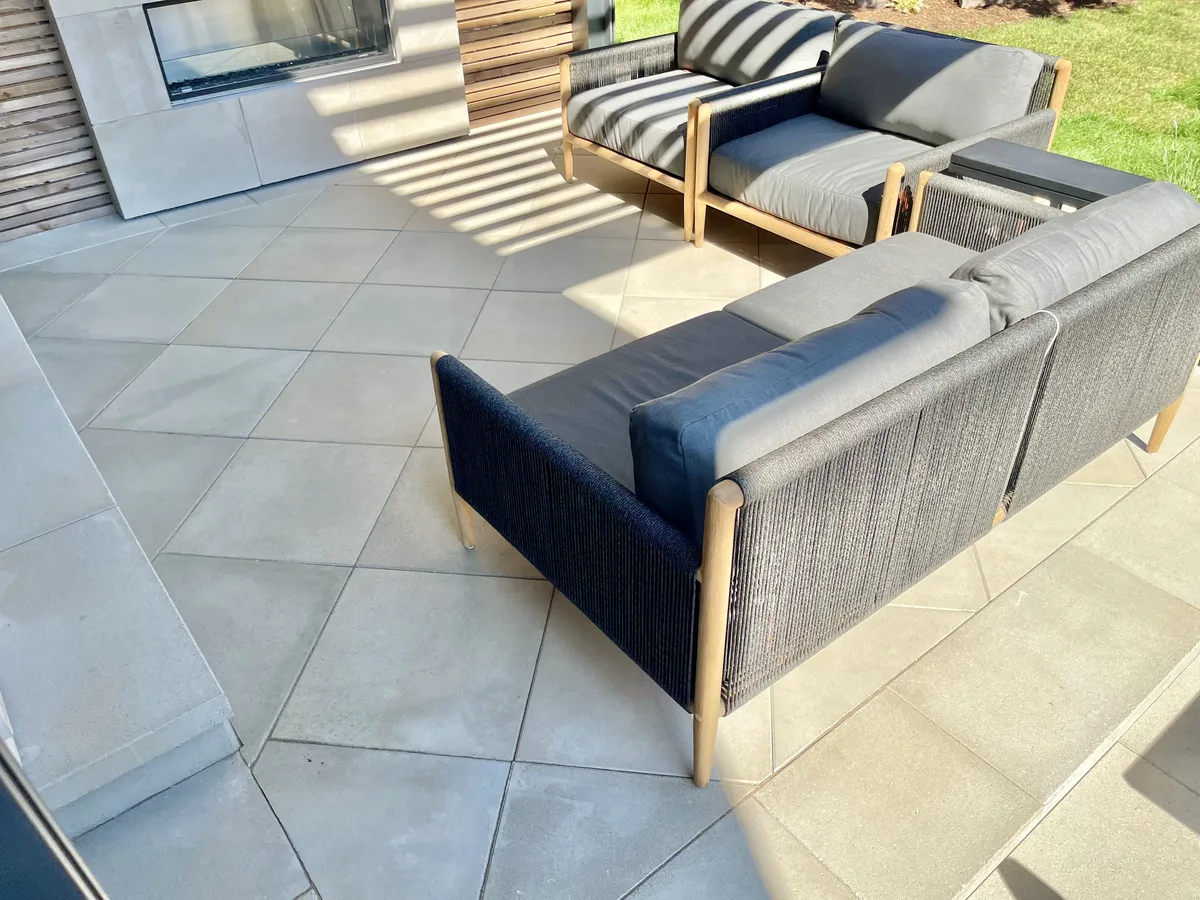
Many reference images are captured immediately after installation, before weather exposure reveals long-term performance.
Ontario conditions expose weak detailing quickly. Inadequate slopes, undersized joints, poor drainage transitions, and incompatible material pairings become visible within a few seasons. Surfaces that photograph well often lack the construction logic required for long-term stability.
Design decisions that prioritize performance over appearance at install day are what allow hardscapes to remain visually clean years later.
Where Each Material Works Best Around Your Home
Choosing between pavers, concrete, and masonry is less about preference and more about placement. Each material performs best when its strengths align with how the space is used, loaded, and exposed to moisture and movement.
Driveways and High-Traffic Areas
Pavers are often the most forgiving choice for driveways in Ontario. Their modular construction allows for load distribution and localized repair if settlement occurs. When installed with proper base depth and edge restraint, interlocking systems handle vehicle traffic and freeze–thaw movement effectively.
Concrete performs well in driveways when reinforced and jointed correctly, but cracking is permanent once it occurs. Masonry is rarely used for full drive surfaces due to cost and construction complexity.
Best fit: Pavers first, reinforced concrete second.
Walkways and Entry Sequences
Walkways benefit from materials that balance durability with visual clarity. Pavers offer flexibility and ease of adjustment around utilities or planting changes. Concrete provides clean, uninterrupted lines for modern entries. Masonry is best used selectively for edges, steps, or framing elements rather than continuous paths.
Slip resistance, winter visibility, and drainage slope are more important here than material type alone.
Best fit: Pavers or concrete, with masonry as an accent.
Patios and Outdoor Living Zones
Patios demand comfort, visual cohesion, and long-term stability. Pavers allow patterned layouts and future adaptability. Concrete supports minimalist designs and seamless transitions between zones. Masonry contributes structure through seat walls, fire features, and vertical definition rather than surface coverage.
The most successful patios often combine all three materials intentionally.
Best fit: Pavers or concrete for surfaces, masonry for structure.
Pool Surrounds and Water-Adjacent Surfaces
Water exposure changes material priorities. Drainage, slip resistance, and salt tolerance become critical.
Pavers handle movement and drainage well but require proper joint systems. Concrete must be finished and sloped precisely to avoid pooling and surface wear. Masonry is best reserved for vertical elements like walls and steps, not walking surfaces directly beside water.
Best fit: Pavers or specialty concrete, masonry for vertical features only.
Retaining Walls, Raised Planters, and Grade Changes
These applications demand structure, not flexibility. Masonry is the correct choice where soil retention, elevation control, and long-term stability are required. Concrete may be used structurally, but masonry provides better visual integration and service life in residential landscapes.
Pavers are not appropriate for load-bearing or retaining applications.
Best fit: Masonry.
Steps, Landings, and Vertical Features
Steps and landings experience concentrated loads and frequent moisture exposure. Masonry and architectural concrete perform best here due to their strength and ability to be detailed precisely. Pavers can be used in low-rise or transitional steps but require careful edge control.
Vertical features benefit from materials that read as intentional and permanent.
Best fit: Masonry or Architectural Concrete.
Design Details That Decide How Well It Ages
Most Hardscape failures are not caused by the material itself. They are caused by small design decisions that were rushed, simplified, or left to be solved on site. These details determine whether a surface still performs after five winters or starts showing problems after two.
Slopes, Water Management, and Where Problems Start
Water is the primary driver of hardscape failure in Ontario. Improper slope, trapped runoff, or undersized drainage allows moisture to sit beneath or against surfaces, accelerating freeze–thaw damage and settlement.
Successful hardscapes are designed to move water intentionally away from structures, joints, and load-bearing areas. This includes consistent surface slope, subsurface drainage paths, and coordination with surrounding grades before construction begins.
When drainage is treated as an afterthought, even premium materials deteriorate quickly.
Transitions Between Materials (And How to Avoid "Patchwork" Design)
Most residential landscapes use more than one hardscape material. Problems arise when transitions are added reactively instead of designed intentionally.
Clean transitions account for elevation change, material thickness, movement tolerance, and visual hierarchy. Poor transitions result in lippage, uneven edges, and surfaces that age at different rates.
Well-designed transitions make mixed materials feel cohesive rather than pieced together.
Jointing, Edge Restraints, and Movement Control
Movement is inevitable. Control is the goal.
Pavers rely on edge restraints and joint systems to stay locked in place. Concrete relies on reinforcement and joint placement to manage cracking. Masonry depends on proper footing depth and expansion allowances.
When movement control systems are undersized or omitted, surfaces shift, crack, or separate regardless of material quality.
Texture, Traction, and Winter Safety
A surface that looks refined in summer can become hazardous in winter if texture and traction are overlooked.
Finish selection affects slip resistance, snow clearing, and salt interaction. Smooth finishes require careful detailing in high-traffic areas, while overly aggressive textures can trap debris and accelerate wear.
Winter-safe hardscapes balance traction, cleanability, and visual restraint rather than optimizing for appearance alone.
Installation Reality: What Makes or Breaks Results
In Ontario, hardscape success is decided below grade and before materials are placed. Installation shortcuts rarely fail immediately. They surface later as movement, cracking, drainage issues, or repairs that should not have been necessary.
Base Construction and Compaction Standards
Base preparation is the most common point of failure across all hardscape types.
Proper excavation depth, layered granular base, and mechanical compaction create a stable platform that resists seasonal movement. Skipping depth, rushing compaction, or building on unsuitable soils transfers stress directly to the surface material.
No surface can compensate for a weak base.
Subsurface Drainage and Long-Term Stability
Drainage failures do not announce themselves. They show up as frost heave, settling, joint washout, or wall movement over time.
Effective installations manage water below the surface using proper slopes, drainage stone, weeping systems, and clear exit paths. This prevents water from freezing under load-bearing areas and reduces long-term stress on foundations and joints.
When drainage is undersized, materials take the blame for design failures.
Why Design-Build Coordination Matters
Most hardscape problems come from disconnects between design intent and field execution.
When designers understand how materials are built, and builders work from resolved drawings, details like transitions, elevations, and drainage are executed cleanly. When those roles are separated, issues get solved reactively on site, often by simplifying or omitting critical details.
Integrated design-build reduces assumptions, change orders, and long-term performance issues.
When Repairs Stay Simple (And When They Don't)
Repairability depends on material choice and installation method. Some systems allow selective access and correction. Others require demolition to address localized issues. Understanding this difference upfront affects long-term cost and disruption.
| Installation Factor | If Done Correctly | If Rushed or Simplified |
|---|---|---|
| Base depth & compaction | Stable surfaces with minimal movement | Settling, heaving, uneven surfaces |
| Subsurface drainage | Water exits the system cleanly | Freeze–thaw damage and erosion |
| Edge restraint & joints | Controlled movement over time | Spreading, cracking, joint failure |
| Transition detailing | Clean, durable material connections | Lippage, separation, patchwork fixes |
| Design-build alignment | Predictable outcomes | On-site compromises and revisions |
| Repair access planning | Localized, manageable repairs | Full section removal required |
Which Option Is Right for You?
There is no single hardscape material that works best everywhere. The right choice depends on how each area of your property functions, how much movement or load it will experience, and how visible future repairs need to be. These summaries clarify what each material is truly best at in Ontario conditions.
Choose Pavers for Flexibility and Easier Long-Term Repairs
Pavers are built to accommodate movement and change. They are the most forgiving option in Ontario, where freeze–thaw cycles and minor settlement are expected over time. Because pavers are modular, individual units can be lifted, re-levelled, or replaced without disturbing surrounding areas. This makes them ideal for patios, walkways, driveways, and transitional zones where access, adjustment, or future modifications may be required.
Choose Concrete for Seamless Minimalism and Structural Continuity
Concrete delivers visual clarity through uninterrupted surfaces. It performs best when used intentionally for patios, walkways, steps, and landings where clean lines and even load distribution are priorities. In Ontario, concrete succeeds when it is designed as a structural system with proper base preparation, reinforcement, jointing, slope, and drainage. Once installed, it offers low day-to-day maintenance, but limited flexibility if movement or cracking occurs.
Choose Masonry for Architectural Impact and Permanent Structure
Masonry provides definition, elevation control, and long-term stability. It is the right choice for retaining walls, steps, raised planters, pillars, and entry features where strength and visual weight matter. Masonry performs exceptionally well in Ontario when footing depth and drainage are engineered correctly. Because it is a structural element, it rewards early design coordination and delivers decades of durability when built properly.
The Best Ontario Hardscapes Assign Each Material a Clear Role
High-performing landscapes rely on coordination, not a single material choice. Pavers manage horizontal surfaces that may need adjustment, concrete creates continuity where restraint matters, and masonry anchors grade changes and architectural features. When these materials are designed together with proper transitions, drainage, and detailing, the hardscape ages evenly and remains visually cohesive instead of feeling pieced together.
Frequently Asked Questions
Hardscape decisions often come down to long-term performance, repair expectations, and how materials behave in Ontario conditions. These answers address the questions homeowners ask most when comparing pavers, concrete, and masonry, based on how projects actually perform after installation.
-
Pavers are the easiest to repair. Individual units can be lifted, re-levelled, or replaced without disturbing surrounding areas. Concrete and masonry repairs are typically more invasive and often remain visible once completed.
-
Pavers and properly built masonry handle freeze–thaw cycles best because they accommodate movement. Concrete can perform well, but only when base preparation, reinforcement, and jointing are executed correctly. When shortcuts occur, cracking is more likely.
-
Masonry is often required for slopes because it provides structural support through retaining walls and steps. Pavers can work on mild slopes when properly restrained. Concrete is least forgiving on sloped sites unless drainage and jointing are carefully engineered.
-
Yes, and the best landscapes often do. Pavers, concrete, and masonry serve different roles. When transitions, elevations, and drainage are designed intentionally, combining materials improves both performance and visual clarity.
-
Patios typically do not require permits. Steps, retaining walls over certain heights, and structural elements often do. Permit requirements vary by municipality, which is why these elements should be addressed during the design phase.
-
Concrete will develop hairline cracking over time. Proper joint placement controls where that cracking occurs. Structural cracking usually points to base, drainage, or reinforcement issues rather than the material itself.
-
For structural and architectural features, yes. Masonry and natural stone offer long service life, strong visual presence, and minimal maintenance when built correctly. They often outlast surface materials and become defining features of the landscape.
-
Installation matters more. Even premium materials fail when base preparation, drainage, or detailing are rushed. A well-installed system using the right material in the right location consistently outperforms a poorly installed premium product.
Ready to Plan a Hardscape That Looks Better Every Year?
In Ontario, the difference between a hardscape that holds up and one that slowly fails is decided long before construction begins. Material choice, drainage strategy, base design, and how each surface is expected to move all determine how the space will perform after years of freeze–thaw cycles and seasonal use.
Precision Landscaping approaches hardscaping as a coordinated system, not a collection of surfaces. Our design-build process aligns pavers, concrete, and masonry with the realities of your property, your lifestyle, and Ontario conditions so the finished space remains stable, functional, and visually cohesive over time.
Contact Precision Landscaping to plan a hardscape that is engineered to age well, not just look good on day one.