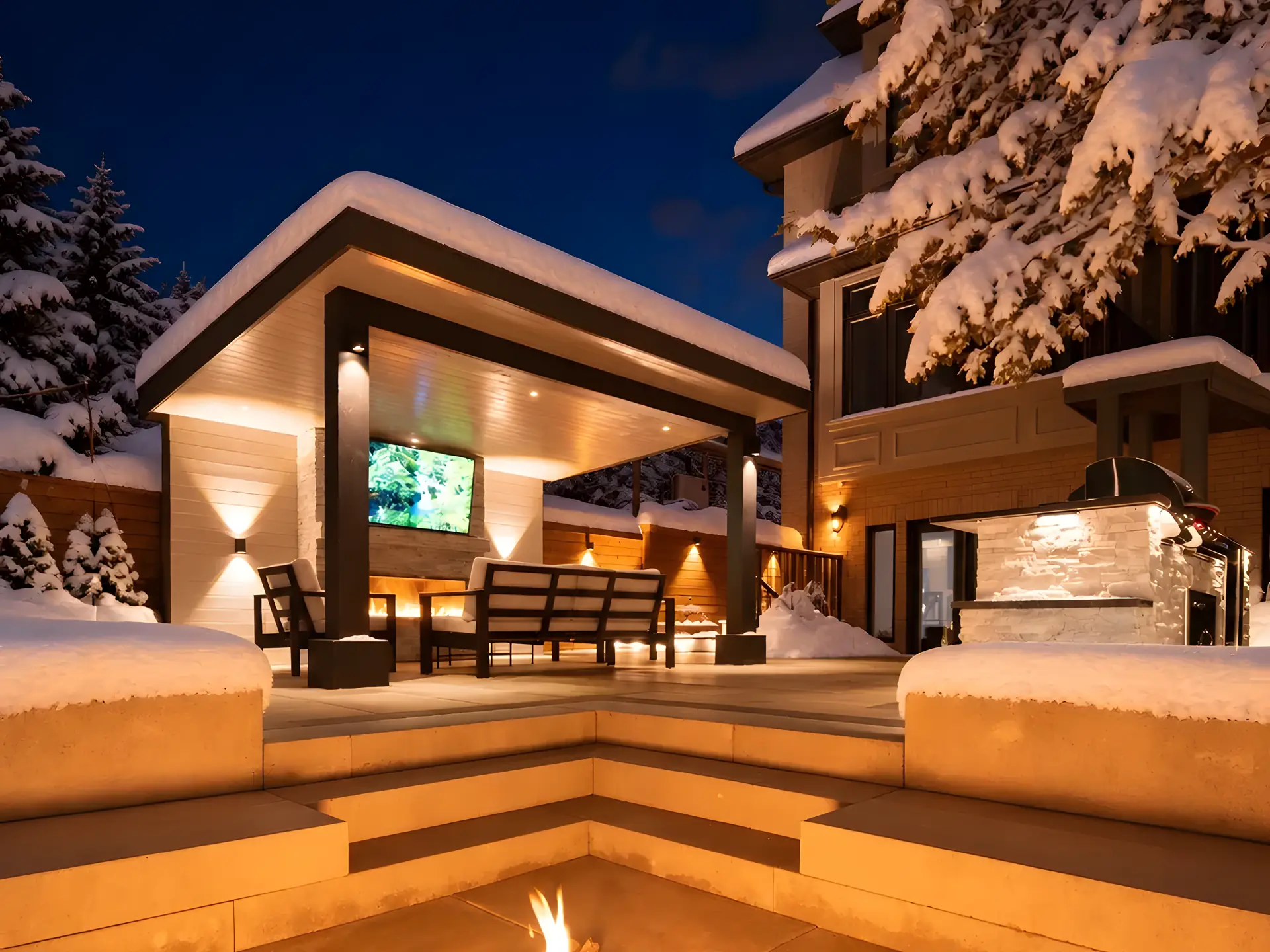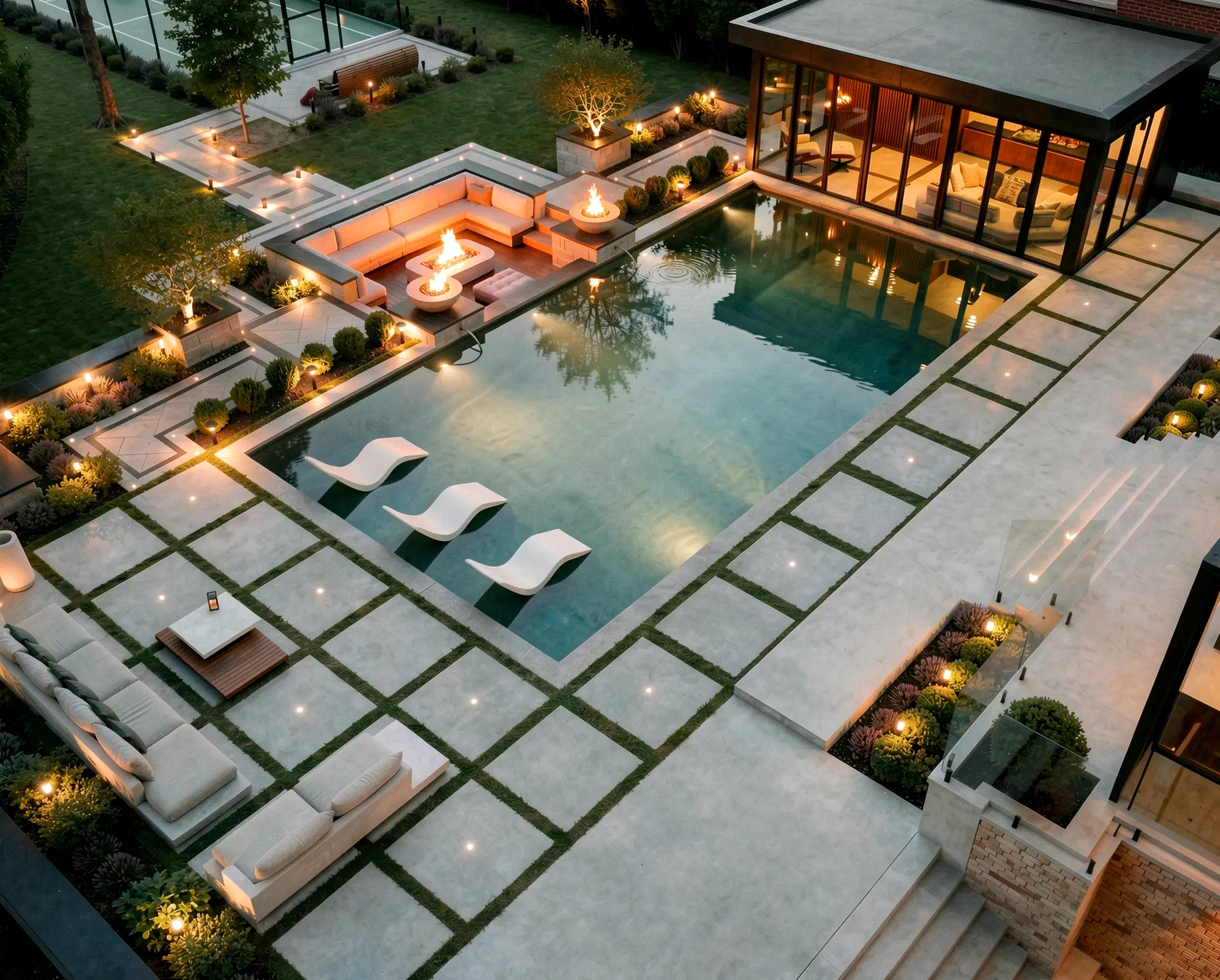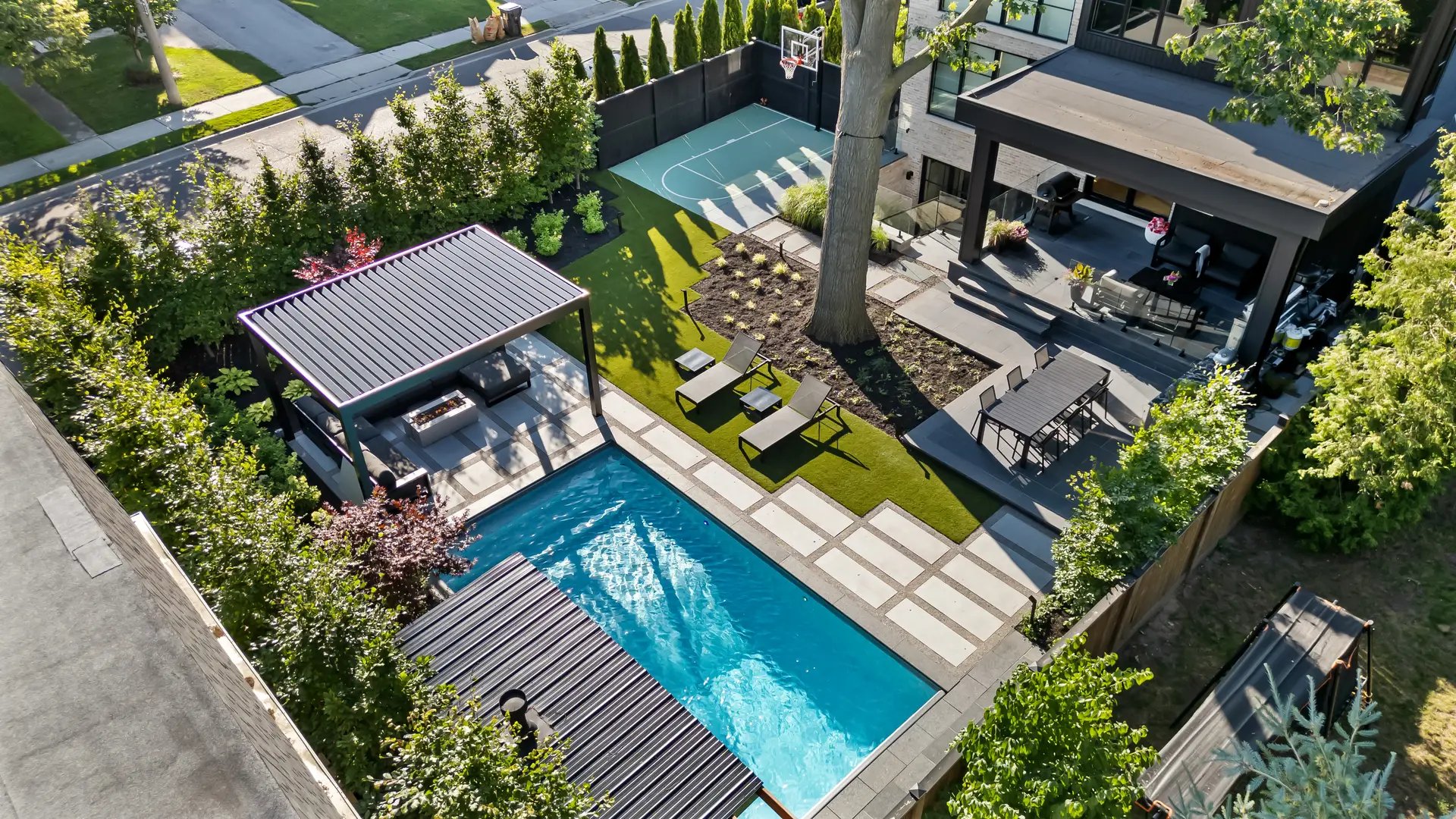

An interlocking pattern is not just a visual choice. On a driveway, the laying pattern also affects how the surface responds to vehicle braking, turning and repeated traffic. Patios generally carry lighter pedestrian loads, which allows more flexibility in pattern selection than a vehicle-bearing driveway. For Toronto and GTA homeowners, Precision's Interlocking and Landscape Design work treats the pattern, product, grading and architecture as one property-wide decision rather than separate surface choices.
Which Interlocking Paver Pattern Is Best for Your Project?
| Pattern | Best For | Style | Driveway Suitability | Key Advantage |
|---|---|---|---|---|
| Herringbone | Driveways, high-traffic areas | Traditional / geometric | Generally preferred for vehicular traffic | Strong multidirectional interlock |
| Running Bond | Patios, walkways; selected driveway-rated systems | Clean / contemporary | System-dependent | Simple, linear appearance |
| Basketweave | Patios, courtyards | Traditional | System-dependent; more commonly pedestrian | Decorative woven character |
| Ashlar | Patios, walkways, pool areas | Natural / contemporary | System-dependent | Non-repeating visual variation |
Driveway suitability depends on the paver system, unit dimensions, base design, edge restraint and expected traffic, not the laying pattern alone. Use this table as a starting point and confirm the selected product is suitable for the intended application.
Why Driveways and Patios Need Different Interlocking Patterns
Interlocking pavers work as a system. Unit shape, joint layout, paver thickness, edge restraint and the base below all influence how the finished surface handles load and movement. The same principle carries across Precision's Hardscaping work: surface design and below-grade construction have to be resolved together.
Patterns with long, continuous straight joints provide less multidirectional interlock than herringbone. On a driveway, repeated braking and turning can make that difference more important. On patios and walkways, where loads are generally lighter, visual rhythm and product selection can take a larger role in the decision.
Precision Installation Note: the pattern is only one part of the pavement system. Precision typically excavates 8 to 12 inches depending on the application, compacts the subgrade, installs geotextile separation and builds a load-bearing ¾-inch clear-stone base in compacted lifts before the bedding and paver layers. A strong laying pattern cannot compensate for poor base preparation. Through Ontario's freeze-thaw cycles, long-term performance depends on the complete installation system, not pattern geometry alone.
For a broader comparison of how pavers, concrete and masonry respond to Ontario freeze-thaw, drainage and settlement, see Precision's Pavers vs. Concrete vs. Masonry: Ontario Hardscape Guide.
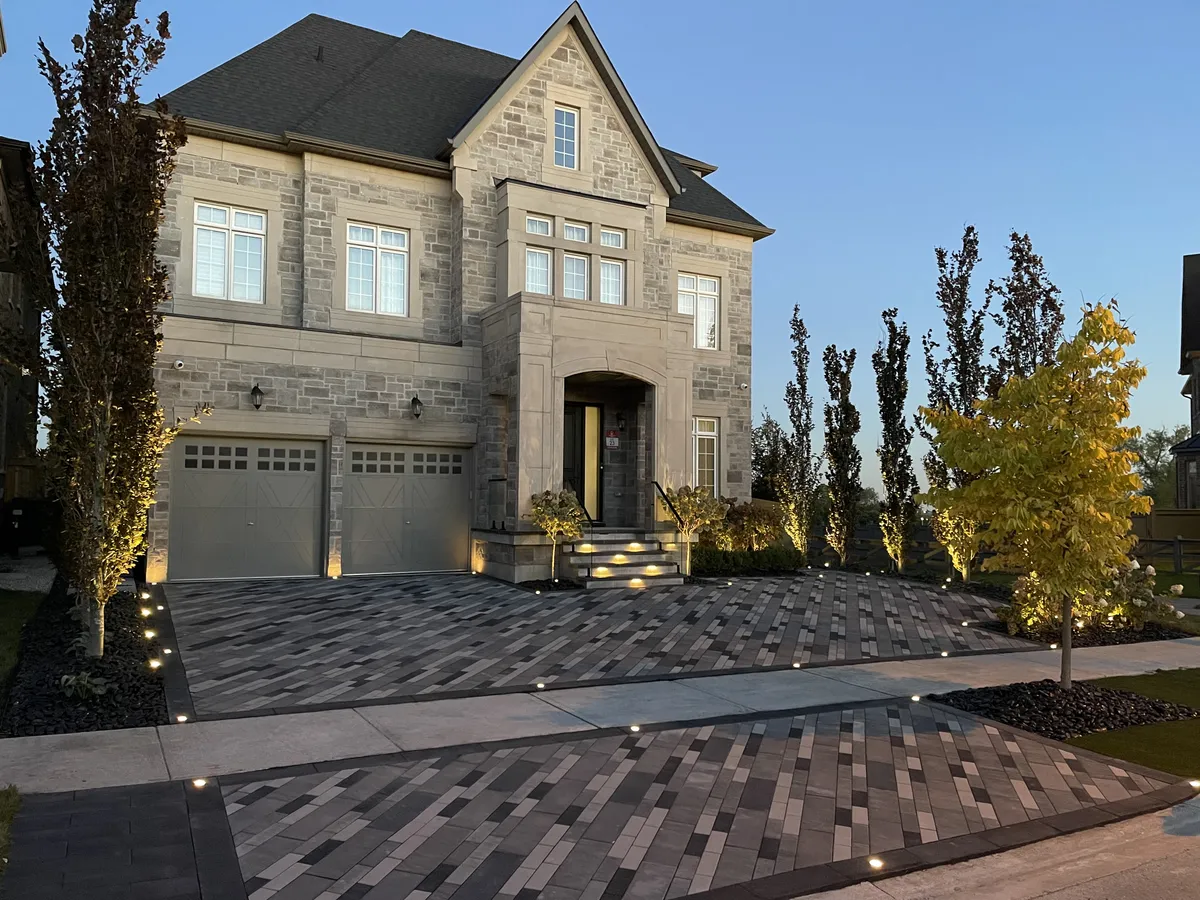
Herringbone Interlocking: The Preferred Pattern for Driveways
Herringbone arranges rectangular pavers in a zigzag layout and is the pattern most consistently recommended for driveways and other vehicle-bearing surfaces.
Why It Handles Vehicle Traffic So Well
The angled layout locks each paver against neighbouring units from multiple directions, helping the pavement resist horizontal movement caused by braking, turning and repeated tire loads. Straight-jointed layouts do not provide the same multidirectional interlock.
45 Degrees or 90 Degrees?
Herringbone can be laid at either 45 or 90 degrees to the driveway edge. Both orientations are used for vehicular applications when paired with an appropriate paver system. For a residential driveway, orientation can therefore be selected around site geometry, border layout, required cuts and finished appearance, while base construction and edge restraint remain critical to performance.
Why the Border Matters
Herringbone driveway fields are commonly finished with a perimeter course and stable edge restraint. A soldier course places rectangular pavers side-by-side across the border, while a sailor course runs them lengthwise along the edge. Both can frame the field and protect cut pieces where the pattern reaches the perimeter, while the underlying edge restraint provides structural containment.
Choose herringbone when:
- The surface carries regular vehicle traffic
- Resisting horizontal movement is a priority
- The property suits a more detailed, geometric field
- A contrasting perimeter course fits the overall design
Consider another pattern if:
- You want a very simple, linear look
- The area is pedestrian-only and design flexibility matters more
- Your budget favours a layout with fewer cuts and less pattern labour
Running Bond Interlocking: Clean Lines for Patios and Walkways
Running bond is an offset, straight-row layout, similar to a brick wall turned on its side. It is simple, clean and especially well suited to contemporary patios and walkways.
Running bond has longer continuous joint lines than herringbone, so it is not the default pattern recommended for areas subject to continual vehicular traffic. However, some driveway-rated paver systems are offered with running-bond laying patterns. On patios and walkways, its simplicity becomes a design advantage: the linear layout can reduce cutting, reads cleanly and suits contemporary properties particularly well.
Basketweave vs. Ashlar Paver Patterns
Once the project moves away from regular vehicle traffic, pattern choice becomes much more design-driven.
Basketweave
- Look: traditional, with a woven, crisscross rhythm
- Works well for: courtyards, patios and garden paths
- Design character: repetitive, structured geometry
Ashlar
- Look: natural and less uniform, using multiple paver sizes
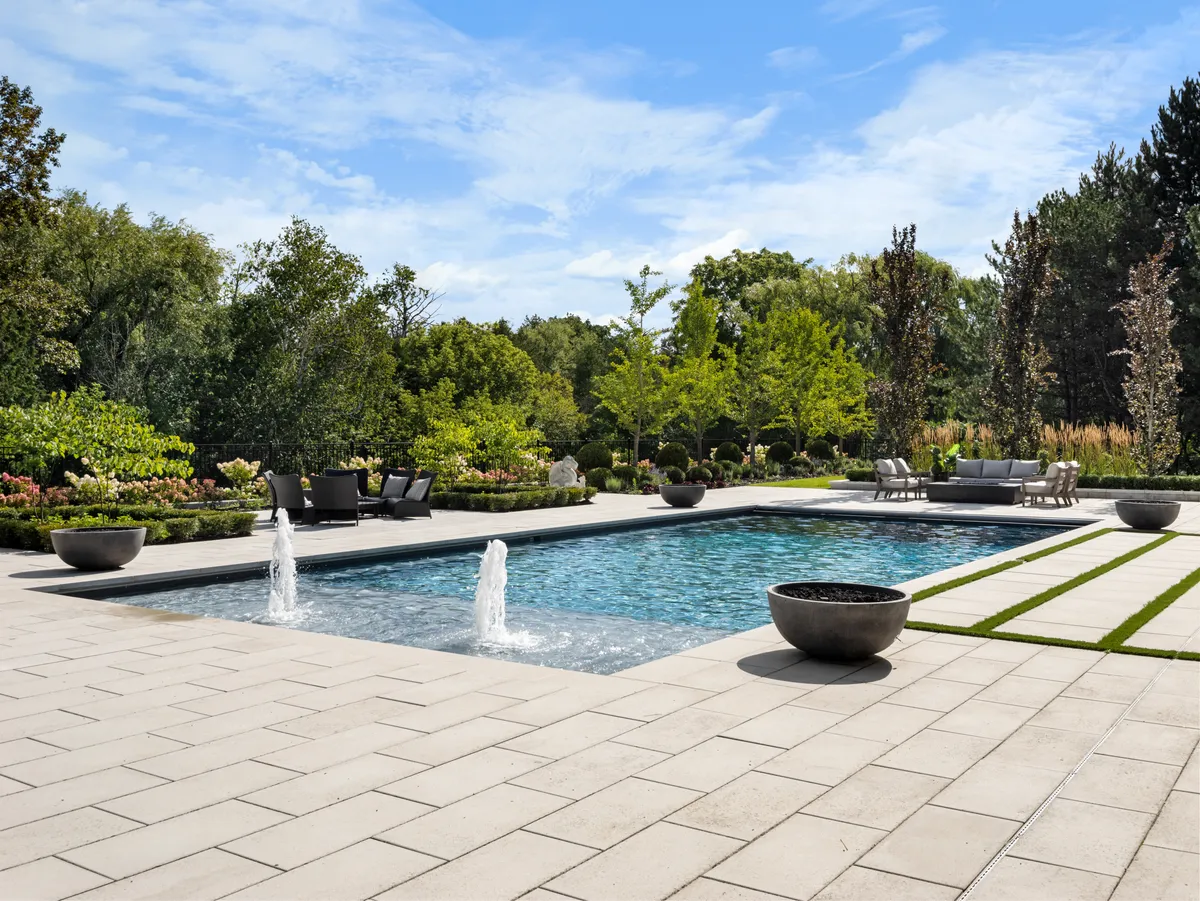
- Works well for: patios, walkways and pool surrounds
- Design character: irregular rhythm that can visually soften minor variation in the finished surface
Basketweave is more commonly selected as a decorative pedestrian pattern, while ashlar driveway suitability depends on the specific multi-size paver system and its vehicular rating. Around pools and other pedestrian areas, evaluate the paver's surface texture, slip resistance, heat retention and drainage separately from the laying pattern.
How to Choose the Right Pattern for Your Property
- Application: driveway, patio, walkway and pool deck each carry different loads and priorities
- Vehicle traffic and turning areas: select a paver system and laying pattern suitable for expected vehicular loads, with herringbone generally preferred where braking and turning forces are significant
- Size of the space: a small patio can look busy with a highly detailed pattern
- Paver dimensions: some patterns work better with specific paver sizes and shapes
- Home architecture: traditional and contemporary properties tend to suit different visual rhythms
- Borders and accents: a contrasting border can add structure and definition regardless of the field pattern
- Connecting multiple areas: a driveway and patio can feel related without using an identical pattern
- Heated driveway plans: best coordinated during design rather than added afterward
- Drainage needs: permeable systems are worth considering where stormwater is a real site concern
- Budget and complexity: more cutting, pattern transitions and detailed borders generally mean more labour
Matching the Pattern to Your Home's Architecture
Traditional or Formal Homes
Bordered herringbone, basketweave and more defined geometry tend to suit traditional architecture well.
Contemporary Homes
Running bond, larger paver formats and simpler, more restrained borders tend to complement contemporary properties. Precision's Interlocking Slabs work can be useful when the design calls for a larger-format, more architectural surface language.
Smaller Toronto Properties
A simpler pattern with a well-defined border can read as more considered on a compact lot than a busier, more detailed layout.
Larger Properties
More available space allows pattern changes, borders and accent bands to become intentional design features rather than crowding the composition.
Design Tip: Coordination does not require duplication. A shared border colour, paver family or accent band can visually connect a driveway and patio without repeating the exact same pattern on both. Paver size, colour and surface texture also change how a pattern reads, so the laying pattern and product selection should be resolved together. The goal is a property that reads as one design decision rather than two separate purchases made at different times. For a broader look at how material selection, lighting, drainage and seasonal performance are resolved during design, see Precision's Landscape Design in Ontario: Process & 2026 Trends.
What About Permeable Interlocking in Ontario?
Permeable interlocking systems use wider joints and an open-graded pavement assembly to let water move through the surface rather than relying only on surface runoff.
Traditional interlocking
- Water moves primarily across the finished surface
- Uses conventional joint material for the selected system
- Drainage is managed through grading and site design
Permeable interlocking
- Water passes through wider joints
- Uses open-graded aggregate within the pavement system
- Can form part of a broader stormwater-management strategy
Toronto publishes a dedicated construction specification for permeable interlocking concrete pavers and standard roadway details using permeable pavement, showing that these systems can be designed for vehicular as well as pedestrian applications. A permeable installation requires its own joint aggregate, bedding, base and drainage or infiltration design. Depending on the site, the assembly may also include aggregate storage or an underdrain. It should be selected as a complete pavement system, not treated as conventional interlocking with wider joints.
Features to Plan Before the Pavers Go Down
Integrated Lighting
A pattern's geometry reads differently after dark. Precision's Landscape Lighting work can be coordinated with interlocking borders, steps and circulation routes during construction, so conduit and fixture placement are resolved before the hardscape is complete.
Heated Driveway Systems
A heated driveway system should be coordinated with the interlocking installation from the beginning. Precision's Heated Driveways work plans the heating system beneath the finished surface as part of the overall driveway assembly, allowing the paver system, drainage, heating layout and construction details to be resolved together.
Does Pattern Choice Affect Cost?
Pattern complexity often affects labour more directly than material cost. A bordered herringbone field can require more layout work, cutting and edge detailing than a simpler pattern, which can increase installation labour.
What can increase pattern labour:
- More cuts and angled edges
- Detailed or contrasting borders
- Multiple paver sizes
- Curves and pattern transitions
- Accent bands
Material selection, project size, site access, drainage and base preparation can affect the overall cost at least as much as the laying pattern. Precision's current planning ranges for Toronto and the GTA are approximately $28 to $43 per square foot for driveway interlocking and $28 to $40 for patios under standard site conditions, with material and site complexity moving the final price. See Precision's Interlocking page for a fuller cost breakdown.
Frequently Asked Questions About Interlocking Patterns
Pattern choice affects both the look and long-term performance of a driveway or patio. These are the questions homeowners ask most.
-
For most Ontario interlock driveways, herringbone is generally preferred because its angled layout provides strong horizontal interlock under braking, turning and repeated vehicle traffic. The paver system, base and edge restraint still matter as much as the field pattern.
-
Both 45- and 90-degree herringbone are used for vehicular applications. The better orientation for a residential driveway depends on site geometry, border layout, cutting requirements and finished appearance, while correct base construction and edge restraint remain critical in either case.
-
Yes, with some driveway-rated paver systems. Herringbone remains the general recommendation where regular braking, turning and vehicle loads make maximum horizontal interlock the priority, but the selected manufacturer's application and laying-pattern guidance should control the final choice.
-
It depends on the paver system. Some multi-size systems are designed for vehicular applications, while others are intended only for patios and walkways. Confirm the product's driveway rating rather than assuming that every ashlar layout performs the same way.
-
Yes. A common approach uses herringbone with a contrasting border for the driveway while a patio or walkway uses a different, more decorative pattern. Shared colours, paver families or accent bands can keep the property visually connected.
-
Running bond and larger-format layouts can visually simplify a smaller space because they avoid the busier rhythm of a highly detailed pattern. The paver size, colour and border treatment also affect how large or compact the space feels.
-
It can affect labour. Patterns with more cuts, borders, transitions or multiple paver sizes generally require more layout and installation time than a simpler pattern of the same area.
-
Many paver patterns can be coordinated with a heated driveway system, but compatibility depends on the heating assembly, paver system and installation design. The heating system should be resolved before the surface pattern and construction details are finalized.
Planning a New Driveway or Patio?
The right pattern depends on how the surface will be used, the architecture of the home and the property it sits on. Precision Landscaping designs and builds interlocking driveways, patios and walkways across Toronto and the GTA, matching pattern, material and border detail to the property as part of one coordinated plan.
Contact Precision Landscaping to start planning your Interlocking project.