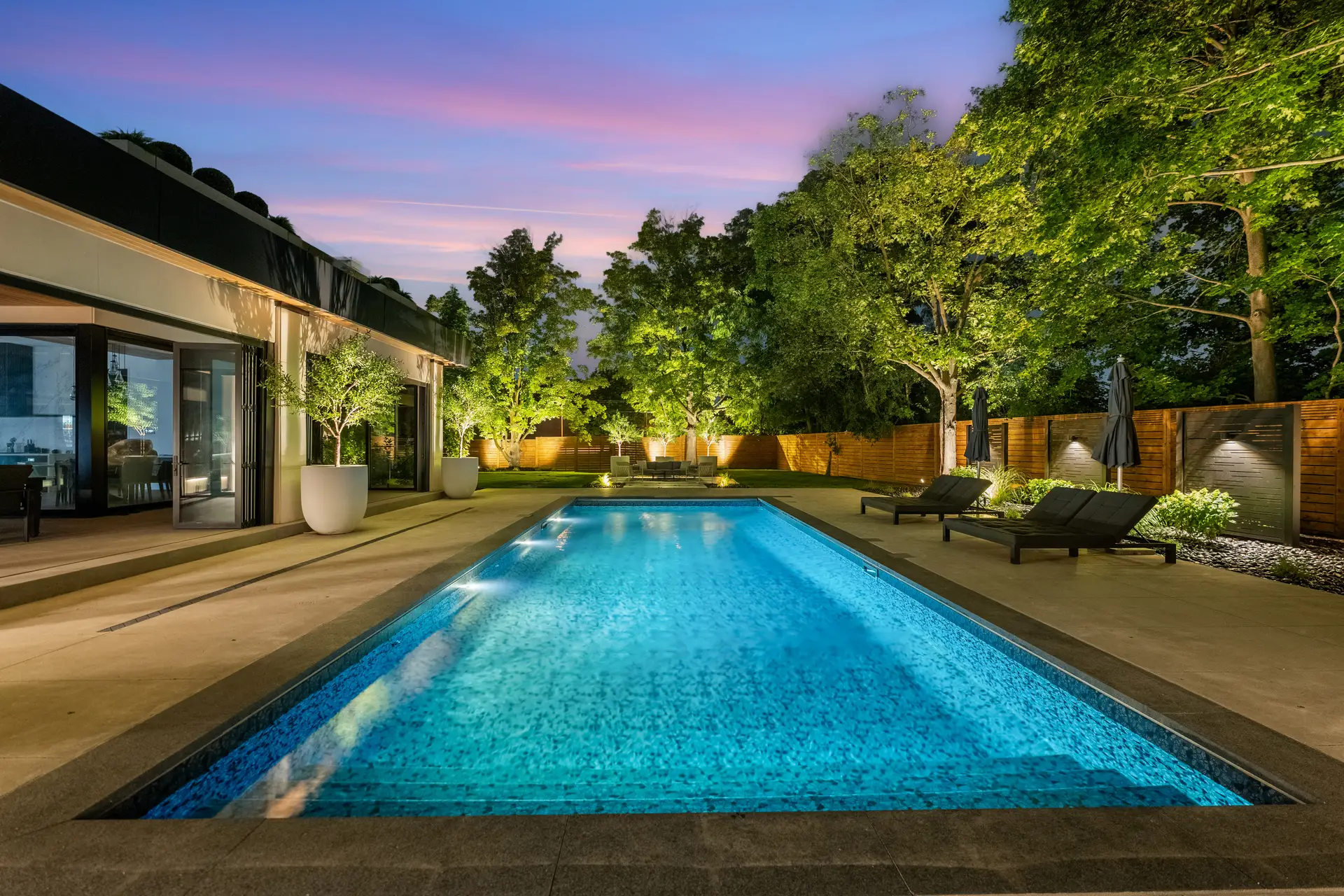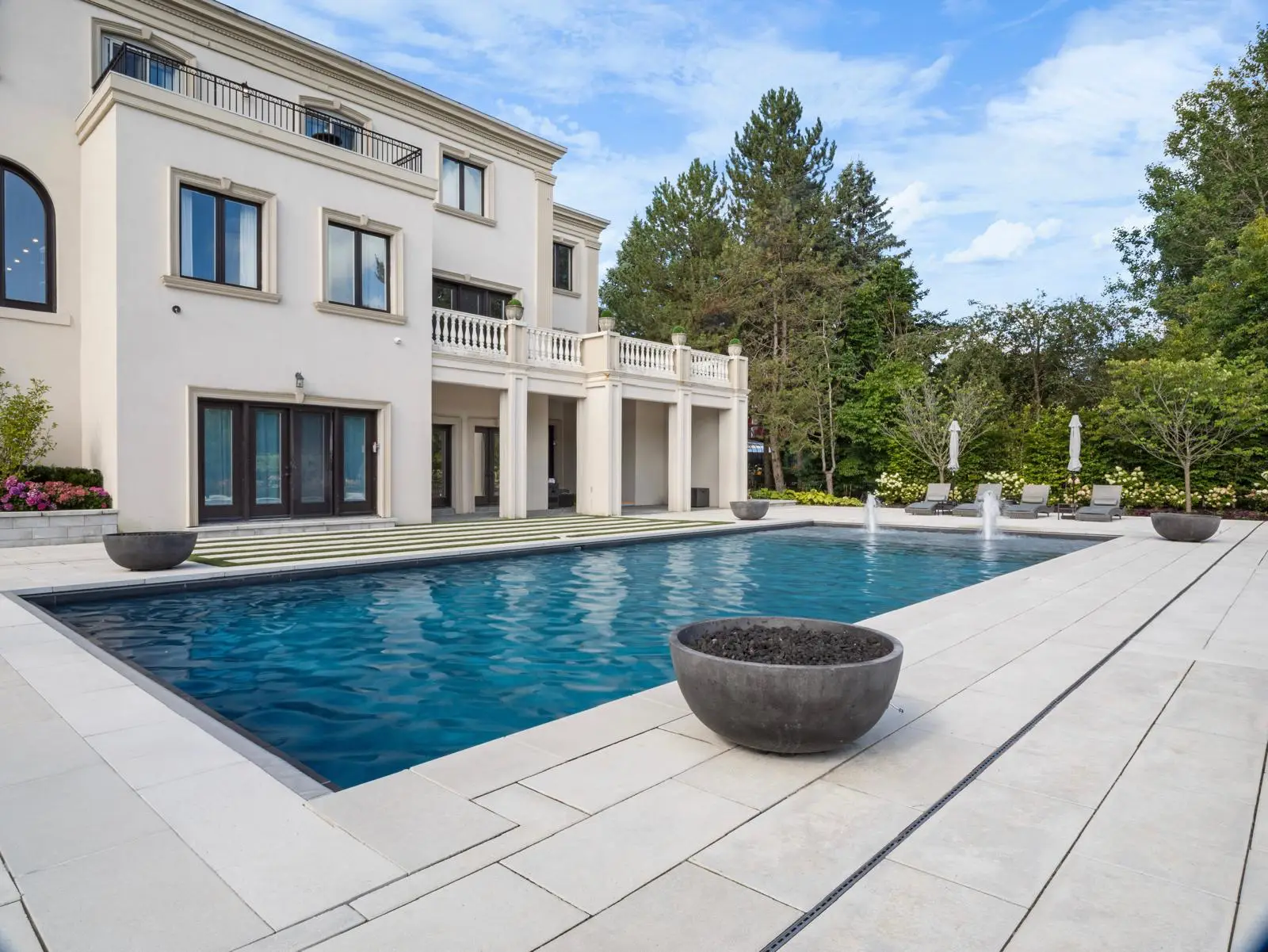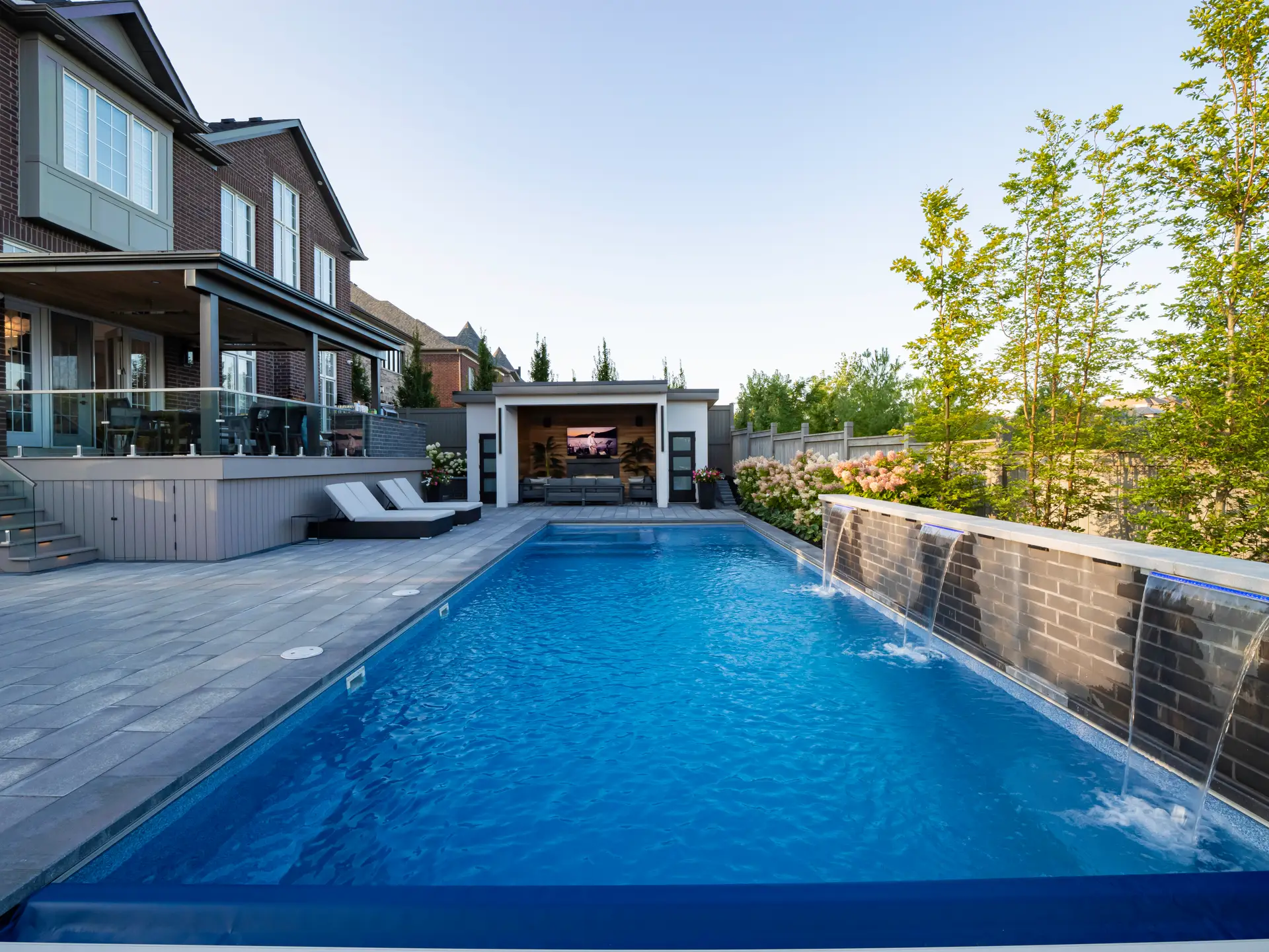

A Concrete Pool is not a pre-built product. It is a fully custom structure formed and engineered on-site, which means cost is determined by design, site conditions, and how the pool integrates with the surrounding environment.
In Ontario, these projects must be built for freeze-thaw movement, drainage control, and long-term performance. When those factors are resolved early through Landscape Design, pricing becomes a result of planning rather than a variable discovered during construction.
Concrete Pool Costs in Ontario: What to Expect
Concrete Pools represent the highest investment tier because they are built entirely around the property they sit in. Size, shape, depth, and integration all influence cost, but the biggest factor is how the project is structured through Pool Design and coordinated with the surrounding space through Pool Landscaping.
So how much does a concrete pool cost in Ontario? Installation typically starts at $170,000 and can exceed $250,000+, depending on size, excavation complexity, finishes, and added features.
Concrete Pool Cost by Size (Installed)
| Pool Size | Typical Installed Cost |
|---|---|
| 12' x 24' | $170,000 – $200,000 |
| 16' x 32' | $200,000 – $270,000 |
| 20' x 40'+ | $270,000 – $380,000 |
These ranges reflect professionally built Concrete Pools designed for long-term performance in Ontario conditions. Final pricing depends on excavation complexity, access, structural requirements, and how the pool connects to the overall outdoor environment through Pool Landscaping.
Typical Total Project Cost Ranges
| Project Level | Typical Range | What's Included |
|---|---|---|
| Entry-Level Concrete Pool | $100,000 – $125,000 | Smaller pool, standard finish, basic equipment |
| Mid-Range Concrete Pool | $125,000 – $200,000 | Larger layouts, upgraded finishes, lighting and features |
| High-End Concrete Pool | $200,000 – $250,000+ | Custom design, premium materials, full backyard integration |
Most projects fall within the mid-range once structure, systems, and surrounding work are fully coordinated. The biggest cost differences come from customization, site conditions, and how the pool is integrated into the property through Landscape Design and Pool Design.
The $100,000 Pool Reality: Why Concrete Pool Costs Are Higher Than Expected
Most homeowners begin their research expecting a concrete pool to fall somewhere around the base price they see online. In reality, that number often reflects only a portion of the total project.
In Ontario, a Concrete Pool is not just a structure placed in the ground. It is a fully engineered system that must account for excavation, drainage, structural reinforcement, mechanical systems, and the surrounding environment. The pool shell itself is often only one part of the total investment.
What drives costs higher is everything required to make the pool buildable and durable in real conditions. Clay soils, rock, access limitations, and elevation changes all affect excavation and structural work. At the same time, features like heating, lighting, and water systems expand the mechanical scope.
The largest cost movement typically happens outside the pool walls. Once patios, coping, grading, and integration into the surrounding space are included, the project shifts from a standalone pool to a complete outdoor environment. This is why two pools that appear similar can differ by $50,000 or more once fully installed.
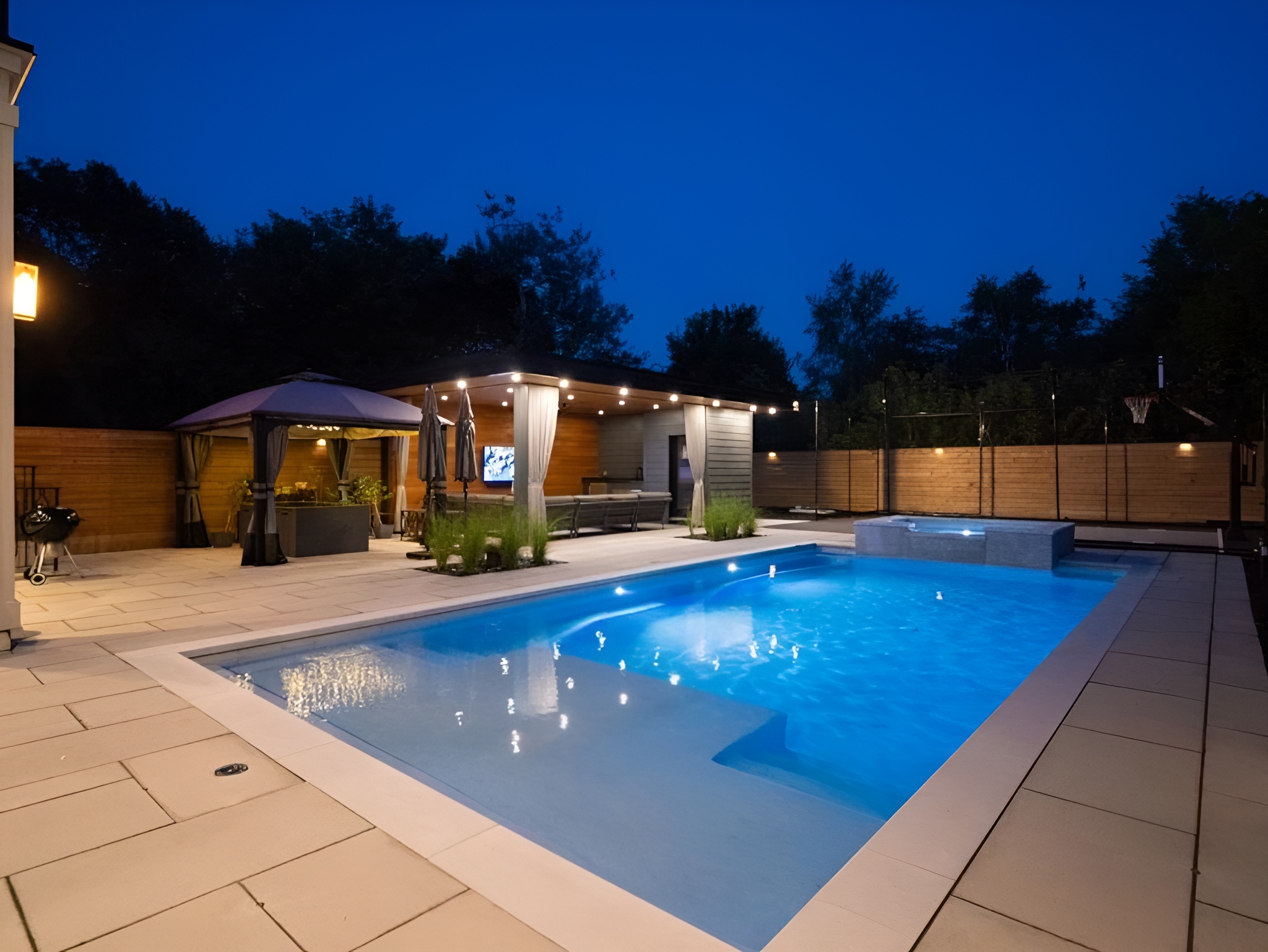
Concrete Pool Cost Breakdown
Concrete pool cost is driven by a series of construction stages, each affecting structure, performance, and long-term durability.
Excavation and Site Preparation
Excavation varies based on soil, access, and elevation. Clay, rock, and high water tables require additional labour and drainage solutions. Limited access increases equipment complexity, while sloped properties may require grading and structural support to create a stable base.
Structural Shell (Concrete / Gunite / Shotcrete)
The structural shell forms the shape and integrity of the pool. Built on-site using concrete, gunite, or shotcrete, it allows full customization but increases labour, engineering, and construction time compared to pre-formed systems.
Waterproofing and Finishing
Waterproofing protects the structure, while finishes such as plaster, tile, or exposed aggregate define the final appearance. Higher-end finishes increase cost but improve durability and visual quality.
Equipment and Mechanical Systems
Pumps, filtration, heating, and automation control pool performance. Proper system sizing is critical to avoid inefficiencies and long-term issues.
Heating systems are a major factor in both upfront and operating costs in Ontario.
Surrounding Landscaping and Hardscaping
The surrounding space often represents a significant portion of total cost. Patios, coping, and structural elements fall under Hardscaping, while grading, planting, and layout integration are handled through Pool Landscaping and Landscape Design.
These elements determine how the pool functions within the property and are essential for drainage, usability, and long-term performance.
What Actually Drives Concrete Pool Cost
Concrete pool pricing is not determined by size alone. It is driven by how design, structure, and site conditions come together to form a buildable and durable system. This is where costs expand or stay controlled depending on how early these factors are resolved.
Custom Design, Depth, and Structural Complexity
Concrete Pools are fully custom, which means shape, depth, and integrated features all directly impact cost. Straight-line layouts are more efficient, while freeform designs, deeper profiles, and multi-level features increase excavation, forming time, and structural requirements.
Elements such as tanning ledges, built-in seating, and wide entry points must be engineered directly into the shell, adding material, reinforcement, and labour. As complexity increases, the project shifts from a standard build to a more engineered structure.
This flexibility is what separates Concrete Pools from alternatives like Fiberglass Pools and steel systems, which are limited by pre-formed shapes.
Site Conditions and Access
Site conditions are one of the biggest cost variables in Ontario. Soil type, rock, water tables, and slope all affect excavation and structural preparation before construction even begins.
Access is equally important. Limited entry points may require smaller equipment or staged excavation, increasing labour and time. Sloped properties often require grading and structural solutions to create a stable base, which can significantly expand the project scope.
Engineering and Permits
Concrete Pools require proper engineering to ensure long-term stability, especially in Ontario's freeze-thaw conditions. Structural drawings, drainage planning, and load considerations all factor into the build.
Permits, setbacks, and municipal requirements also influence layout and construction sequencing. When these are addressed early through Pool Design, they stabilize the project and prevent costly changes later.
Integration with the Backyard
The largest cost increases often come from how the pool is integrated into the property. A standalone pool is one cost. A fully coordinated outdoor environment is another.
When the pool is planned alongside Pool Landscaping and overall Landscape Design, elements like patios, steps, drainage, and transitions are built as part of one system. This improves functionality and long-term performance but also increases total investment.
Concrete Pool Features and Add-Ons
Once the structure is defined, features become the biggest driver of final cost. These upgrades shape how the pool functions, how long it can be used throughout the season, and how it integrates into the surrounding space.
| Feature | Typical Cost |
|---|---|
| Built-in Tanning Ledge | $15,000 – $25,000 |
| Pool Lighting | $2,000 – $6,000 |
| Water Features (Jets, Waterfalls) | $12,000 – $30,000+ |
| Pool Heating System | $5,000 – $12,000 |
| Automatic Pool Cover | $25,000+ |
| Integrated Custom Hot Tub | $30,000 – $50,000+ |
Infinity Edges and Water Features
Infinity edges and water features transform the pool into a visual focal point. These elements require additional structural detailing, plumbing, and finishing work, which increases both construction complexity and cost.
They are typically used in projects where the pool is designed as a central feature within a larger outdoor environment.
Built-In Spas and Sun Shelves
Integrated spas and sun shelves add both functionality and comfort. Sun shelves create shallow lounging areas, while built-in spas extend usability into cooler seasons.
These features must be engineered into the pool structure and connected to the mechanical system, increasing both structural and system complexity.
Pool Lighting Systems
Lighting extends usability into the evening and enhances safety. Proper placement and system design ensure consistent visibility without glare.
Lighting is often coordinated with surrounding outdoor spaces and can be integrated into broader Lighting plans to create a cohesive nighttime environment.
Heating and Automation Systems
Heating systems extend the swimming season in Ontario, while automation systems simplify operation and improve efficiency. Together, they control temperature, filtration, and overall system performance.
These systems must be properly sized and integrated into the pool's design to ensure long-term reliability and manageable operating costs.
Surrounding Outdoor Features
The pool rarely exists on its own. Features such as patios, seating areas, pergolas, and outdoor kitchens shape how the space is used and experienced.
These elements are built through Hardscaping, Pergolas, and other outdoor structures, and often represent a significant portion of the total project cost when fully integrated.
Concrete vs Fiberglass vs Steel Vinyl Pool Cost
Concrete Pools, Fiberglass Pools, and steel systems all fall into different investment tiers based on how they are built and how they perform over time.
Concrete Pools are fully custom and typically range from $100,000 to $250,000+, making them the highest investment option. They are chosen when the pool is designed as a structural and visual centrepiece within a larger outdoor environment.
Fiberglass Pools generally range from $90,000 to $120,000+ and offer faster installation with lower surface maintenance due to their pre-molded structure.
Steel-based pool systems (often Steel-Vinyl) typically range from $60,000 to $100,000 and provide a more accessible entry point with flexible layouts. The key difference is not just price, but how each system integrates into the property. Concrete Pools offer the highest level of customization and integration, while other systems prioritize speed, cost control, or simplified maintenance.
Concrete Pool Cost by Size with Add-Ons
| Pool Size | Typical Installed Cost | Add-Ons |
|---|---|---|
| 12' x 24' | $170,000 – $200,000 | $20,000+ |
| 16' x 32' | $200,000 – $270,000 | $20,000+ |
| 20' x 40'+ | $270,000 – $380,000 | $20,000+ |
The Long-Term Cost of a Concrete Pool
Concrete Pools require ongoing maintenance and long-term planning to preserve performance, appearance, and system efficiency. While upfront costs are higher, ownership costs are predictable when the pool is properly designed and built.
Ongoing Maintenance and Ownership Costs
| Cost Category | Typical Cost | Frequency |
|---|---|---|
| Chemical Balancing | $500 – $1,500/year | Ongoing |
| Cleaning & Maintenance | $500 – $2,000/year | Ongoing |
| Resurfacing | $10,000 – $25,000 | Every 10–15 years |
| Equipment Repairs | $1,000 – $5,000 | As needed |
| Heating Costs | Varies | Seasonal |
Most ongoing costs are tied to water management, equipment performance, and seasonal use. Heating is typically the largest operating expense in Ontario, while resurfacing represents the most significant long-term investment.
Frequently Asked Questions About Concrete Pool Costs in Ontario
These are the most common questions homeowners ask when planning a Concrete Pool in Ontario.
-
Most Concrete Pools start around $100,000 and typically range from $125,000 to $200,000+, with larger or more complex projects exceeding $250,000.
-
The biggest cost drivers are excavation conditions, structural complexity, and how the pool is integrated into the surrounding space. Features, access limitations, and site conditions can significantly increase total investment.
-
Concrete Pools offer unmatched customization and long-term durability. They are typically chosen for high-end projects where design flexibility and integration are priorities.
-
With proper maintenance, Concrete Pools can last 50+ years. Surface finishes will require periodic resurfacing, but the underlying structure is designed for long-term performance.
-
Yes. Concrete Pools are often the best option for properties with slopes, access limitations, or complex layouts because they can be engineered to fit the site conditions.
Plan Your Concrete Pool with Clear Cost Expectations
The most effective way to control Concrete Pool cost is to start with a complete plan.
Through Landscape Design, Pool Design, and coordinated planning, site conditions, structure, and surrounding features are resolved before construction begins. This leads to clearer pricing, fewer changes during the build, and a better long-term result. Contact Precision Landscaping to start your project with a structured plan.